
We read your photo as:
From the formula F = (Gm1m2)/r2, if F = 100N, m1 = 5.0Kg and r = 2m, find G.
ScanSolve AI Answer
Step-by-step solution
7 stepsHere are the solutions to the questions from the image:
1.
Start with the given formula for gravitational force.
To isolate , first multiply both sides of the equation by .
Next, divide both sides by to make the subject of the formula.
The formula with as the subject is .
2.
Use the formula for derived in Question 1.
Substitute the given values into the formula
, , , and .
Calculate the square of and multiply the masses.
Perform the multiplication in the numerator and then the division.
The value of is .
3.
Gravitational potential is the work done per unit mass to move a test mass from infinity to a point in a gravitational field. It is always negative and is associated with mass.
Electric potential is the work done per unit charge to move a test positive charge from infinity to a point in an electric field. It can be positive or negative and is associated with electric charge.4.
Two processes of demagnetisation are:- Heating: When a magnetic material is heated above its Curie temperature, the increased thermal energy causes the magnetic domains to lose their alignment, resulting in demagnetisation.
- Hammering/Mechanical Shock: Repeatedly striking a magnet or subjecting it to strong mechanical vibrations can disorient the magnetic domains, causing them to become randomly arranged and thus demagnetising the material.
Still stuck on this one?
Ask a follow-up, and the answer starts from this question.
More Physics Questions
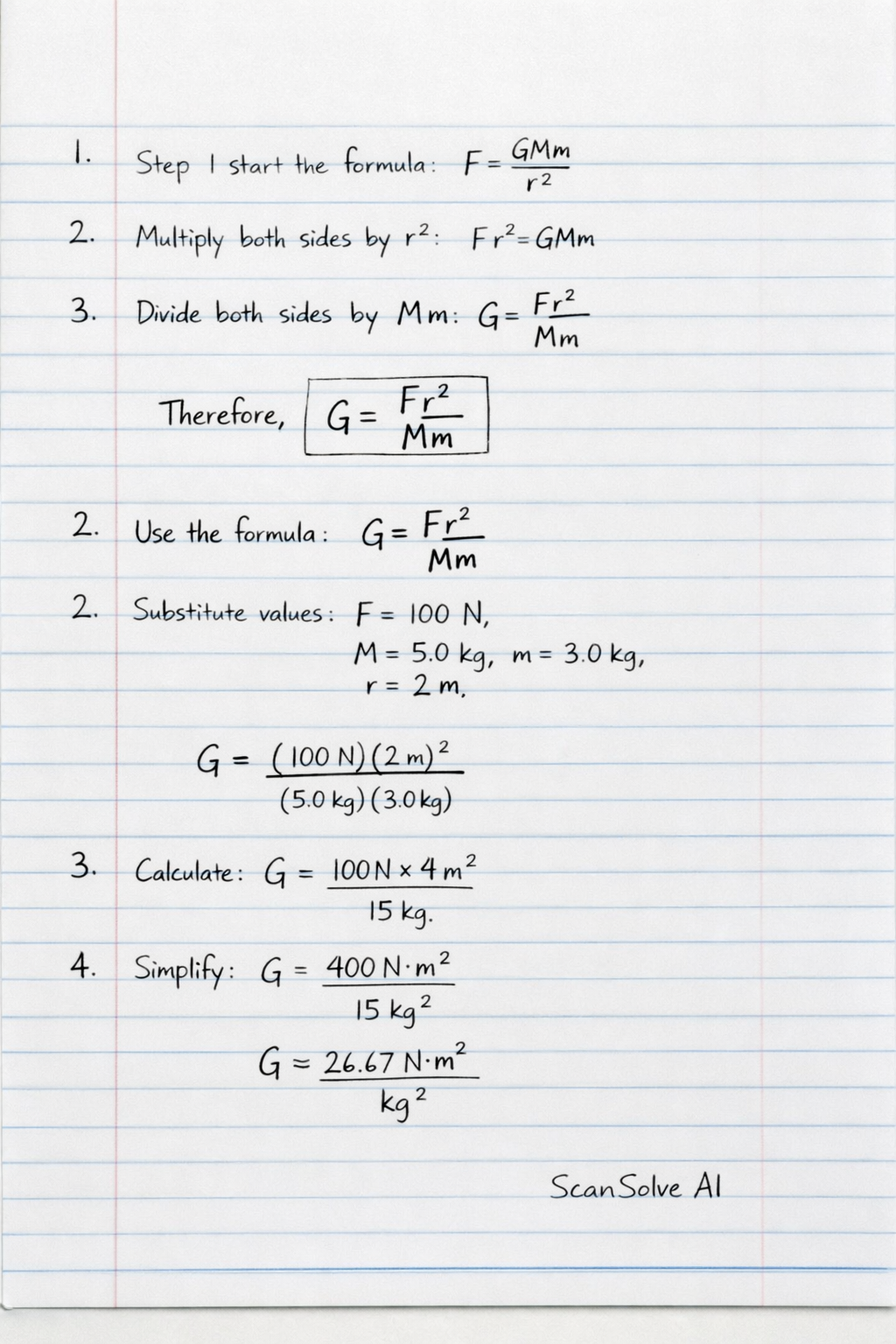
Handwritten Step-by-Step Solution
Get this as a handwritten image on WhatsApp — like a tutor wrote it for you.
Try on WhatsApp