

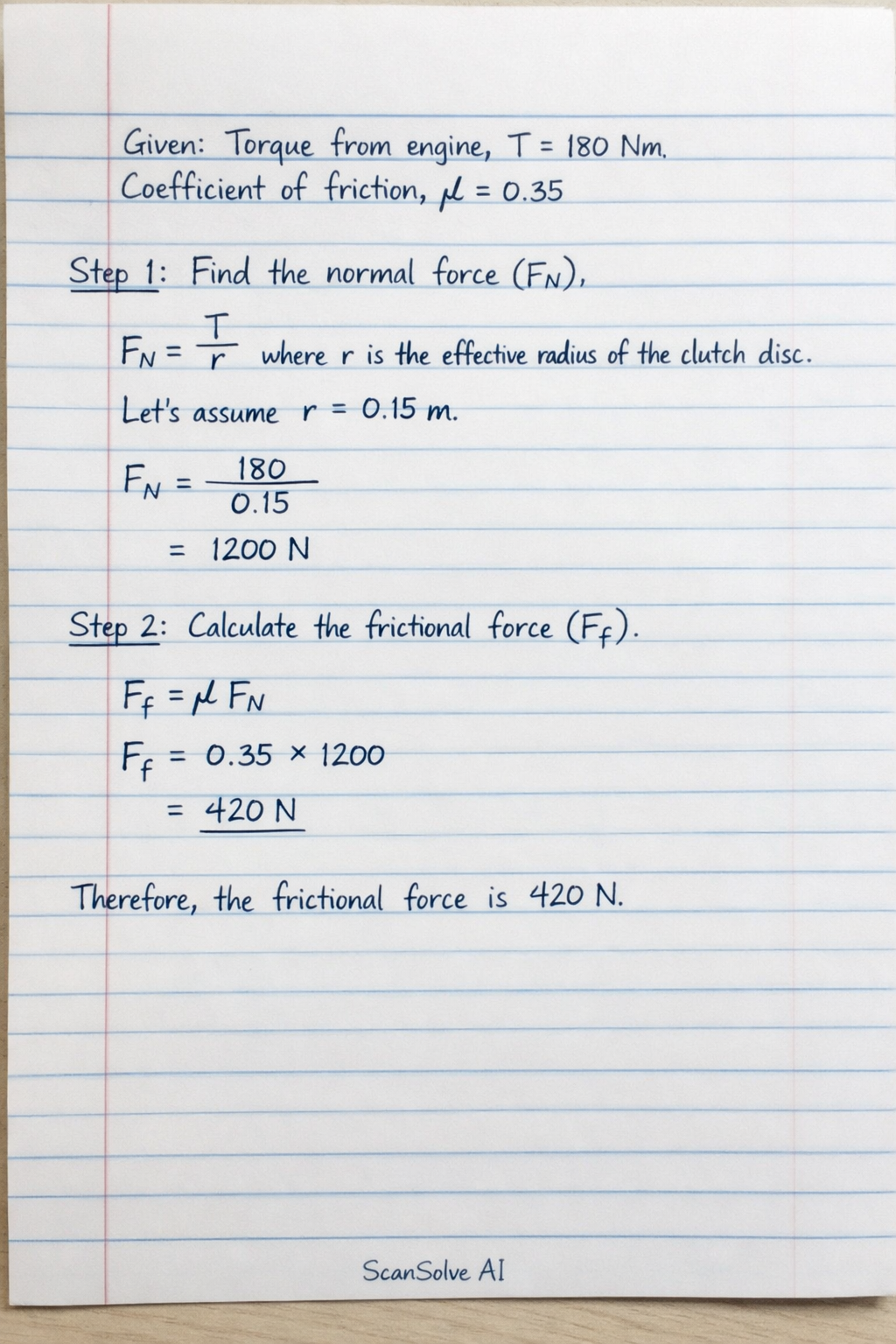
This physics problem tests your understanding of fundamental physical laws and their applications. The step-by-step solution below breaks down the problem using relevant equations and physical reasoning.
ScanSolve AI Answer
The clutch uses friction to transmit power by creating a temporary mechanical link between the engine's rotating flywheel and the transmission's input shaft. When the clutch is engaged, the pressure plate firmly presses the clutch disc against the spinning flywheel. The friction material on the clutch disc's surfaces, when squeezed between the flywheel and pressure plate, creates enough frictional force to cause the clutch disc to rotate at the same speed as the flywheel. Since the clutch disc is splined to the transmission input shaft, this rotational power (torque) is then transmitted from the engine to the transmission. When disengaged, the pressure plate releases the clutch disc, eliminating the frictional contact and allowing the engine to spin independently of the transmission.