
We read your photo as:
What is the displacement of the object from the fixed point at time t = 5.0 s and what is the acceleration of the object?
ScanSolve AI Answer
Answer
Step-by-step solution
3 stepsHere are the solutions to the problems from the image:
14. The Sun is the original source of energy for many of our energy resources. Which energy resource does not originate from the Sun?
Most energy resources on Earth, such as fossil fuels (formed from ancient plants and animals that used sunlight), wind (caused by uneven heating of the Earth by the Sun), hydroelectric (driven by the water cycle, powered by the Sun), and waves (generated by wind), ultimately derive their energy from the Sun. Geothermal energy, however, originates from the heat within the Earth's core, which is a result of radioactive decay and residual heat from the planet's formation, not from the Sun.
The correct option is A.
15. A student can run or walk up the stairs to her classroom. Which statement describes the power required and the gravitational potential energy gained while running up the stairs compared to walking up them?
When the student goes up the stairs, the change in height and her mass are the same, regardless of whether she runs or walks. Therefore, the gravitational potential energy gained () is the same.
Power is the rate at which work is done (). Since the work done (gaining potential energy) is the same, but running takes less time than walking, running requires more power.
The correct option is C.
16. The graph shows the variation of velocity with time for an object. The object passes a fixed point at time . What is the displacement of the object from the fixed point at time and what is the acceleration of the object?
Determine the acceleration of the object.
Acceleration is the gradient of a velocity-time graph.
From the graph:- Initial velocity (at )
- Final velocity (at )
- Time interval The acceleration is given by:
Determine the displacement of the object.
Displacement is the area under the velocity-time graph. The shape under the graph from to is a trapezium.
The area of a trapezium is given by , where and are the lengths of the parallel sides and is the perpendicular height.
In this case, the parallel sides are the initial and final velocities, and the height is the time interval.Match the calculated values with the options.
The displacement is and the acceleration is .
Comparing this with the given table:- A: 60 m, 4.0 m/s
- B: 70 m, 4.0 m/s
- C: 60 m, 4.8 m/s
- D: 70 m, 4.8 m/s The correct option is B.
Try one yourself
A new problem that tests the same skill.
Still stuck on this one?
Ask a follow-up, and the answer starts from this question.
More Physics Questions
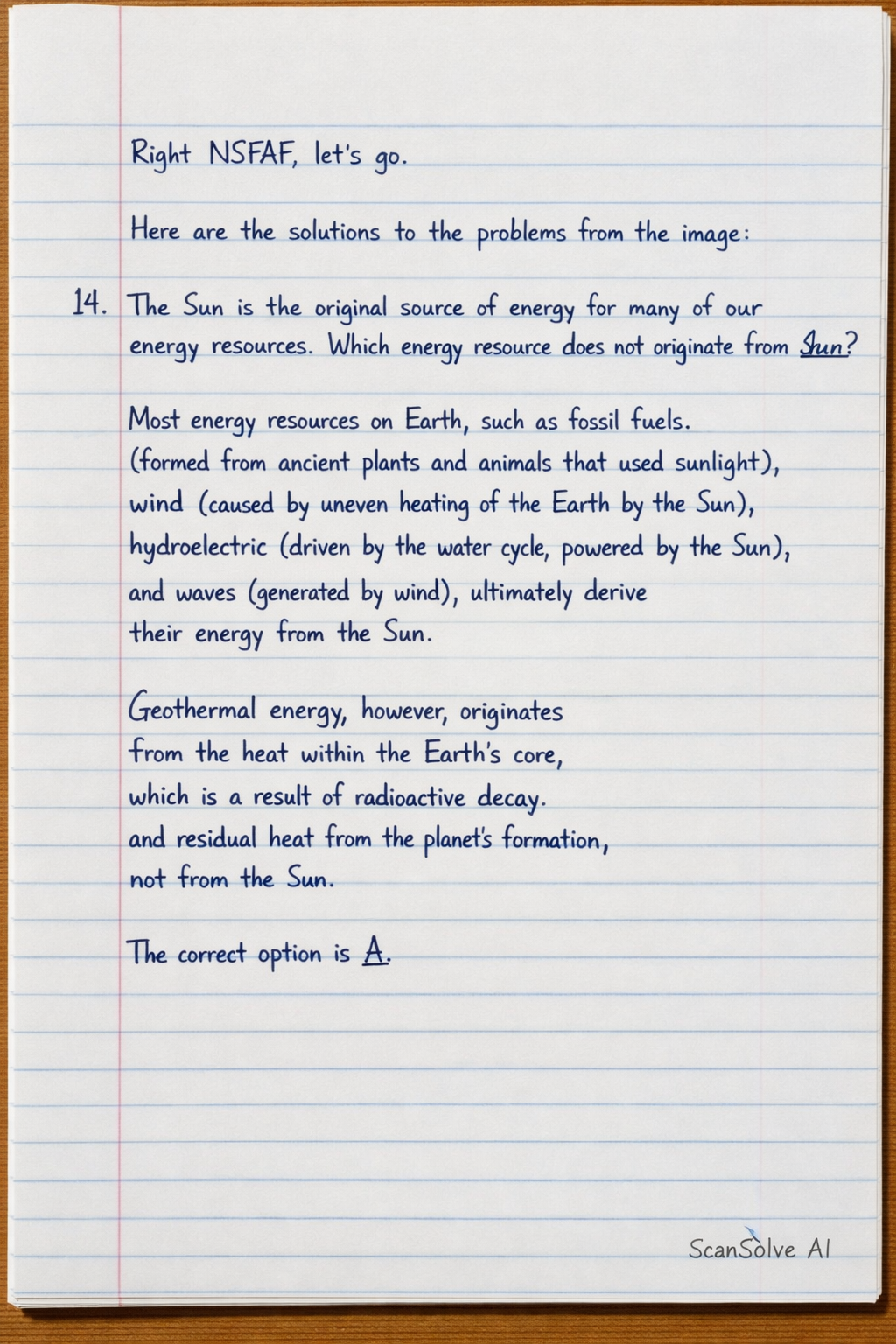
Handwritten Step-by-Step Solution
Get this as a handwritten image on WhatsApp — like a tutor wrote it for you.
Try on WhatsApp