
Anatomy Homework Help
Step-by-step AI solutions. Ask your own question →
Anatomy Questions

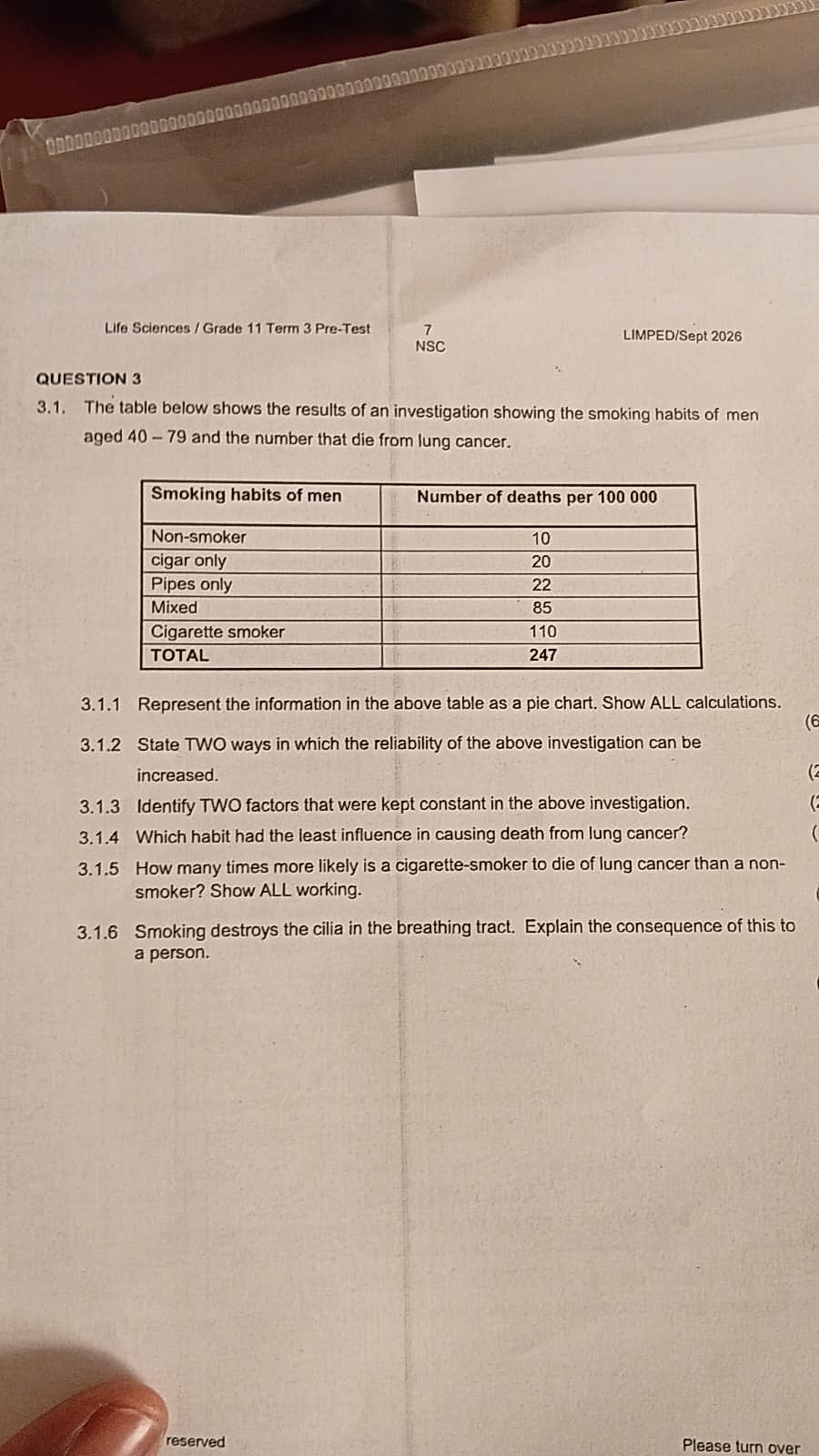
The table below shows the results of an investigation showing the smoking habits of men aged 40 – 79 and the number that…
View Solution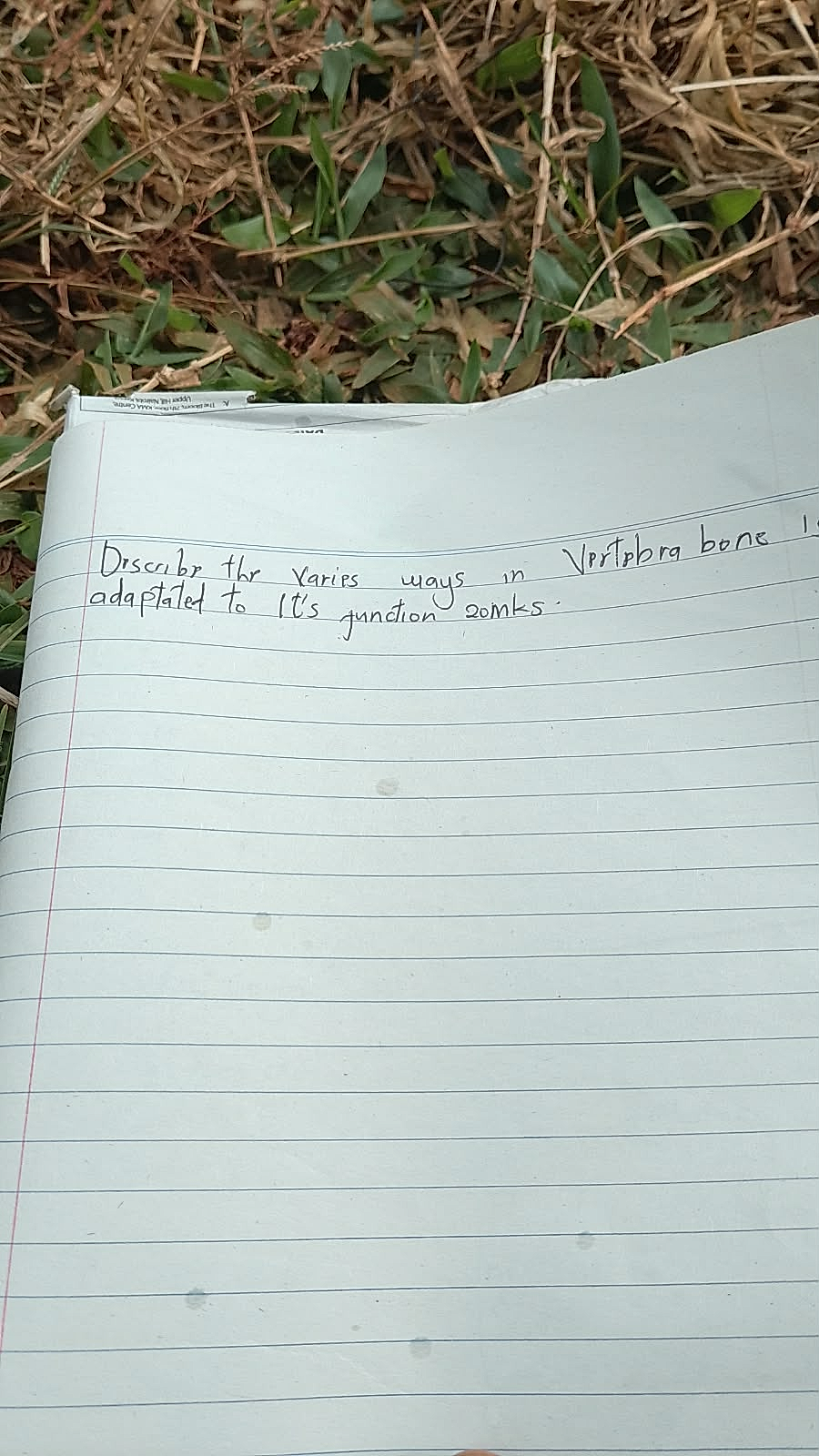
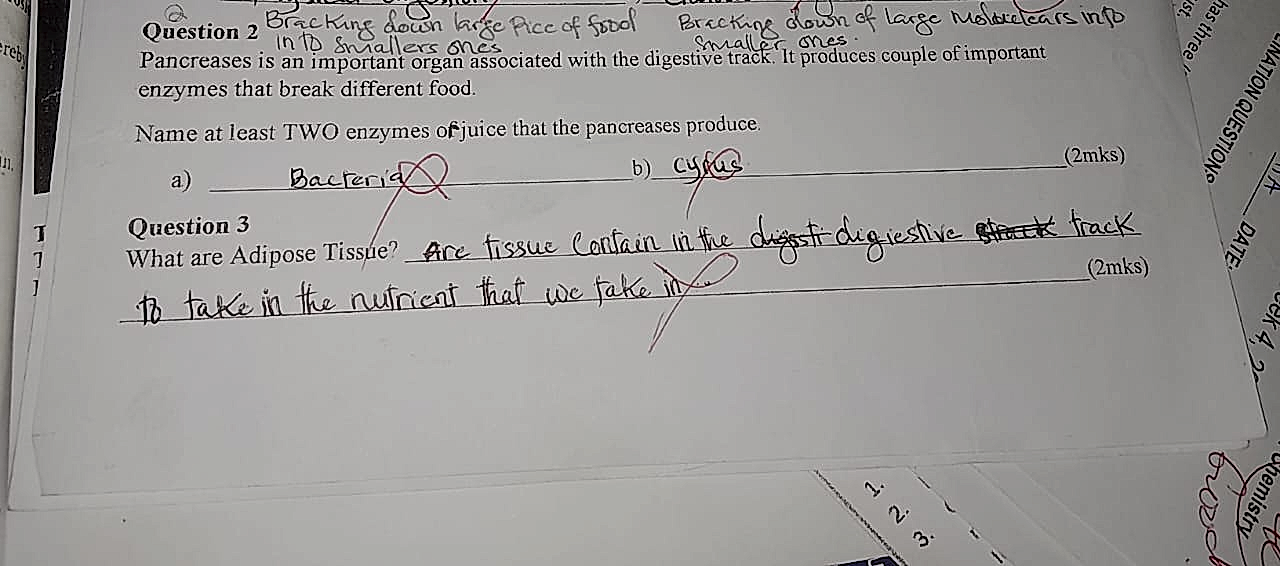
Name at least TWO enzymes of juice that the pancreas produce. What are Adipose Tissue?
View Solution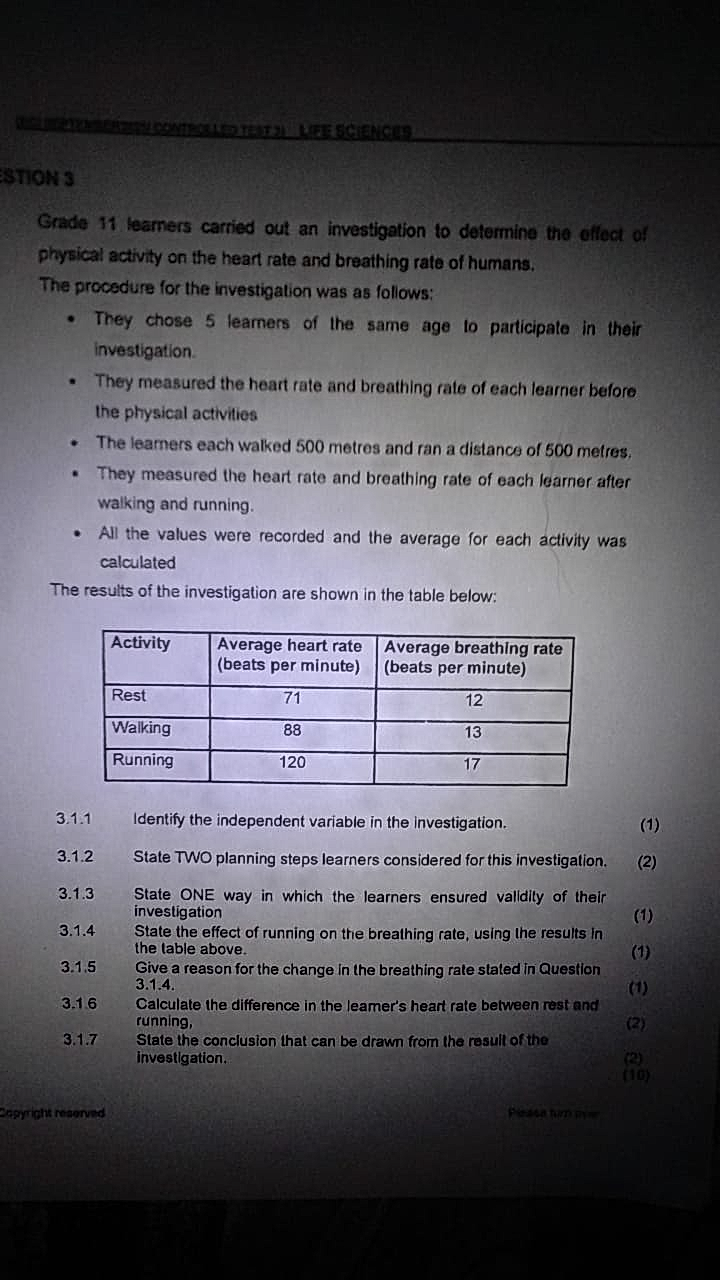
Grade 11 learners carried out an investigation to determine the effect of physical activity on the heart rate and breath…
View Solution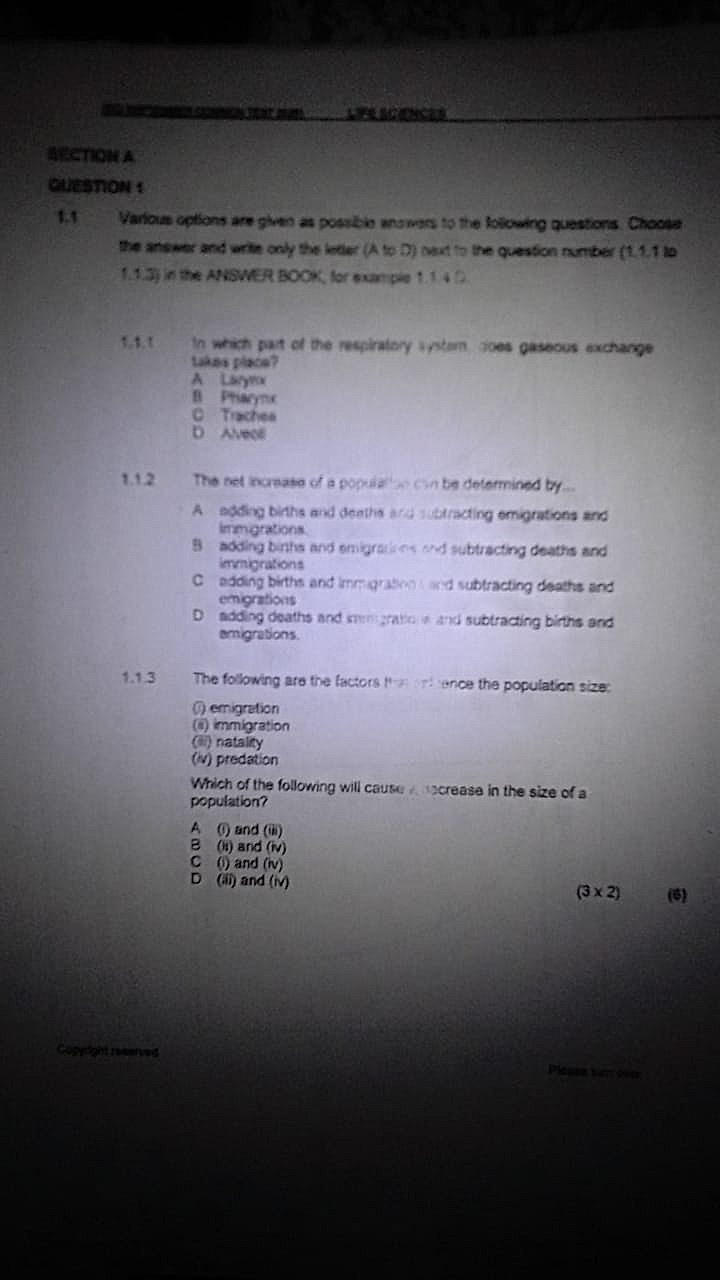
In which part of the respiratory system does gaseous exchange takes place? A Larynx B Pharynx C Trachea D Alveoli
View Solution
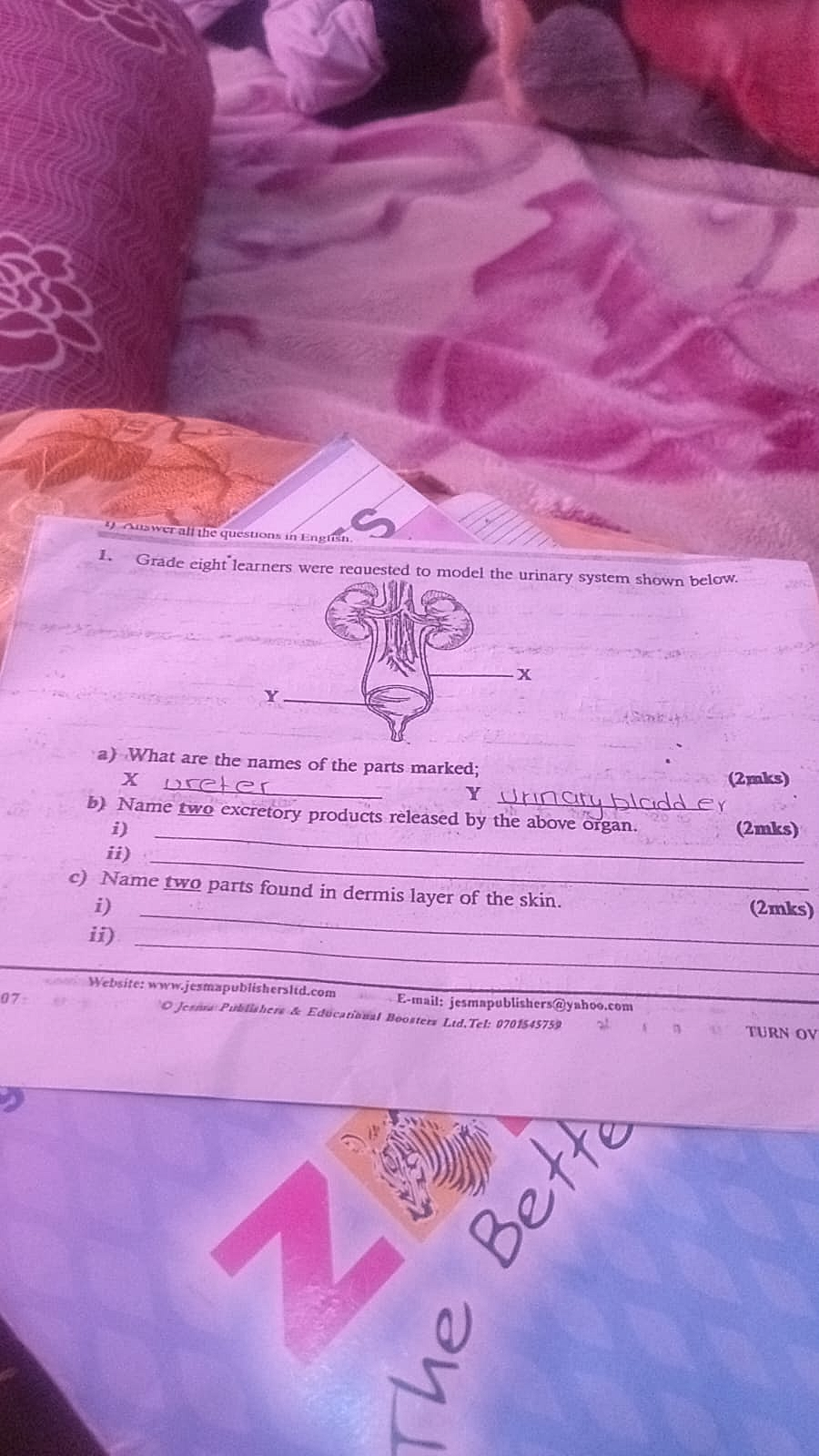
Grade eight learners were requested to model the urinary system shown below. a) What are the names of the parts marked;…
View Solution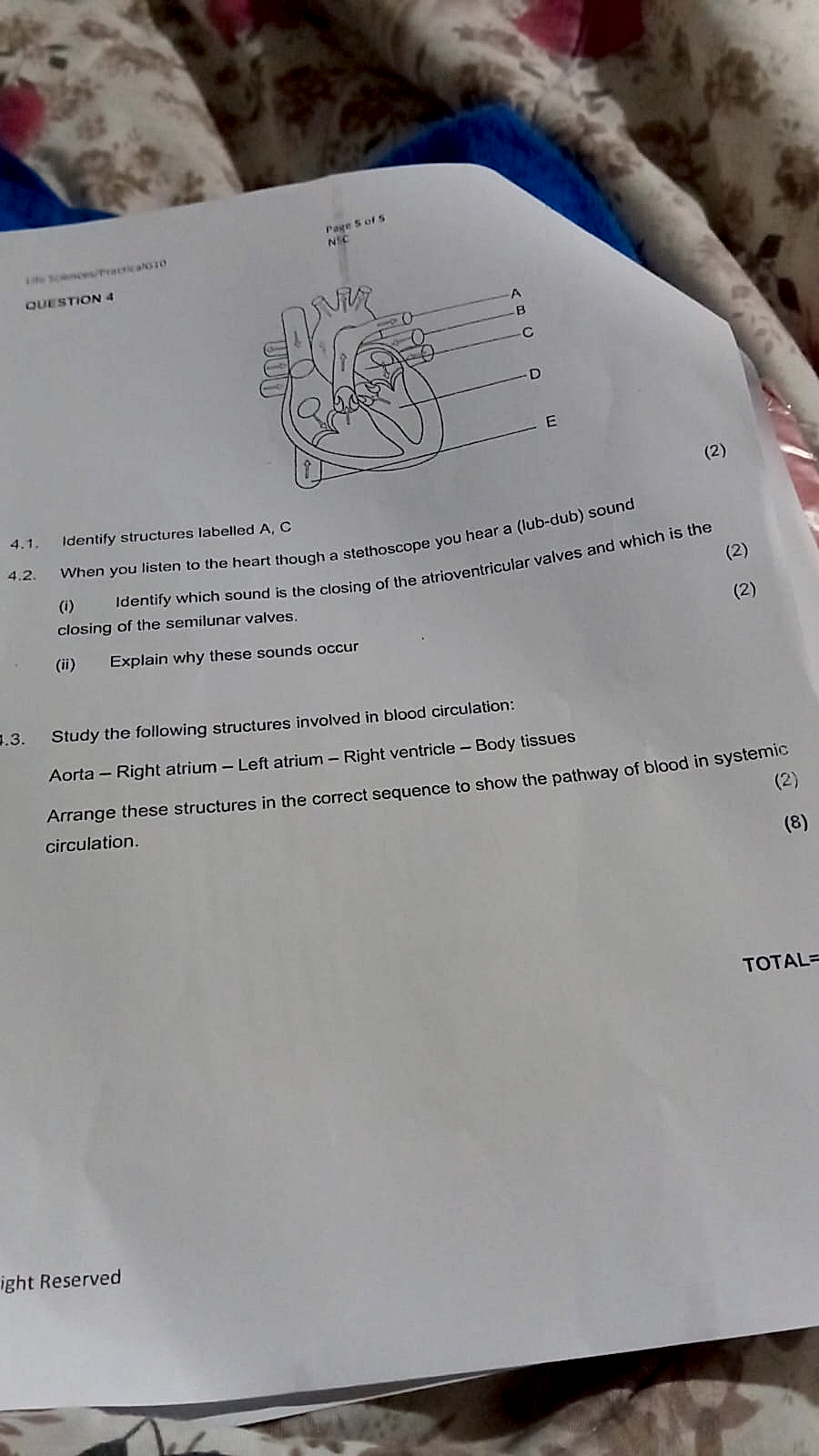
Study the following structures involved in blood circulation: Aorta – Right atrium – Left atrium – Right ventricle – Bod…
View Solution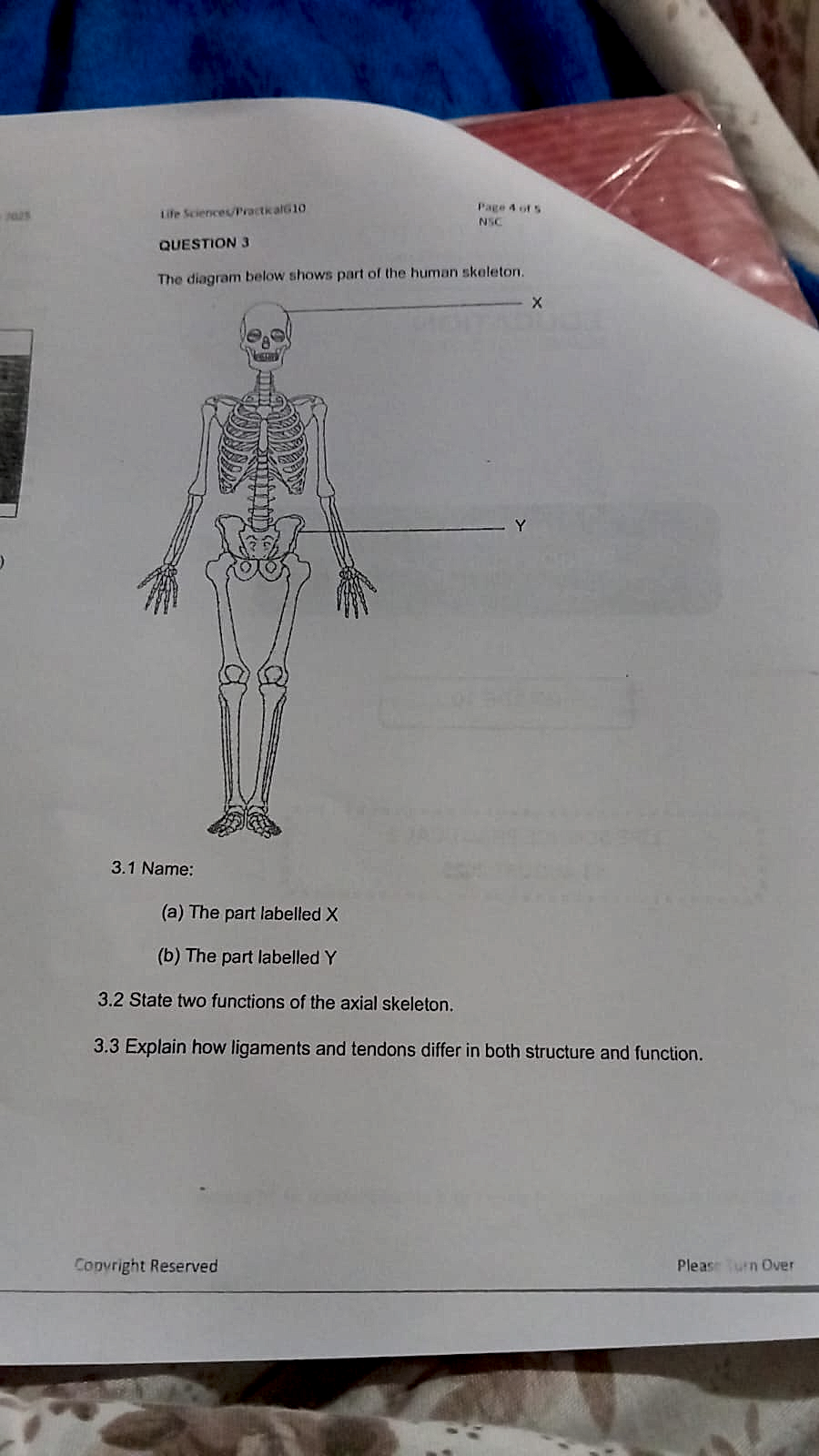
The diagram below shows part of the human skeleton. 3.1 Name: (a) The part labelled X (b) The part labelled Y 3.2 State…
View Solution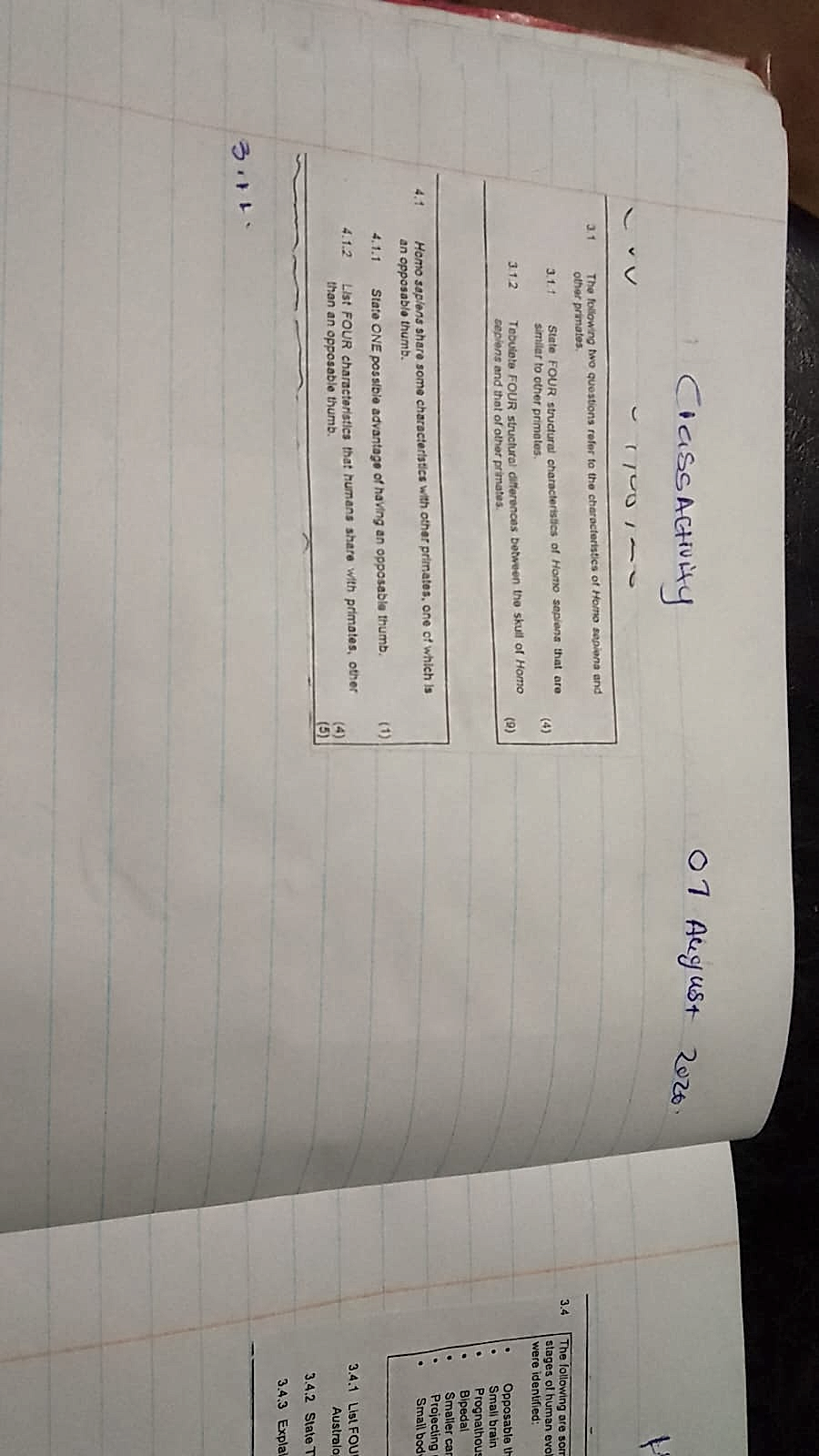
The following two questions refer to the characteristics of Homo sapiens and other primates. 3.1.1 State FOUR structural…
View Solution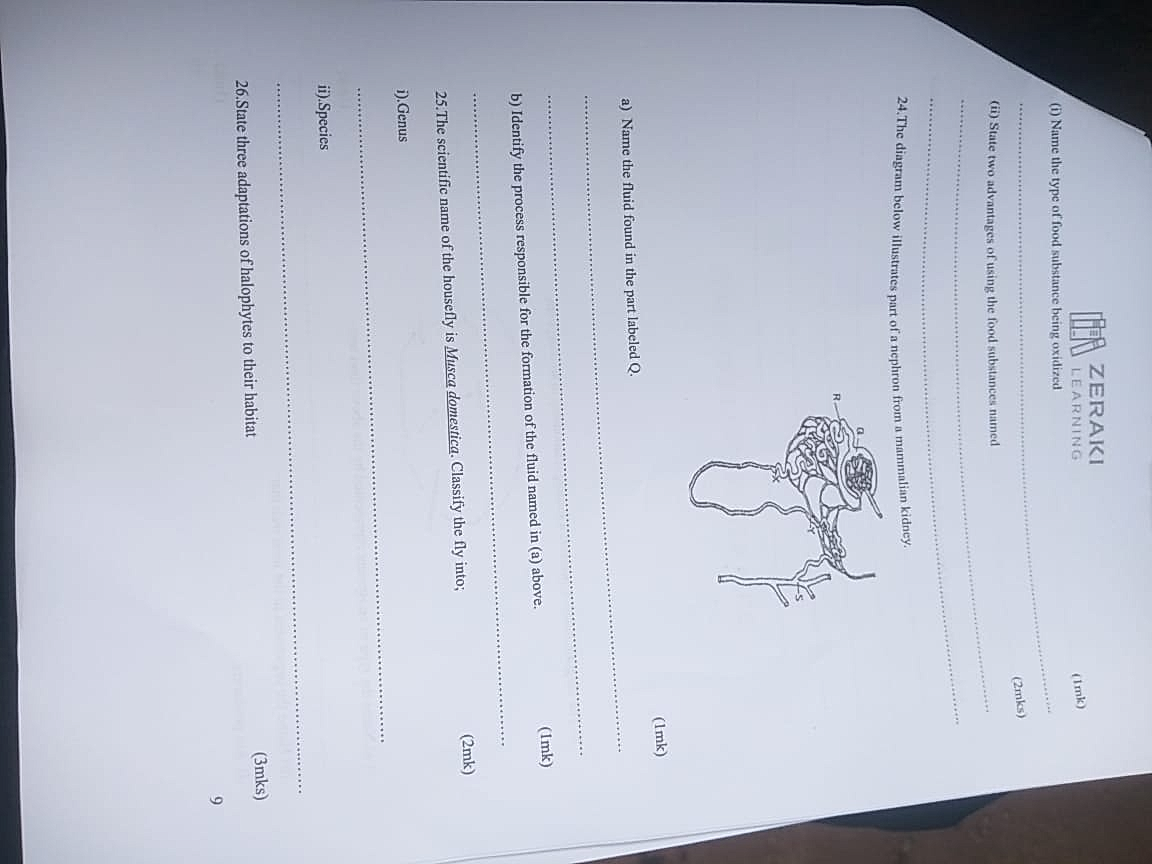
i) Name the type of food substance being oxidized (ii) State two advantages of using the food substances named The diagr…
View Solution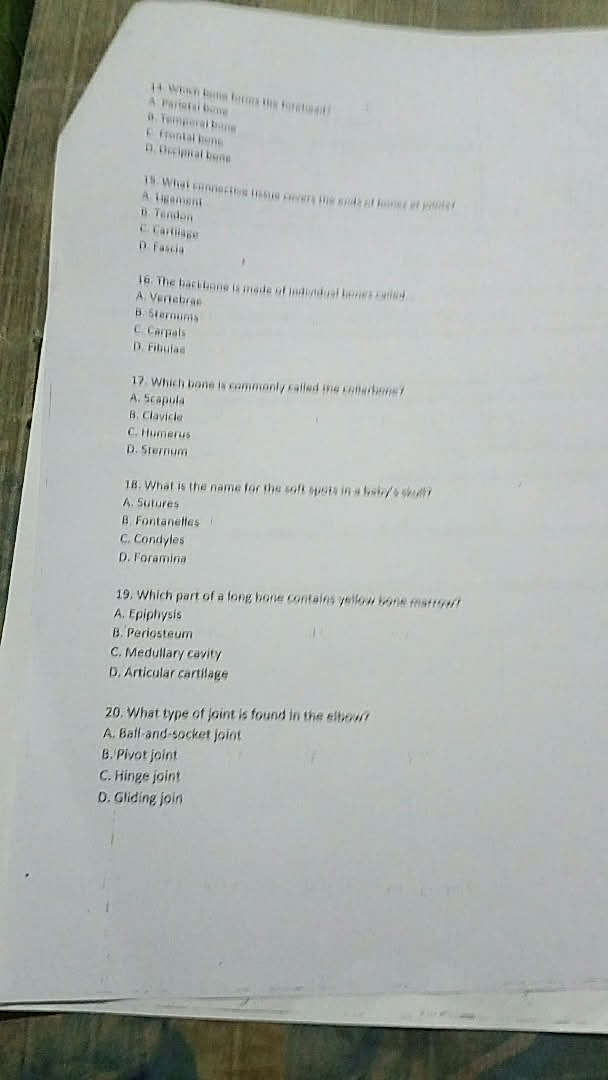
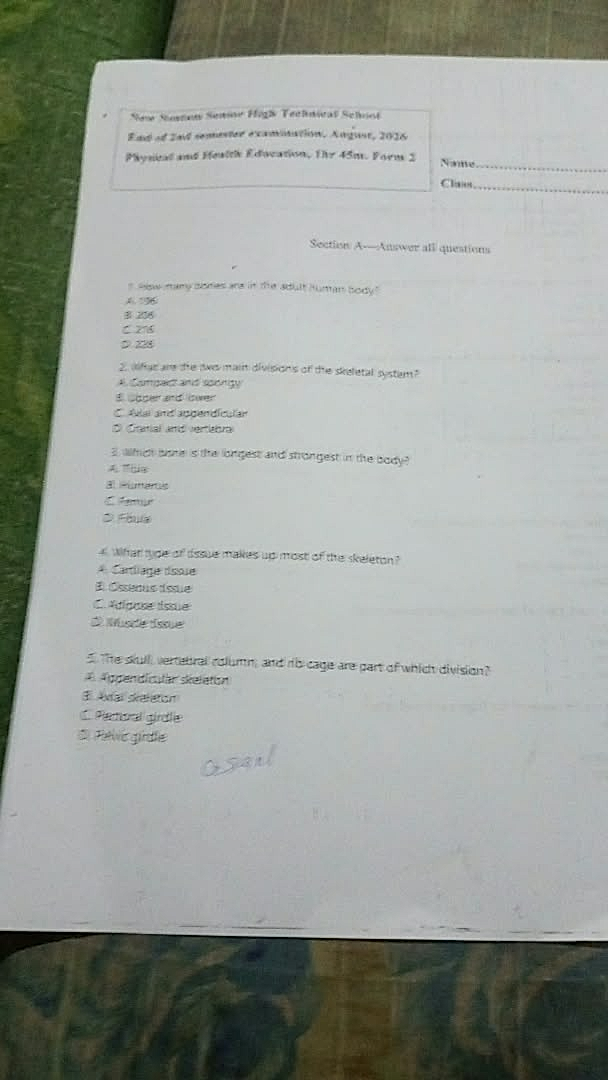
How many bones are in the adult human body? What are the two main divisions of the skeletal system? Which bone is the lo…
View SolutionDescribe the structure of the skin Name the layers of the skin and the tissues from which they are made. Describe the lo…
View SolutionAbout Anatomy
Anatomy is the study of the body's structures and how their shape fits their job. School and college questions tend to move system by system — digestion, breathing, circulation, excretion, movement, coordination — and to be built on a diagram to label or a table of results to explain. The useful habit is always the same: name the structure, then say what its structure lets it do.
Popular Topics in Anatomy
Digestive System
The alimentary canal and accessory organs, enzymes and where each acts, absorption in the ileum, and the role of bile.
Respiratory System
The breathing mechanism, gaseous exchange in the alveoli, and the adaptations that make exchange surfaces efficient.
Circulatory System
The heart's chambers and valves, arteries, veins and capillaries, double circulation, and blood composition.
Skeleton & Muscles
Bones of the skull, thorax and limbs, joint types, antagonistic muscle pairs and how a vertebra is adapted to its job.
Excretion
The kidney and nephron, ultrafiltration and selective reabsorption, osmoregulation and the skin's role.
Nervous System
Neurones, the reflex arc, the central and peripheral divisions, and the parts of the brain and their functions.
Endocrine System
Hormones and the glands that secrete them, insulin and blood glucose control, and negative feedback.
Cells & Tissues
Levels of organisation from cell to organ system, tissue types, and specialised cells such as the root hair and red blood cell.
How ScanSolve Helps with Anatomy
Photograph a labelled diagram and ScanSolve identifies the structures before it answers, so the reply names parts rather than positions ("the ileum", not "part B") and then explains the function being asked about. Where a question gives experimental results — smoking and lung capacity, exercise and pulse rate — the answer reads the trend from the data first and only then offers the biology.
Answers keep to the vocabulary marking schemes expect: structure, adaptation, function, and the comparisons that carry marks (artery against vein, inspiration against expiration). Where a process has an order, it is numbered, because in anatomy the sequence is usually the answer.
Study Tips for Anatomy
Learn each structure with its adaptation attached. "Alveoli" is worth little on its own; "thin, moist and richly supplied with blood, so diffusion is fast" is the mark.
Draw systems from memory and then check against the diagram. Recognising a labelled diagram is much easier than producing one, and exams ask for the harder skill.
Keep a comparison table as you go — artery/vein, inspiration/expiration, sensory/motor. Comparison questions are common and the table is the answer.
Use the units and axes when results are given. Many anatomy questions are data questions wearing a biology hat.
Get Anatomy Help on WhatsApp
Send a photo of your anatomy homework and get step-by-step solutions instantly. No app download needed.
Message Us on WhatsAppFrequently Asked Anatomy Questions
How can ScanSolve help with Anatomy homework?
ScanSolve's AI solves anatomy problems step by step. Snap a photo of your homework or type your question to get instant, detailed solutions with clear explanations.
Is Anatomy homework help free on ScanSolve?
Yes, ScanSolve offers free anatomy homework help with step-by-step solutions. Upgrade to Pro at $89.99/year (about $7.50/month) or $9.99/week for unlimited answers and priority support.
What Anatomy topics does ScanSolve cover?
ScanSolve covers all anatomy topics including Digestive System, Respiratory System, Circulatory System, Skeleton & Muscles, Excretion. Upload any anatomy problem and get a step-by-step solution.
Can ScanSolve solve anatomy problems from a photo?
Yes. Take a photo of your anatomy homework and ScanSolve's AI will read the problem, identify the method needed, and provide a complete step-by-step solution.
How accurate are ScanSolve's anatomy solutions?
ScanSolve uses advanced AI to deliver accurate, step-by-step anatomy solutions. Each answer includes detailed explanations so you can verify the reasoning and learn the method.
Anatomy Study Guides & Articles
View all articles →More in Science
Explore More Subjects
Have an Anatomy question?
Get an instant AI-powered step-by-step solution in seconds.