
Thermodynamics Homework Help
Step-by-step AI solutions. Ask your own question →
Thermodynamics Questions

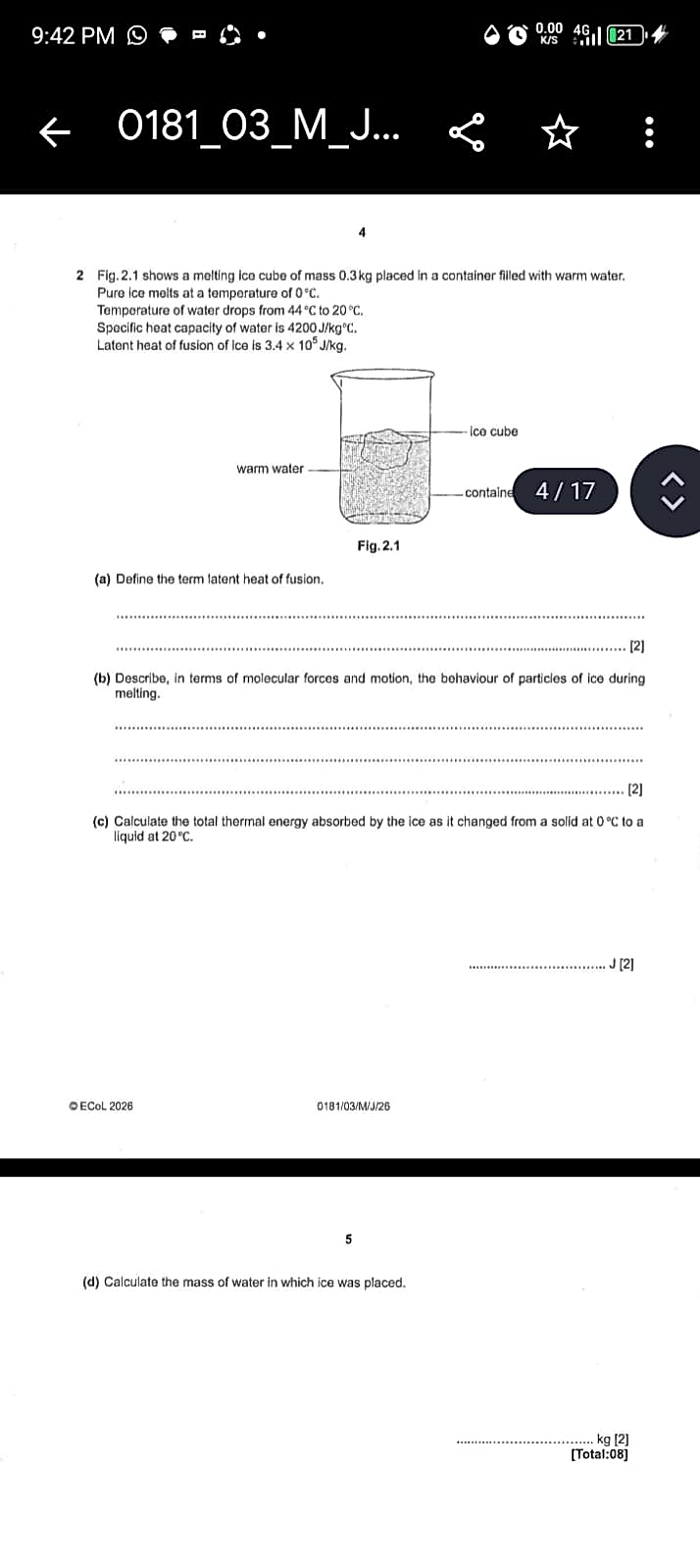
Fig. 2.1 shows a melting ice cube of mass 0.3 kg placed in a container filled with warm water. Pure ice melts at a targe…
View Solution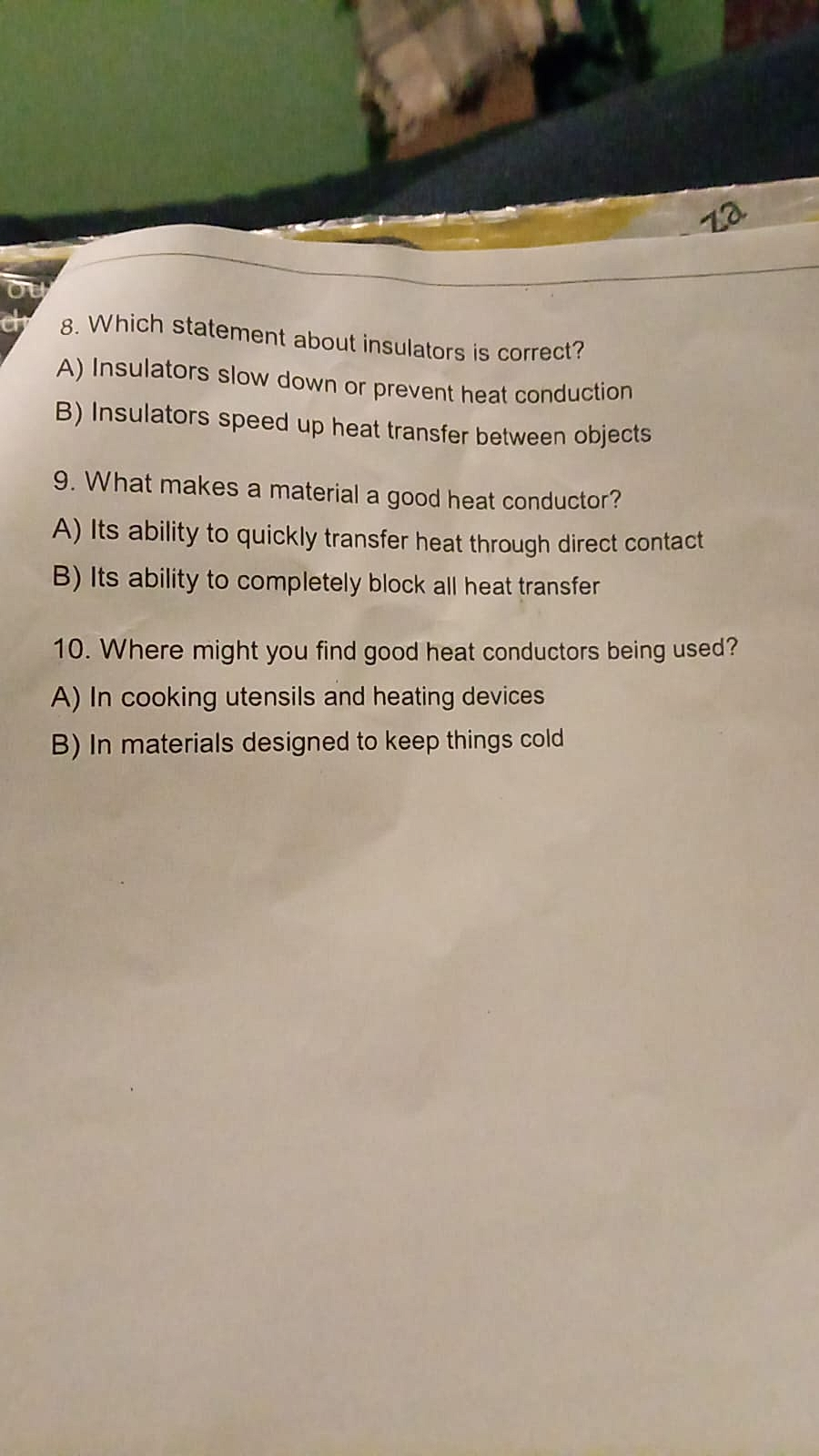
Which statement about insulators is correct? A) Insulators slow down or prevent heat conduction B) Insulators speed up h…
View Solution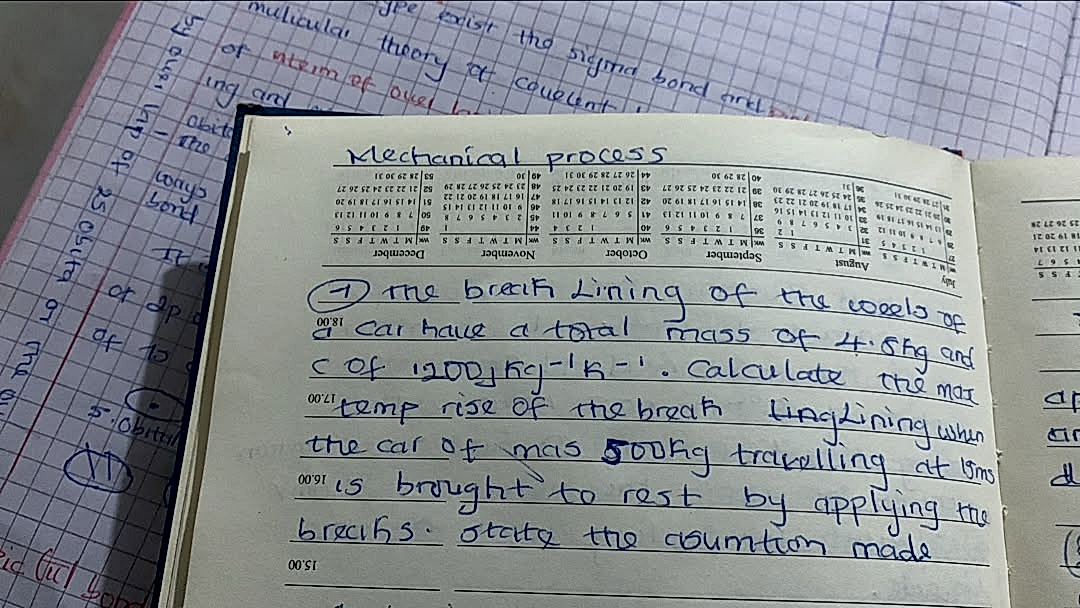
The brake lining of the wheels of a car have a total mass of 4.8kg and specific heat capacity of 1200J kg-1 K-1. Calcula…
View Solution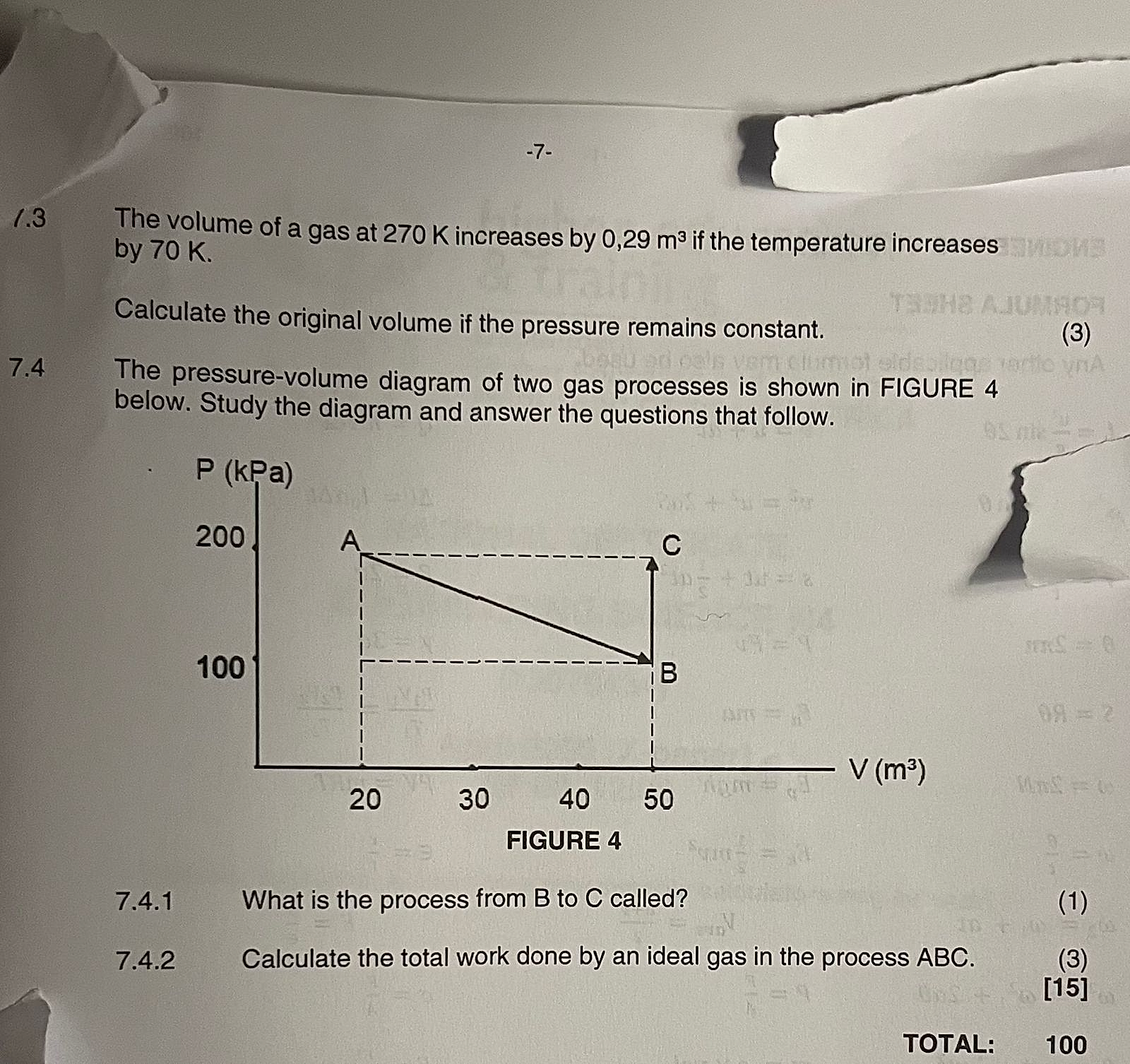
What is the process from B to C called? Calculate the total work done by an ideal gas in the process ABC.
View Solution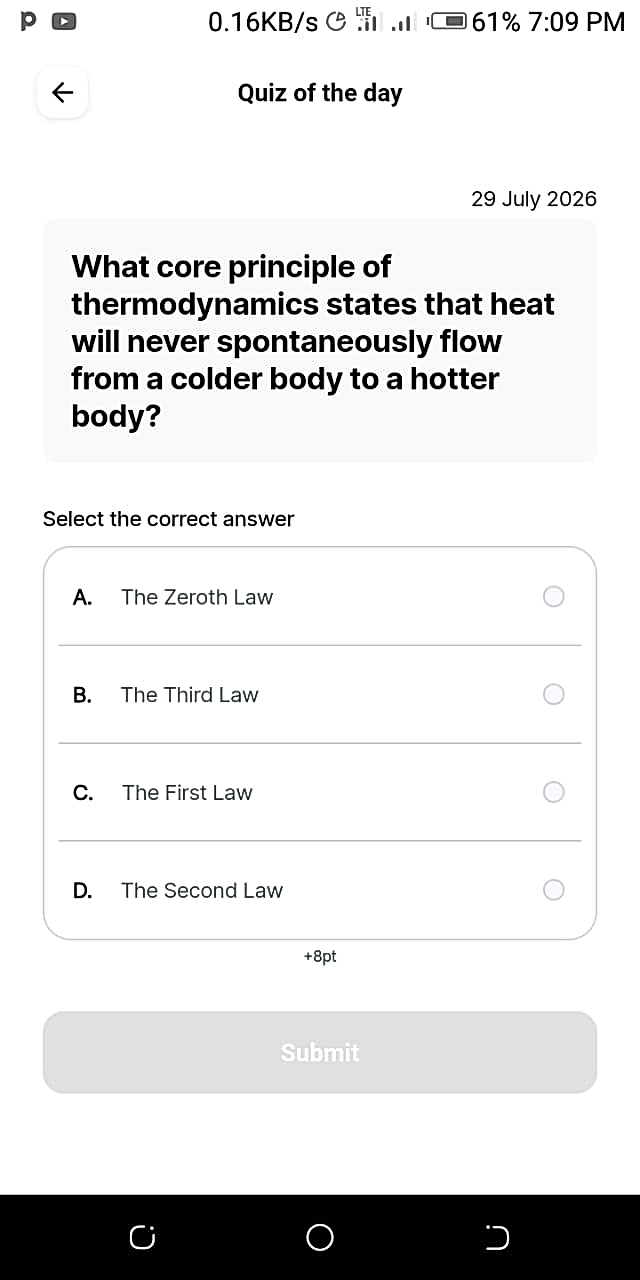
What core principle of thermodynamics states that heat will never spontaneously flow from a colder body to a hotter body…
View Solution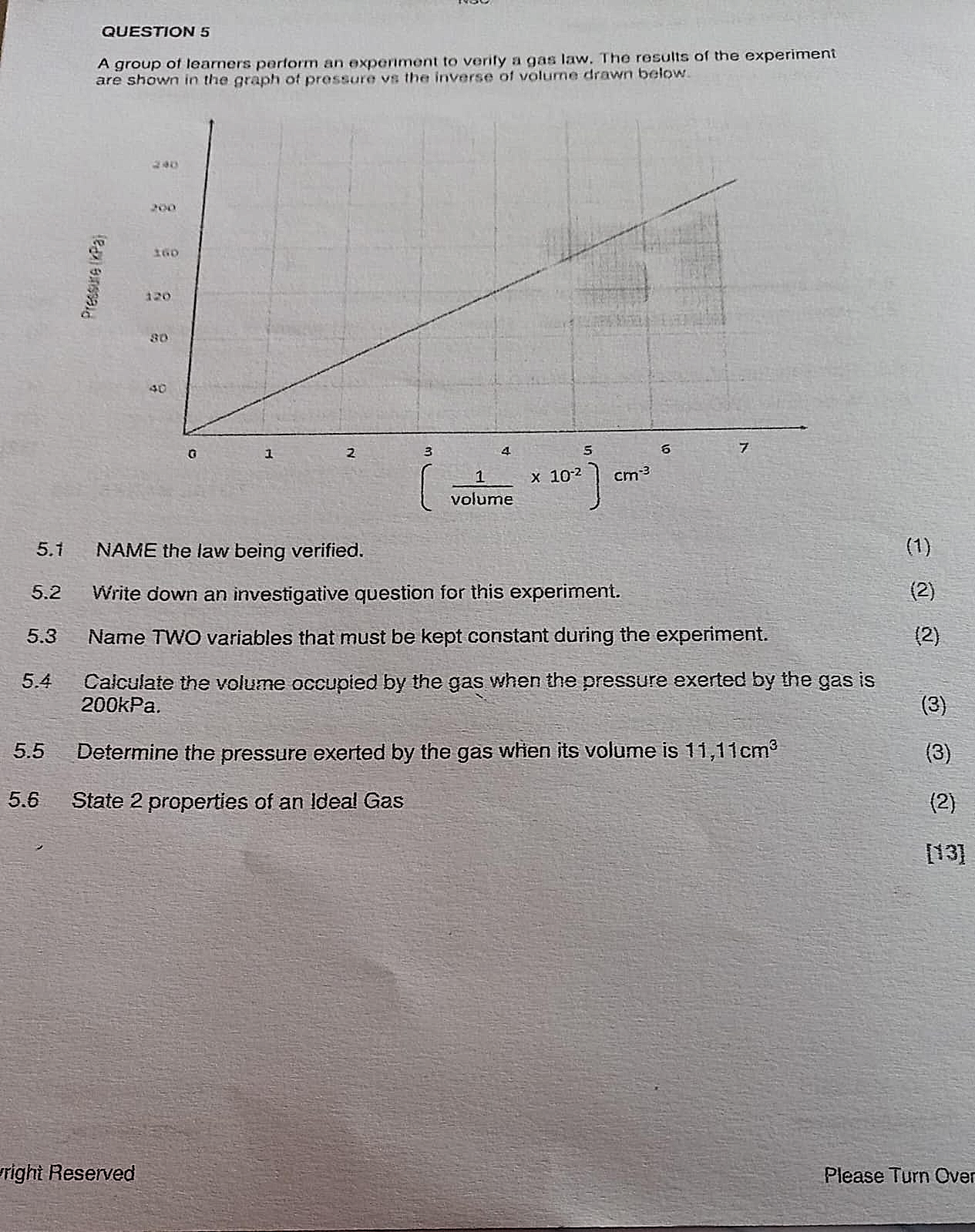
A group of learners perform an experiment to verify a gas law. The results of the experiment are shown in the graph of p…
View Solution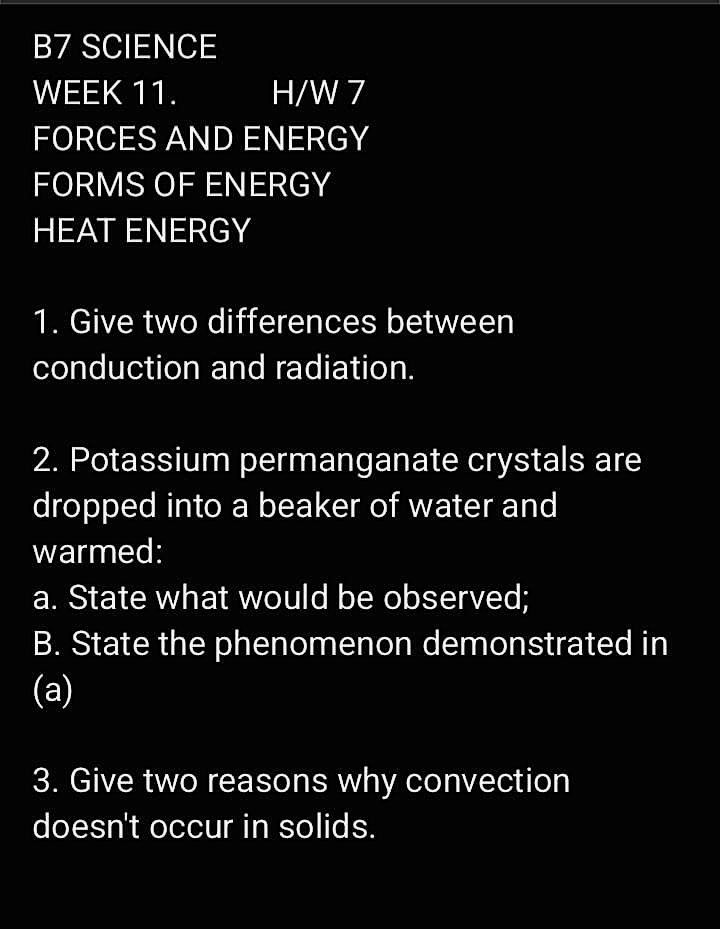
Give two differences between conduction and radiation. 2. Potassium permanganate crystals are dropped into a beaker of w…
View Solution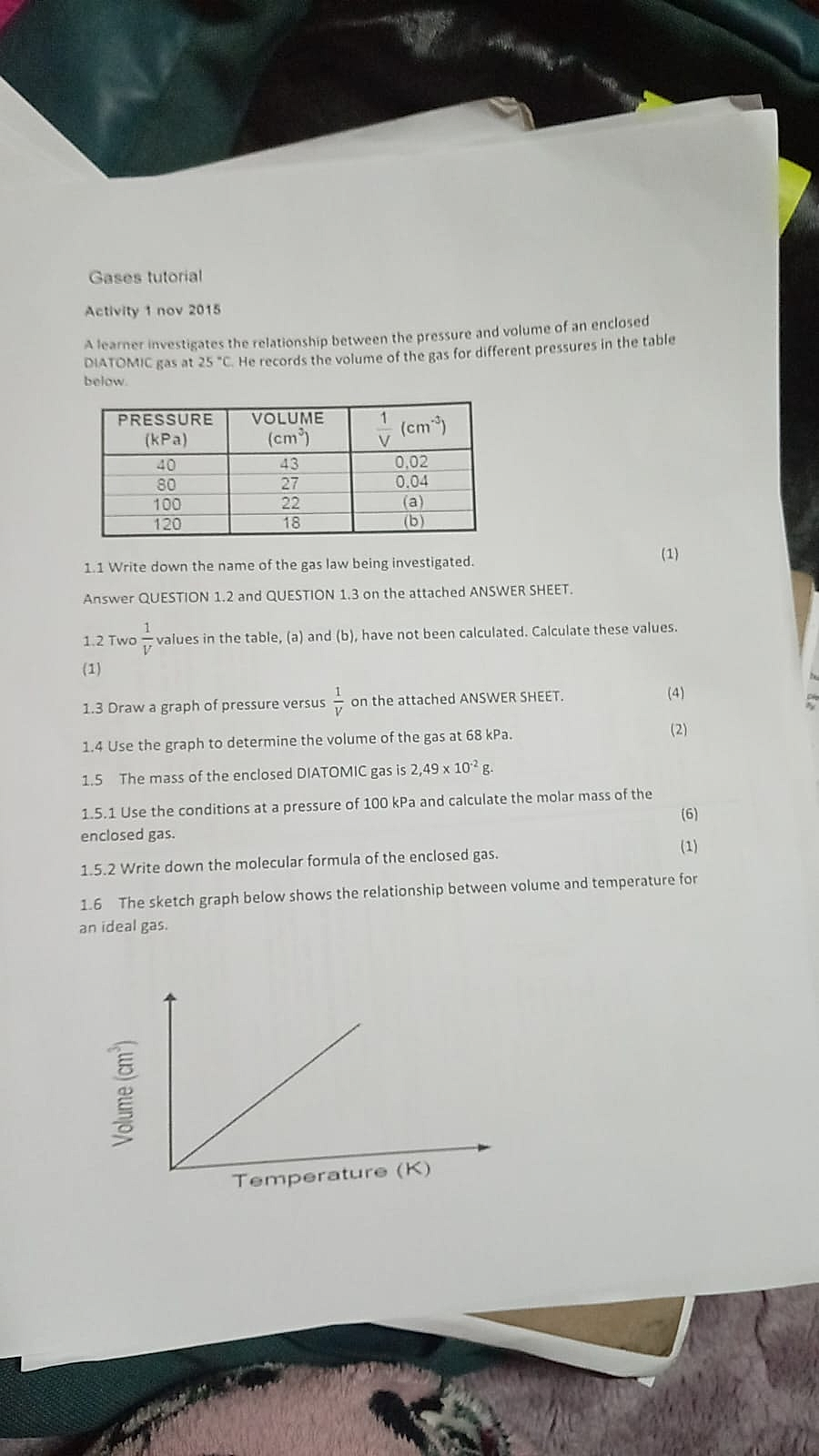
A learner investigates the relationship between the pressure and volume of an enclosed DIATOMIC gas at 25 °C. He records…
View Solution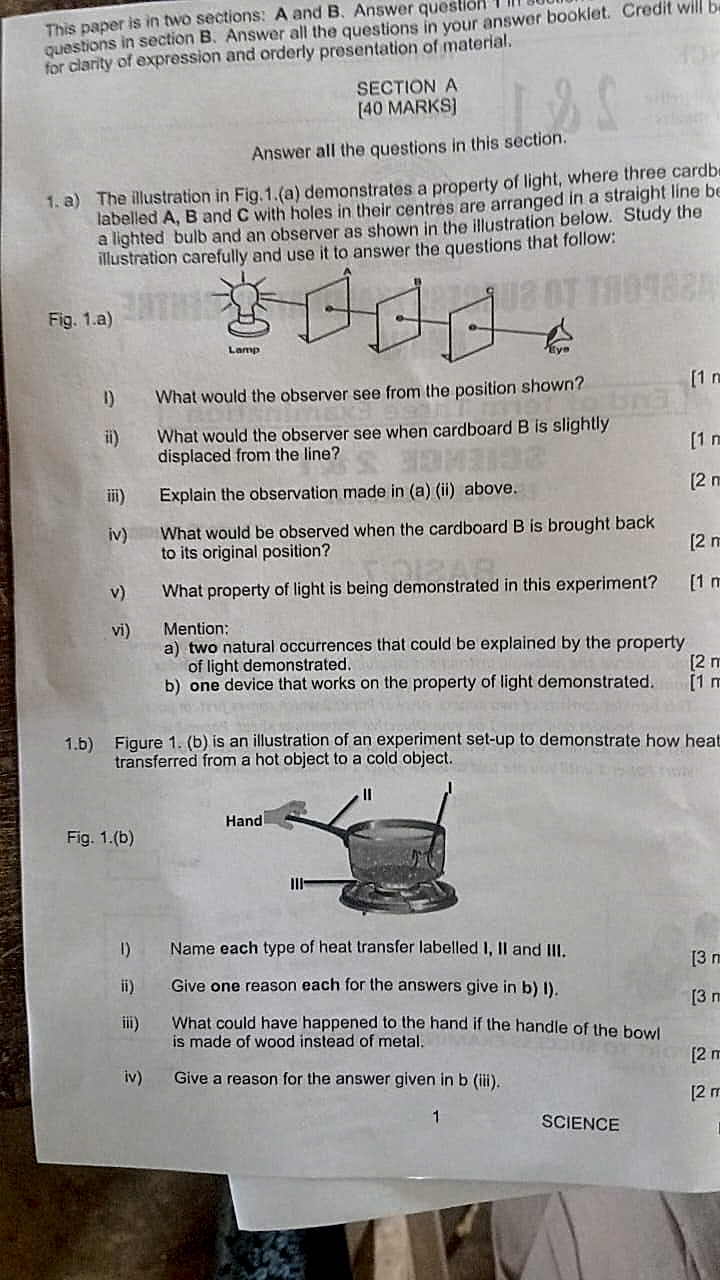
In section A, question 1.a, what property of light is being demonstrated and mention two natural occurrences that could…
View Solution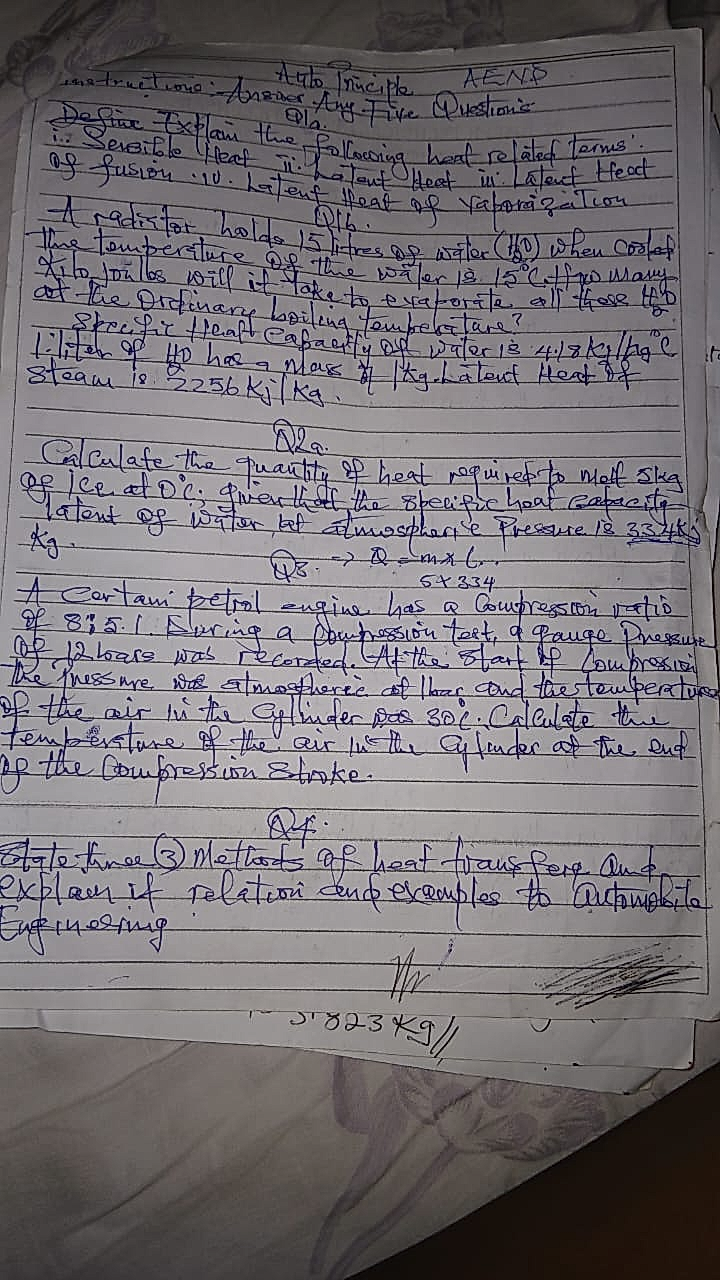
Define and explain the following heat related terms: i. Sensible Heat ii. Latent Heat iii. Latent Heat of Fusion iv. Lat…
View Solution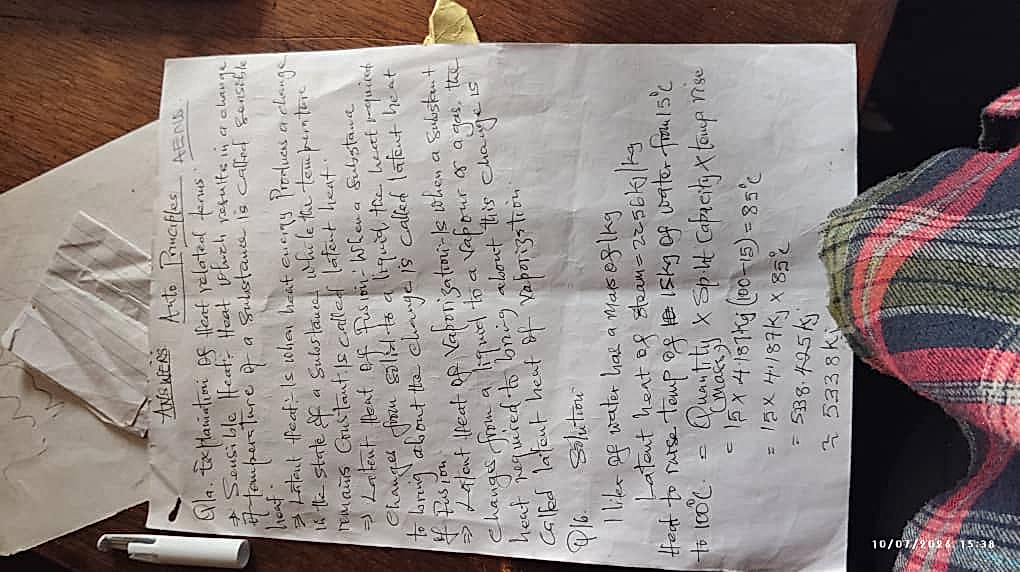
Explain Heat related forms. Sensible Heat, Latent Heat, Latent heat of fusion, Latent heat of Vaporization. Calculate th…
View Solution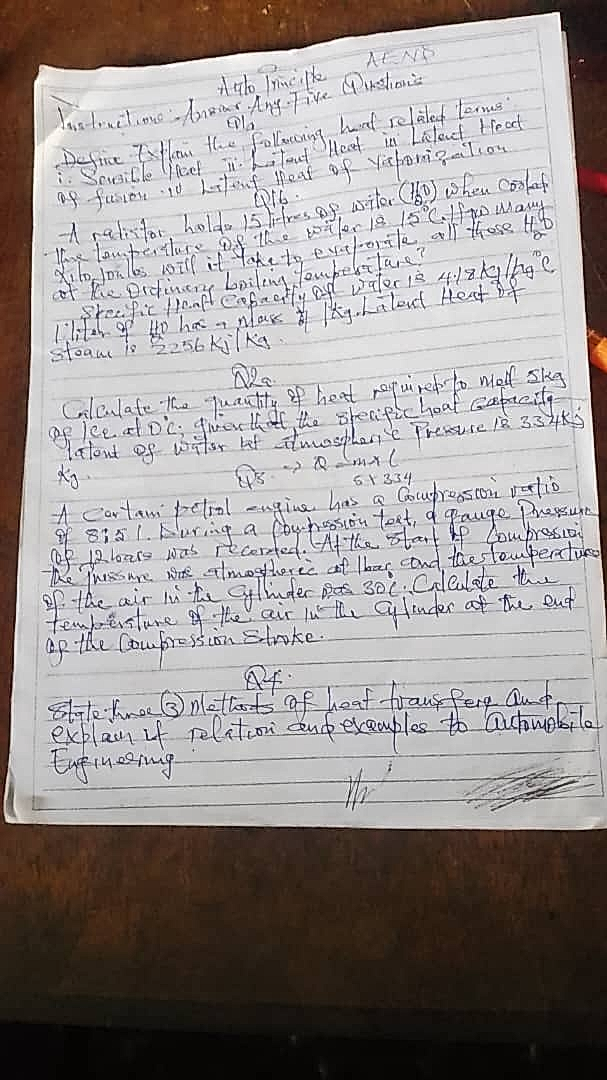
Define the following heat related terms: i. Sensible Heat ii. Latent Heat of Vaporization iii. Latent Heat of Fusion.
View Solution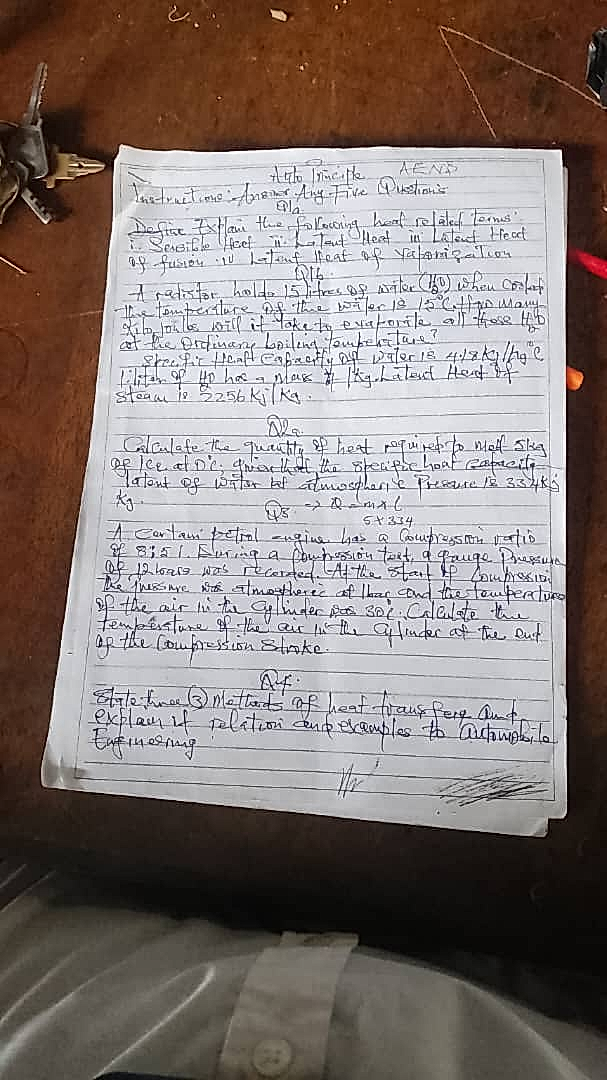
Auto Principle: Answer Any Five Questions. Q1a. Define Explain the following heat related terms: 1. Sensible Heat 11. La…
View Solution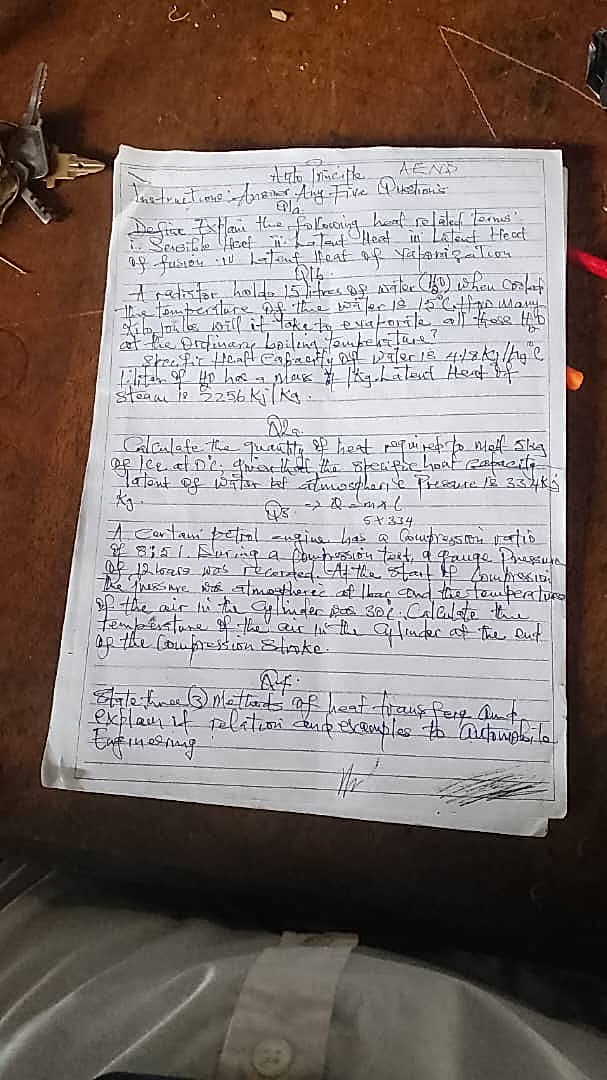
Auto Principle AENG. Instructions: Answer Any Five Questions. Q.1a. Define/Explain the following heat related terms: i.…
View Solution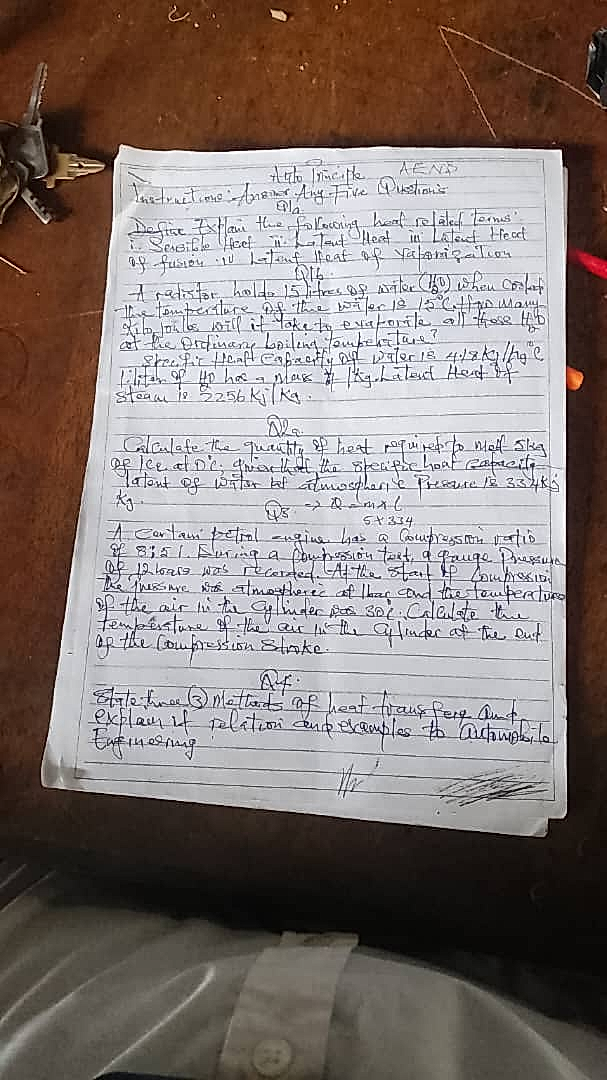
Auto Principle Instructions: Answer Any Five Questions. Q1. Define, Explain the following heat related terms: i. Sensibl…
View Solution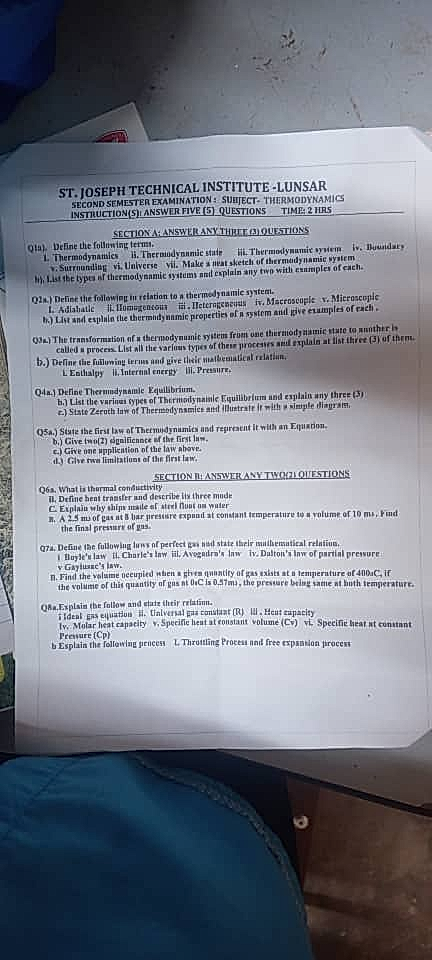
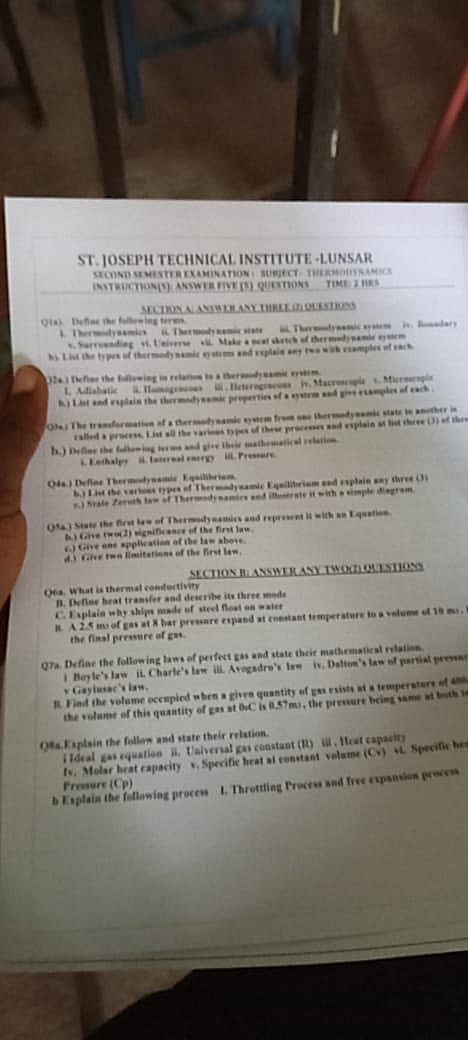
Define the following terms: i. Thermodynamics ii. Thermodynamic state iii. Boundary iv. Surrounding v. Universe. Make a…
View Solution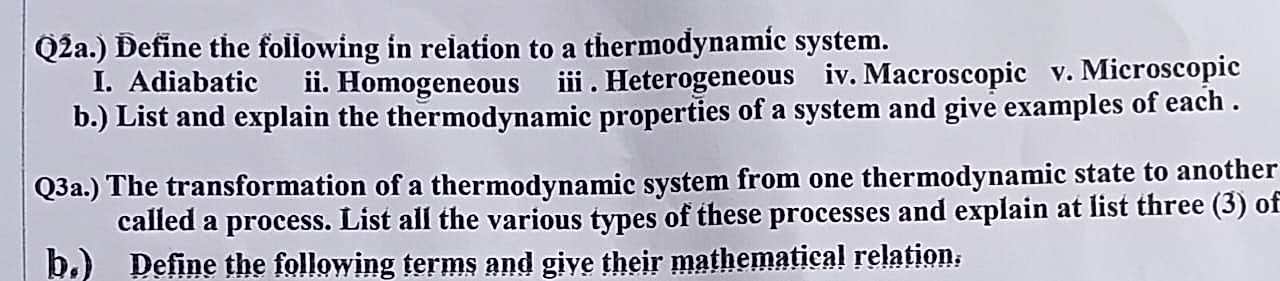
Q2a.) Define the following in relation to a thermodynamic system. I. Adiabatic ii. Homogeneous iii. Heterogeneous iv. Ma…
View Solution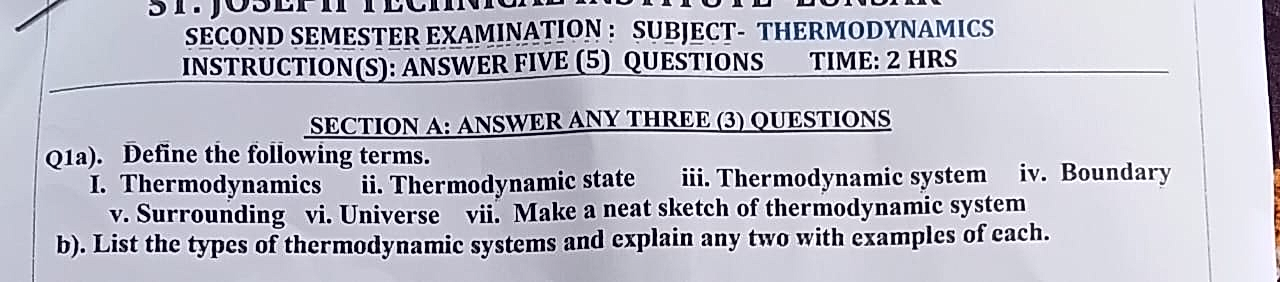
Q1a). Define the following terms. I. Thermodynamics ii. Thermodynamic state iii. Thermodynamic system iv. Boundary v. Su…
View Solution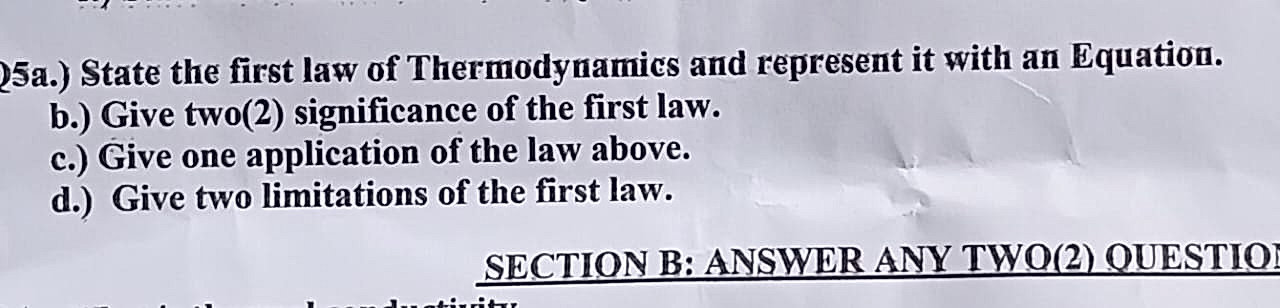
Q5a.) State the first law of Thermodynamics and represent it with an Equation. b.) Give two(2) significance of the first…
View SolutionAbout Thermodynamics
Thermodynamics is the physics of heat: how it moves, what it does to matter, and the limits on turning it into work. School questions concentrate on specific and latent heat calculations, the gas laws, expansion, and the three ways heat travels — with calorimetry experiments as the standard practical setting.
Popular Topics in Thermodynamics
Specific Heat Capacity
The formula Q = mcΔθ, mixtures reaching a common temperature, and calorimetry experiments and their precautions.
Latent Heat
Fusion and vaporisation, why temperature stays constant during a change of state, and heating curves.
Heat Transfer
Conduction, convection and radiation, good and poor conductors, and everyday applications such as the vacuum flask.
Gas Laws
Boyle's, Charles' and the pressure law, the combined and ideal gas equations, and kelvin temperatures.
Kinetic Theory
Molecular explanation of pressure and temperature, Brownian motion, and the assumptions of an ideal gas.
Thermal Expansion
Linear, area and volume expansivity, expansion joints and the bimetallic strip.
Laws of Thermodynamics
The first law as energy conservation, the second law and entropy, and why heat flows one way.
Heat Engines
Work done in a cycle, efficiency, and the limits set by the second law.
How ScanSolve Helps with Thermodynamics
ScanSolve keeps the energy balance explicit: what loses heat, what gains it, and the equation that sets them equal. That is the whole of a mixtures question, and writing it out prevents the usual error of adding temperatures instead of energies.
Gas law answers convert to kelvin first and say so, because degrees Celsius substituted into a gas law is the most common wrong answer in the topic. Where a question describes an experiment, the answer identifies the measurements taken and the main source of error before doing the arithmetic.
Study Tips for Thermodynamics
Convert every temperature to kelvin before using a gas law. Celsius works only for a temperature difference, never for a ratio.
Write "heat lost = heat gained" as your first line in a mixtures question, then fill in each side.
During a change of state, temperature does not rise. Questions test whether you know energy is going into the change instead.
Distinguish specific heat capacity from latent heat in your working — one has a temperature change in it, the other does not.
Get Thermodynamics Help on WhatsApp
Send a photo of your thermodynamics homework and get step-by-step solutions instantly. No app download needed.
Message Us on WhatsAppFrequently Asked Thermodynamics Questions
How can ScanSolve help with Thermodynamics homework?
ScanSolve's AI solves thermodynamics problems step by step. Snap a photo of your homework or type your question to get instant, detailed solutions with clear explanations.
Is Thermodynamics homework help free on ScanSolve?
Yes, ScanSolve offers free thermodynamics homework help with step-by-step solutions. Upgrade to Pro at $89.99/year (about $7.50/month) or $9.99/week for unlimited answers and priority support.
What Thermodynamics topics does ScanSolve cover?
ScanSolve covers all thermodynamics topics including Specific Heat Capacity, Latent Heat, Heat Transfer, Gas Laws, Kinetic Theory. Upload any thermodynamics problem and get a step-by-step solution.
Can ScanSolve solve thermodynamics problems from a photo?
Yes. Take a photo of your thermodynamics homework and ScanSolve's AI will read the problem, identify the method needed, and provide a complete step-by-step solution.
How accurate are ScanSolve's thermodynamics solutions?
ScanSolve uses advanced AI to deliver accurate, step-by-step thermodynamics solutions. Each answer includes detailed explanations so you can verify the reasoning and learn the method.
More in Science
Explore More Subjects
Have a Thermodynamics question?
Get an instant AI-powered step-by-step solution in seconds.