
Inorganic Chemistry Homework Help
Step-by-step AI solutions. Ask your own question →
Inorganic Chemistry Questions

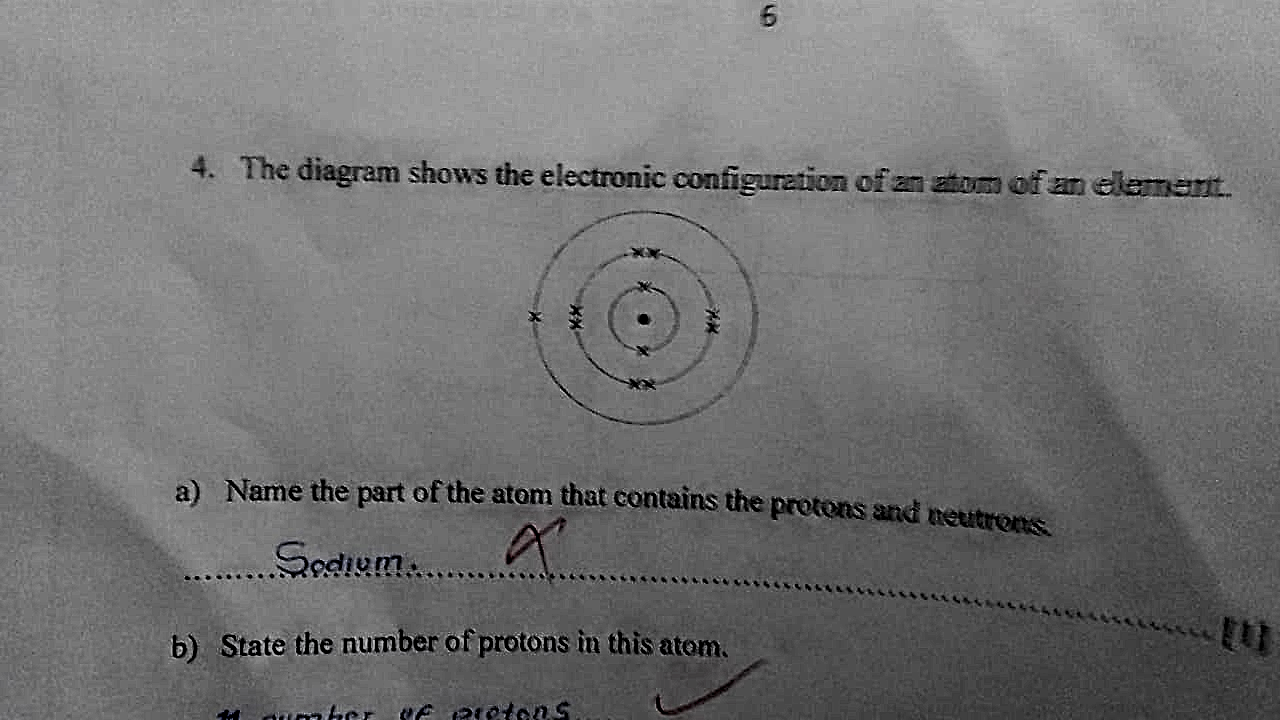
The diagram shows the electronic configuration of an atom of an element. a) Name the part of the atom that contains the…
View SolutionElectron Configuration Practice In the space below, write the unabbreviated electron configurations of the following ele…
View Solution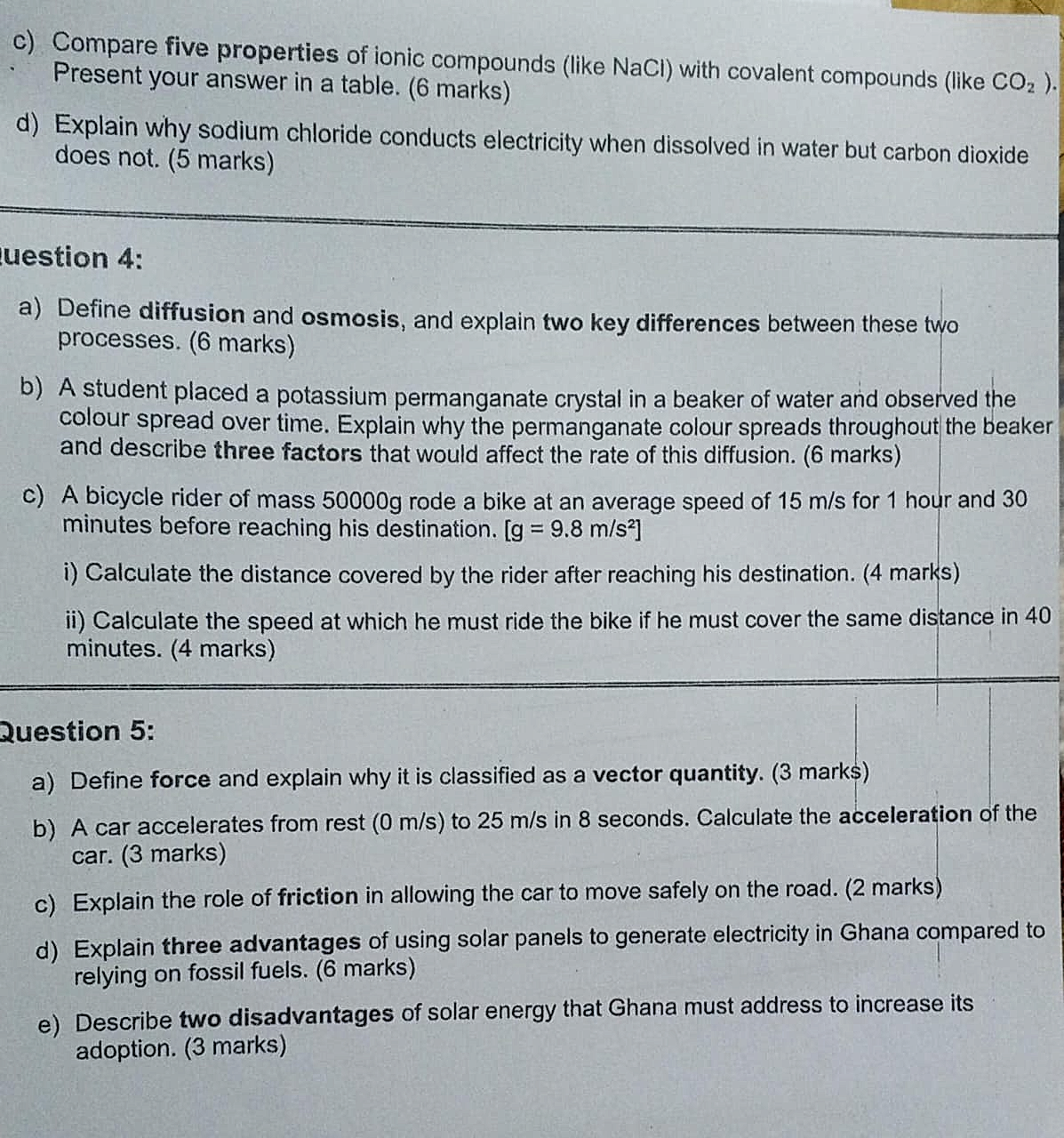
Compare five properties of ionic compounds (like NaCl) with covalent compounds (like CO2). Present your answer in a tabl…
View Solutionhow to make a model of periodic table using locally available materials
View Solutionusing the periodic table to predict the group and period of an element using the electron arrangement
View Solutionvideo of how to make a periodic table using locally available materials
View Solution
Do research on the periodic table, research on the models on periodic table, research on the report writing format of th…
View Solution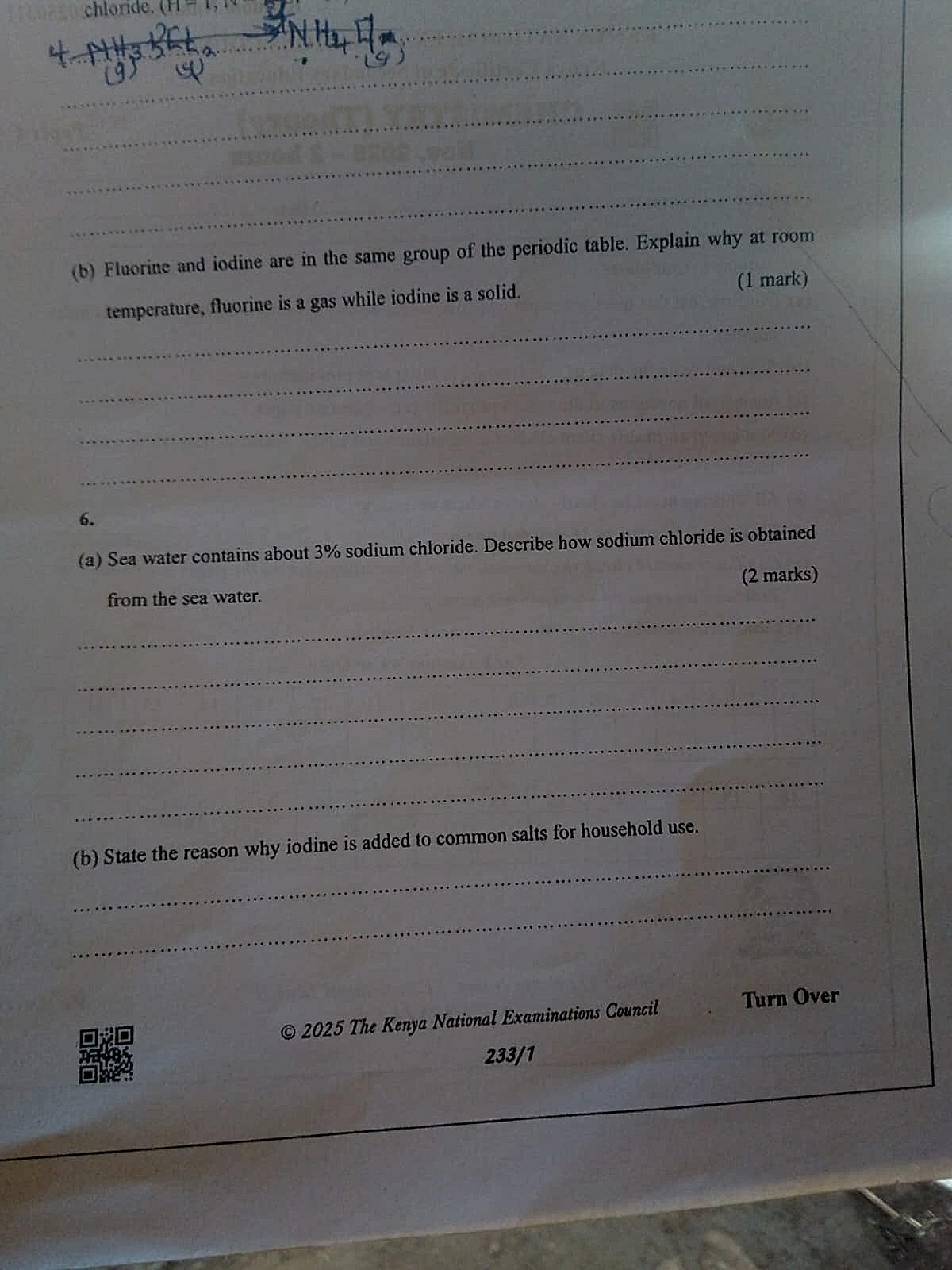
Fluorine and iodine are in the same group of the periodic table. Explain why at room temperature, fluorine is a gas whil…
View Solution
Prepare the periodic table for the first 20 elements using available materials
View Solution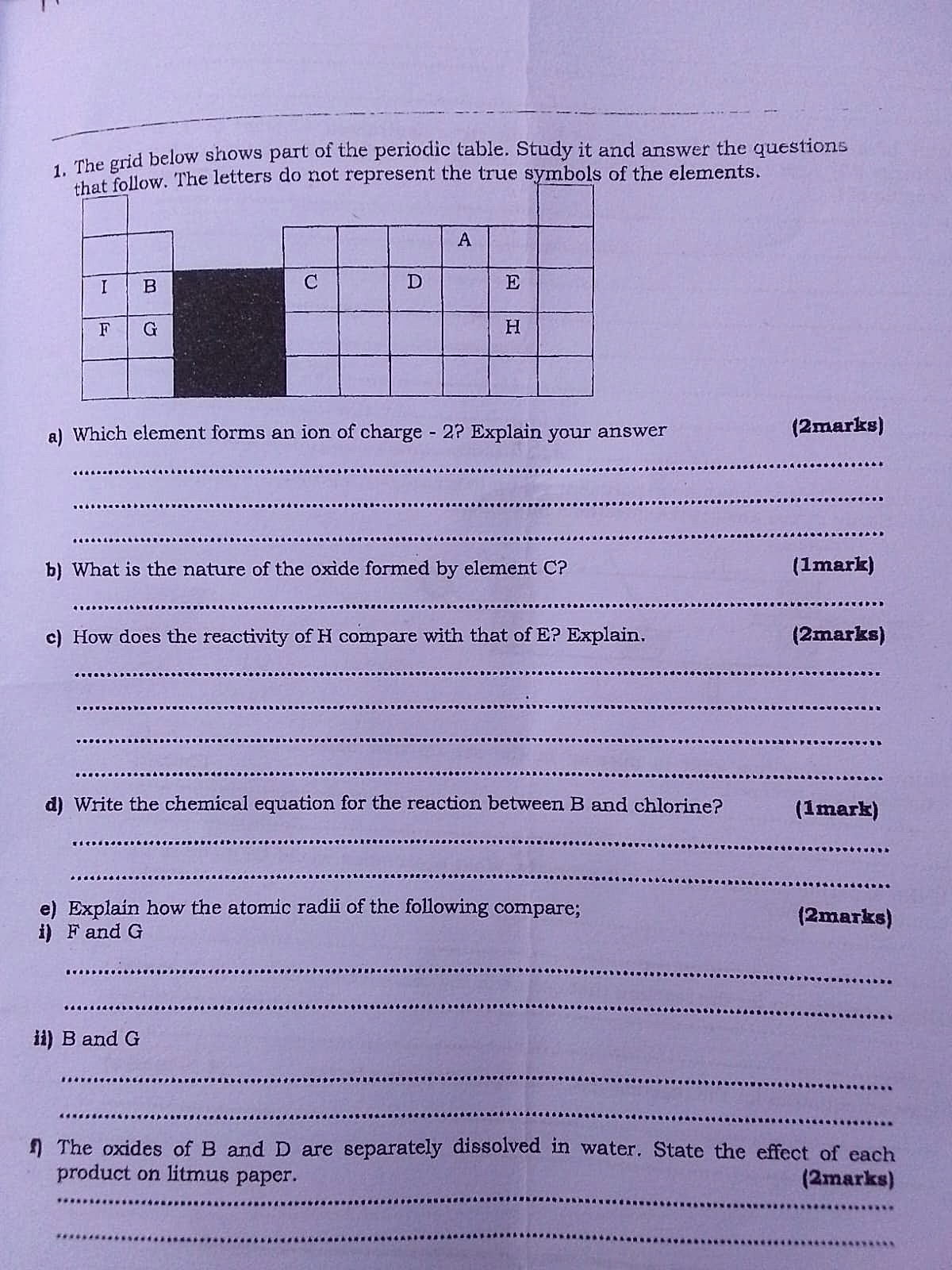
The grid below shows part of the periodic table. Study it and answer the questions that follow. The letters do not repre…
View Solution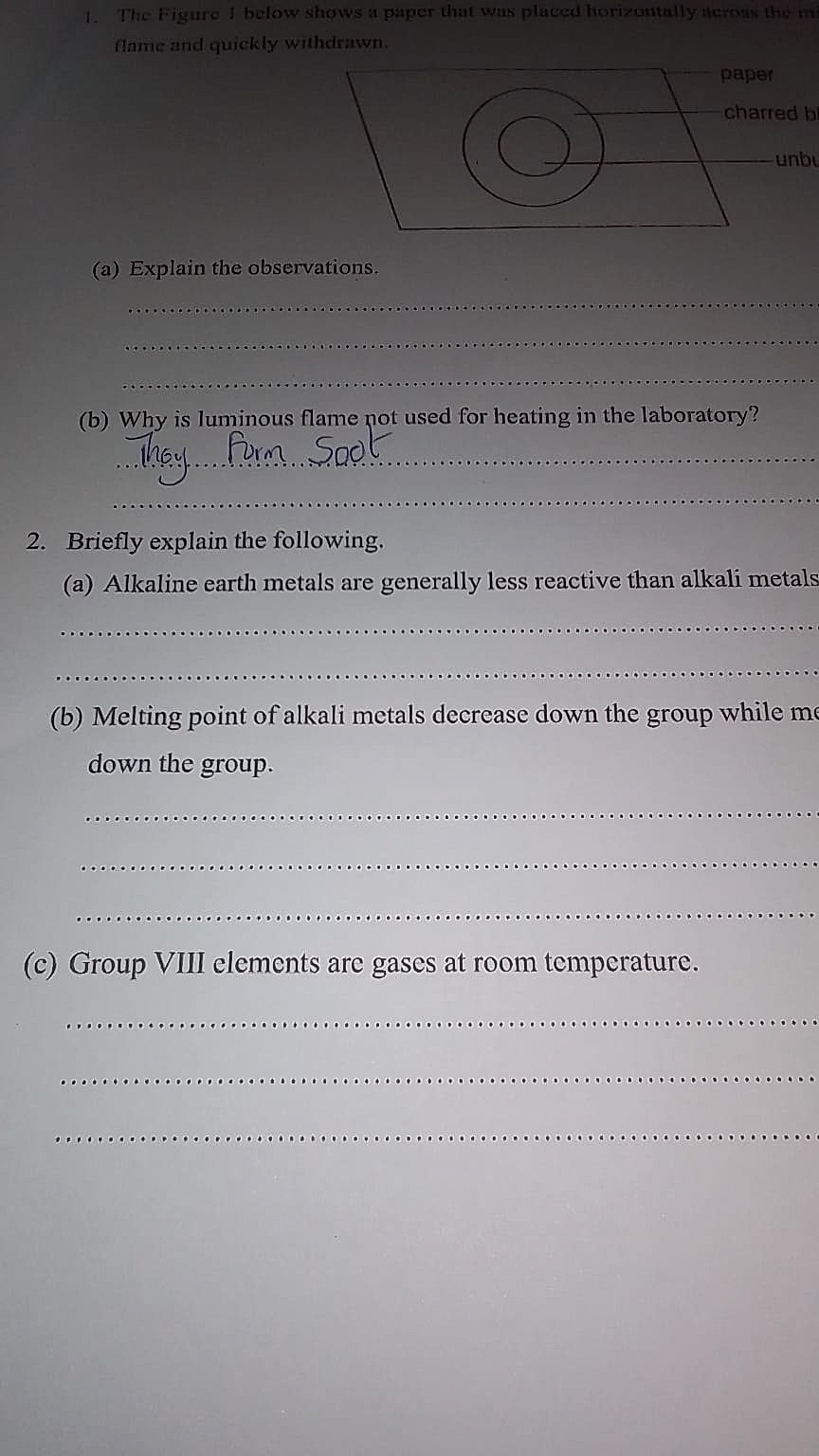
Briefly explain the following. (a) Alkaline earth metals are generally less reactive than alkali metals. (b) Melting poi…
View Solution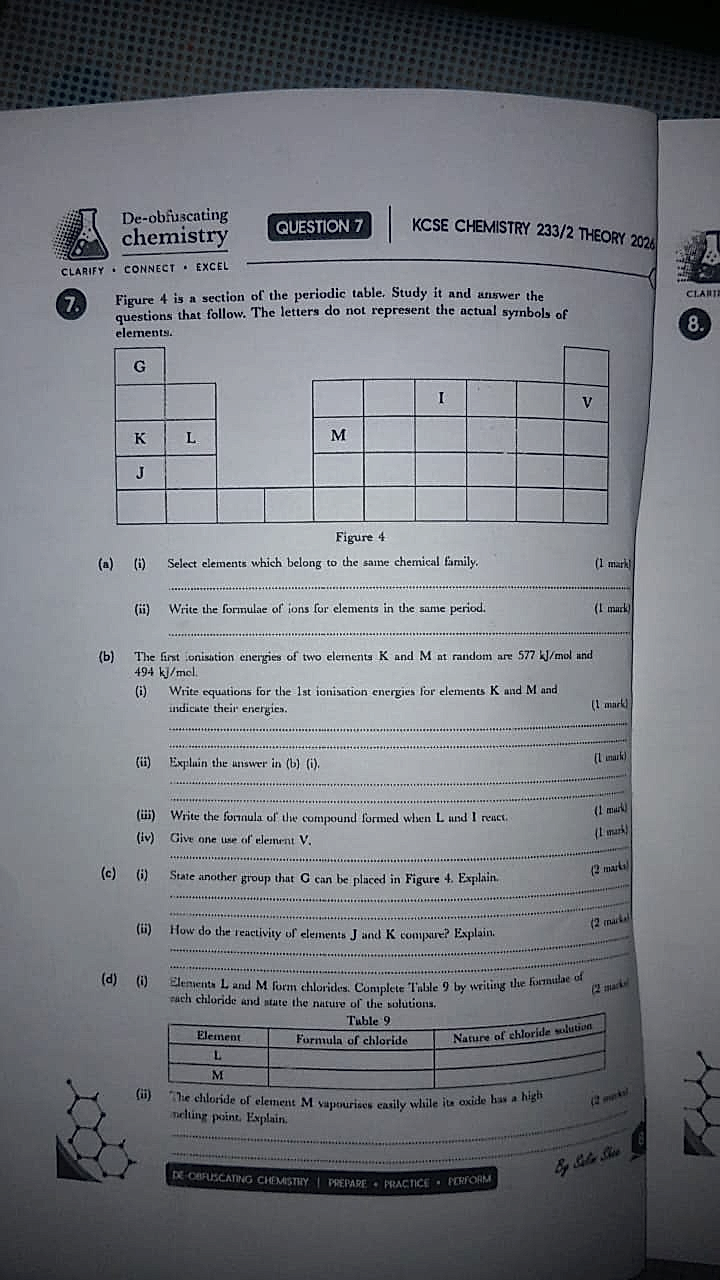
Figure 4 is a section of the periodic table. Study it and answer the questions that follow. The letters do not represent…
View Solution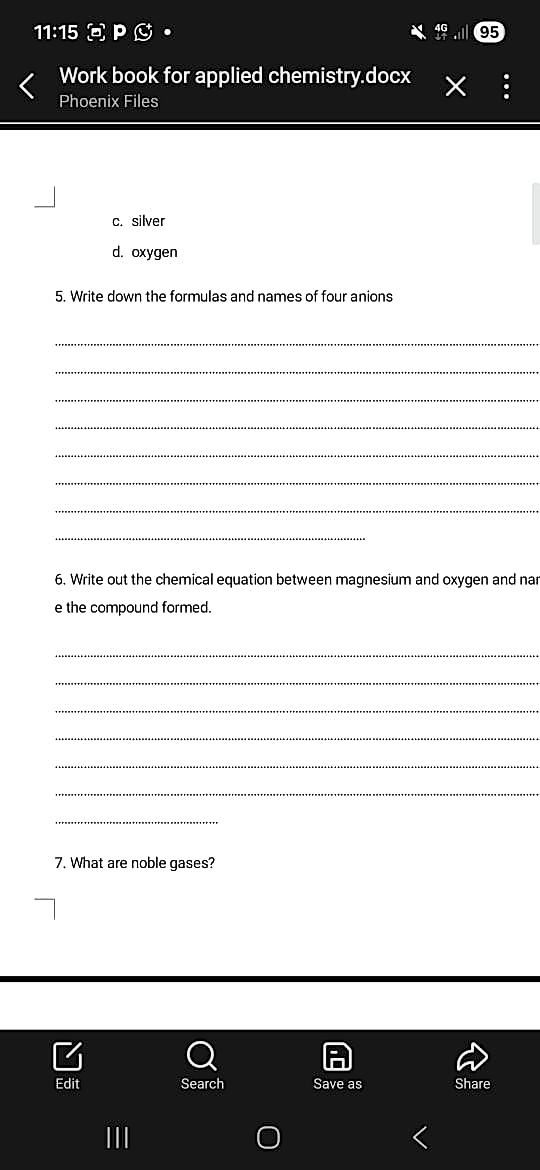
Write down the formulas and names of four anions Write out the chemical equation between magnesium and oxygen and name t…
View SolutionAbout Inorganic Chemistry
Inorganic chemistry is the chemistry of the elements and their compounds other than hydrocarbons: the periodic table and the trends across and down it, bonding, oxidation states, acids, bases and salts. These questions lean heavily on the table itself — position, configuration, group behaviour — and on predicting a property from where an element sits.
Popular Topics in Inorganic Chemistry
Periodic Table
Groups and periods, metals, non-metals and metalloids, and trends in atomic radius, ionisation energy and electronegativity.
Electron Configuration
Writing configurations for atoms and ions, valence electrons, and how configuration explains group behaviour.
Chemical Bonding
Ionic, covalent and metallic bonding, dot-and-cross diagrams, and the properties each bond type produces.
Group Chemistry
Alkali metals, alkaline earth metals, halogens and noble gases: reactivity trends and characteristic reactions.
Oxidation States
Assigning oxidation numbers, identifying oxidising and reducing agents, and balancing redox half-equations.
Acids, Bases & Salts
Strong and weak acids, neutralisation, pH, preparation of salts and titration calculations.
Transition Metals
Variable oxidation states, coloured ions, complex ions and ligands, and catalytic behaviour.
Qualitative Analysis
Tests for cations and anions, precipitate colours, flame tests and identifying an unknown salt.
How ScanSolve Helps with Inorganic Chemistry
ScanSolve reads the question against the periodic table: the element's position, its configuration, and the property that follows. Trend questions are answered with the reason (nuclear charge, shielding, atomic radius) rather than the direction alone, because the reason is the mark.
Equations are balanced with state symbols, redox questions are split into half-equations, and analysis questions follow the observation-inference structure examiners expect: what is seen, then what it means. Titration and mole calculations show the formula, the substitution and the units at each line.
Study Tips for Inorganic Chemistry
Learn the first twenty elements' configurations. A surprising share of inorganic marks come straight from them.
For every trend, memorise the reason, not just the direction. "Increases across a period because nuclear charge increases while shielding stays similar" is the answer.
Include state symbols in equations. They are cheap marks and examiners always want them.
In analysis questions, write the observation and the inference as two separate sentences. They are usually two separate marks.
Get Inorganic Chemistry Help on WhatsApp
Send a photo of your inorganic chemistry homework and get step-by-step solutions instantly. No app download needed.
Message Us on WhatsAppFrequently Asked Inorganic Chemistry Questions
How can ScanSolve help with Inorganic Chemistry homework?
ScanSolve's AI solves inorganic chemistry problems step by step. Snap a photo of your homework or type your question to get instant, detailed solutions with clear explanations.
Is Inorganic Chemistry homework help free on ScanSolve?
Yes, ScanSolve offers free inorganic chemistry homework help with step-by-step solutions. Upgrade to Pro at $89.99/year (about $7.50/month) or $9.99/week for unlimited answers and priority support.
What Inorganic Chemistry topics does ScanSolve cover?
ScanSolve covers all inorganic chemistry topics including Periodic Table, Electron Configuration, Chemical Bonding, Group Chemistry, Oxidation States. Upload any inorganic chemistry problem and get a step-by-step solution.
Can ScanSolve solve inorganic chemistry problems from a photo?
Yes. Take a photo of your inorganic chemistry homework and ScanSolve's AI will read the problem, identify the method needed, and provide a complete step-by-step solution.
How accurate are ScanSolve's inorganic chemistry solutions?
ScanSolve uses advanced AI to deliver accurate, step-by-step inorganic chemistry solutions. Each answer includes detailed explanations so you can verify the reasoning and learn the method.
More in Science
Explore More Subjects
Have an Inorganic Chemistry question?
Get an instant AI-powered step-by-step solution in seconds.