
Astronomy Homework Help
Step-by-step AI solutions. Ask your own question →
Astronomy Questions

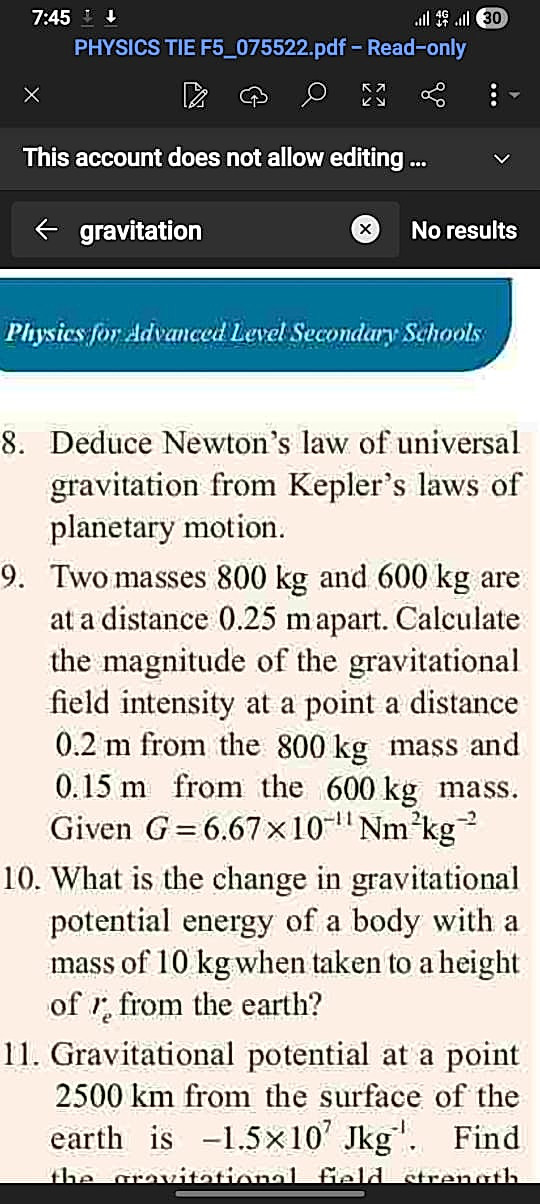
Deduce Newton's law of universal gravitation from Kepler's laws of planetary motion.
View Solution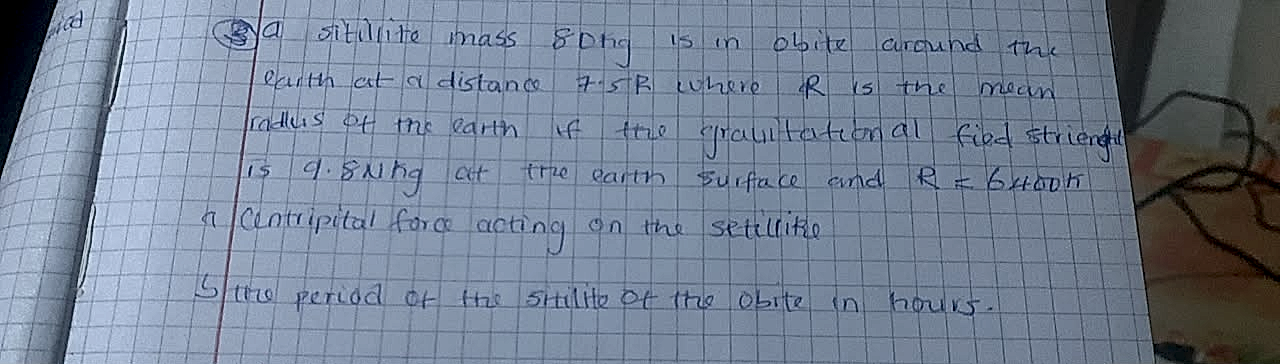
A satellite mass 80kg is in orbit around the earth at a distance 7.5R where R is the mean radius of the earth. If the gr…
View Solution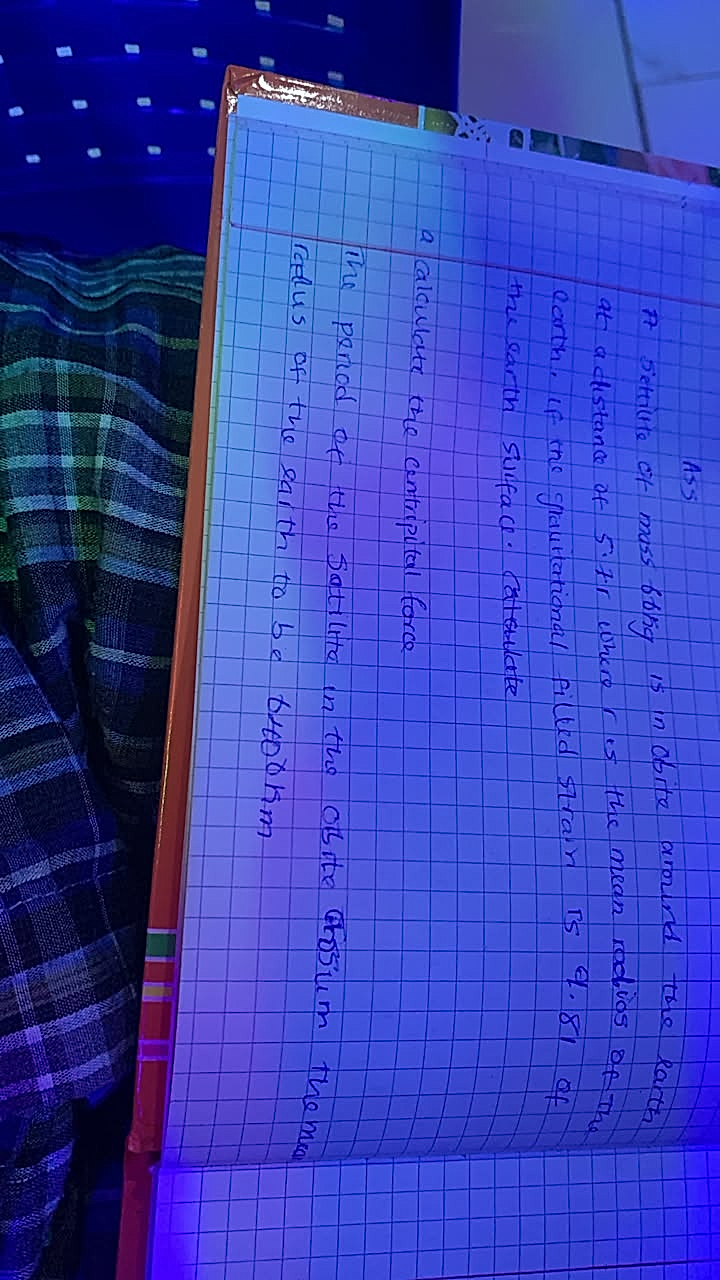
A satellite of mass 60kg is in orbit around the Earth. If the gravitational field strain is 4.81 of the earth surface. C…
View Solution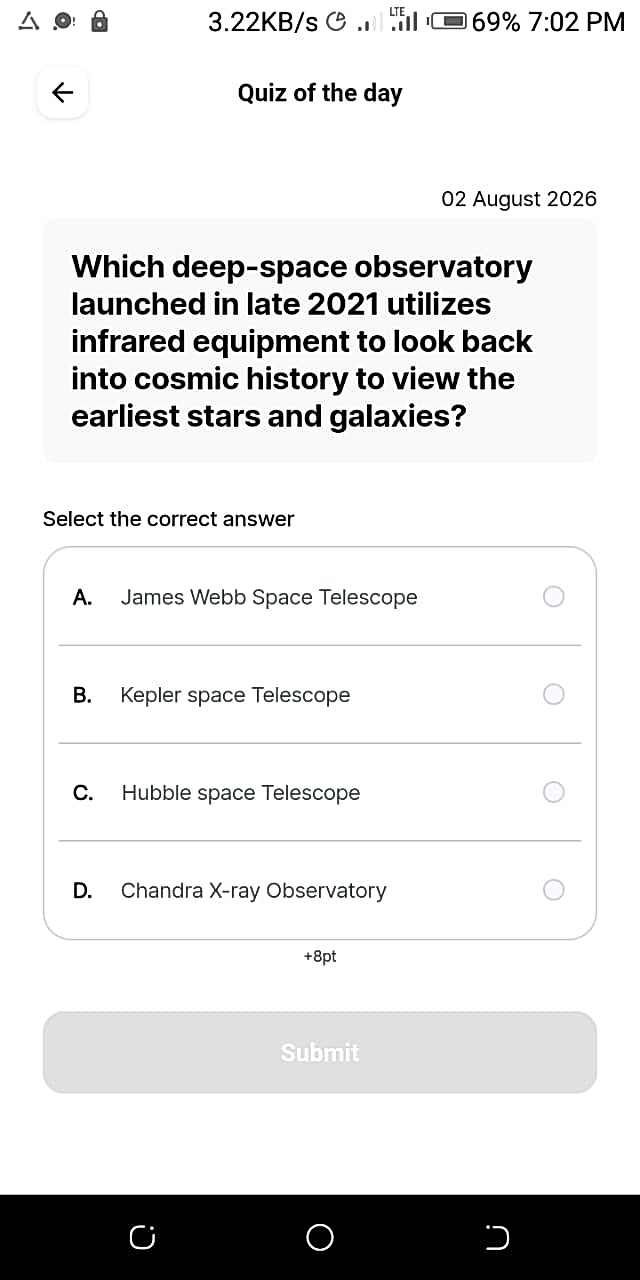
Which deep-space observatory launched in late 2021 utilizes infrared equipment to look back into cosmic history to view…
View Solution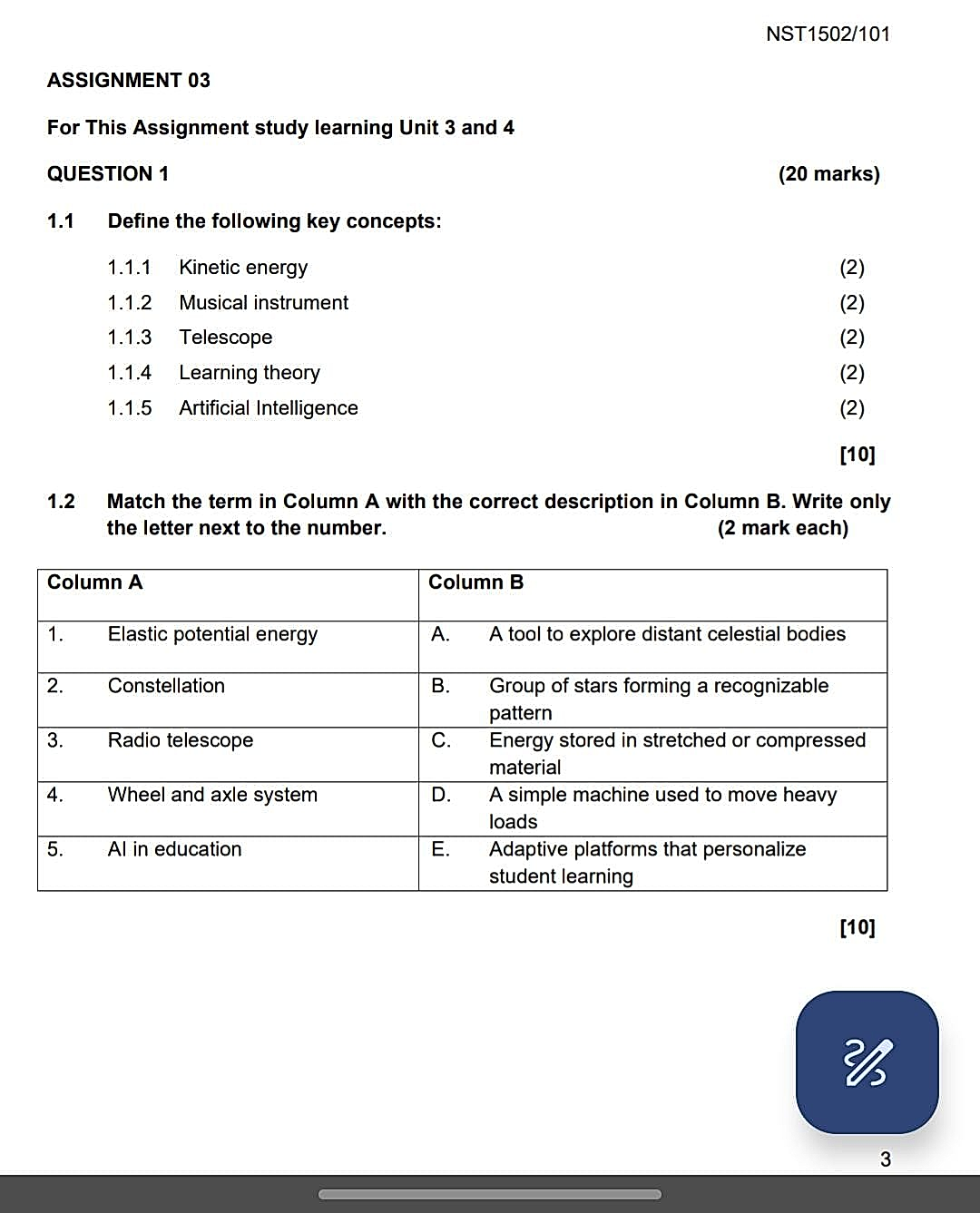
1 Define the following key concepts: 1.1.1 Kinetic energy 1.1.2 Musical instrument 1.1.3 Telescope 1.1.4 Learning theory…
View Solution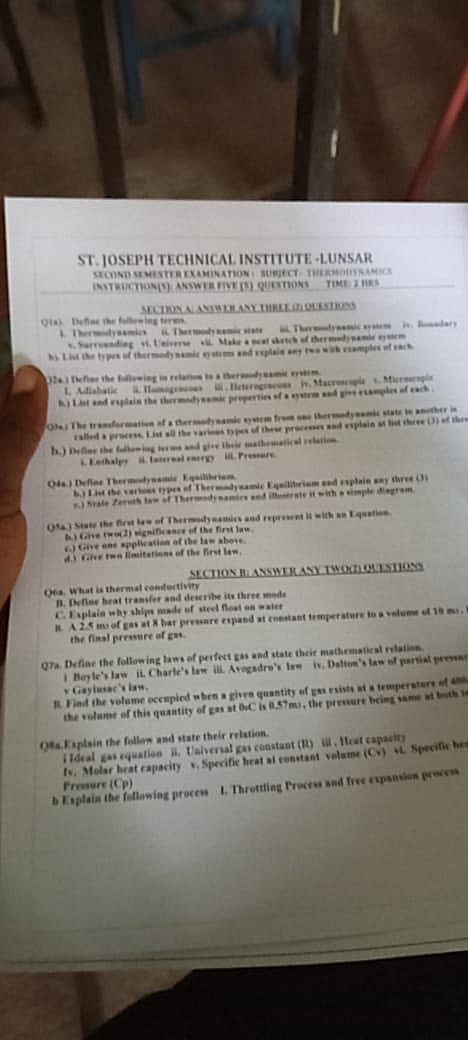
Define the following terms: i. Thermodynamics ii. Thermodynamic state iii. Boundary iv. Surrounding v. Universe. Make a…
View Solution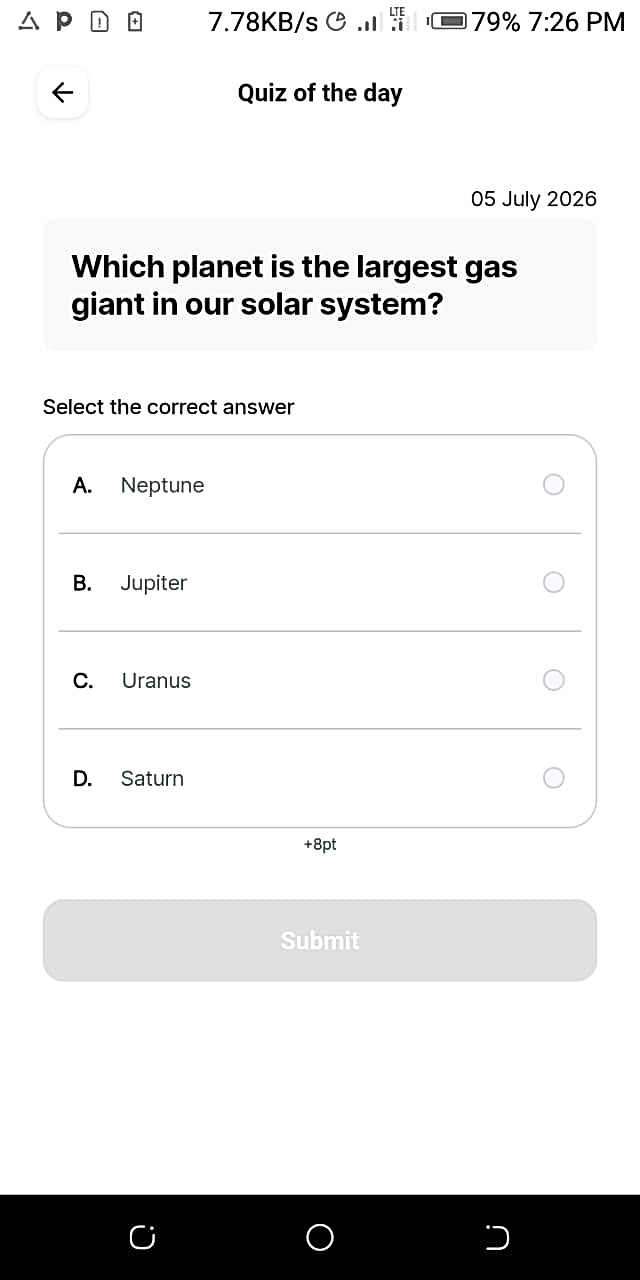
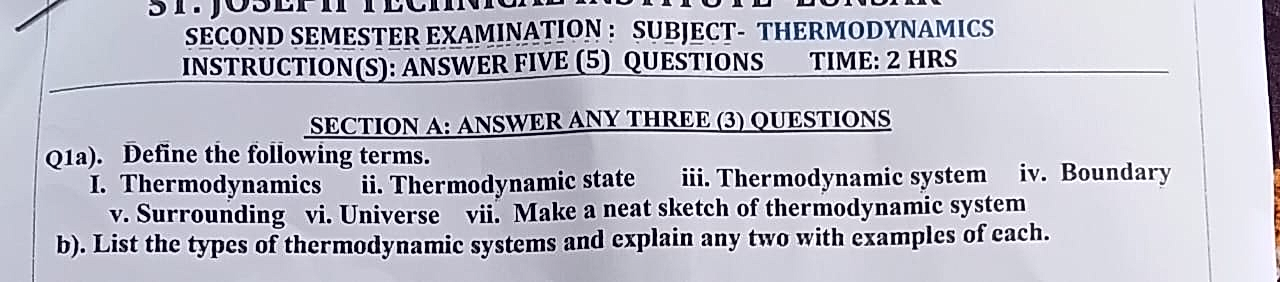
Q1a). Define the following terms. I. Thermodynamics ii. Thermodynamic state iii. Thermodynamic system iv. Boundary v. Su…
View Solution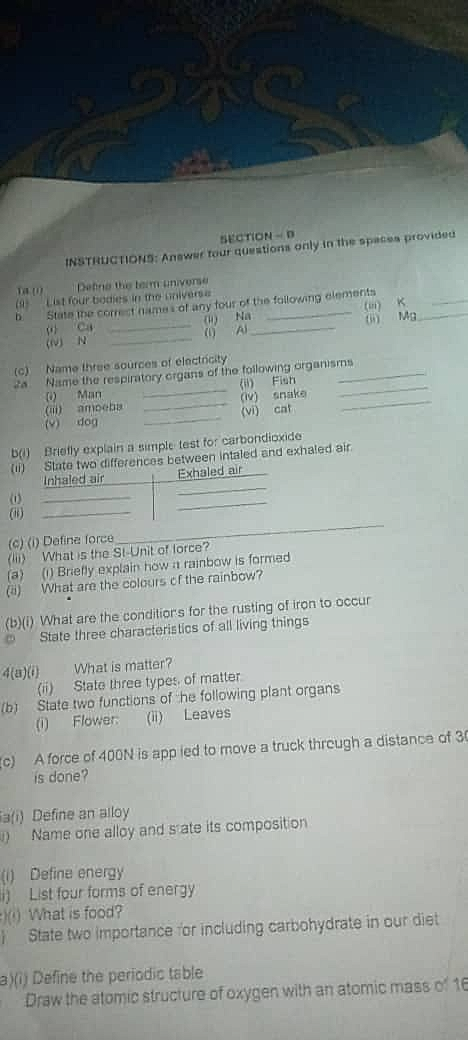
Define the term universe. List four bodies in the universe. State the correct names of any four of the following element…
View Solution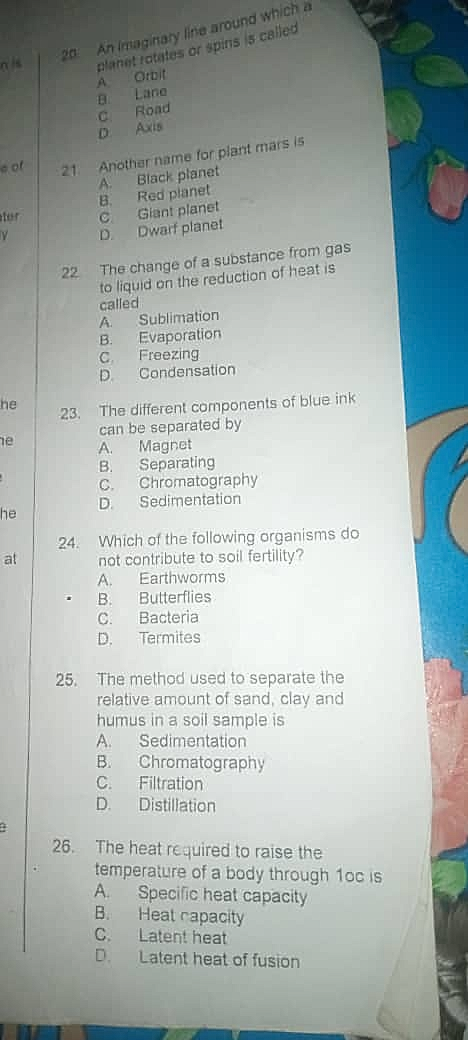
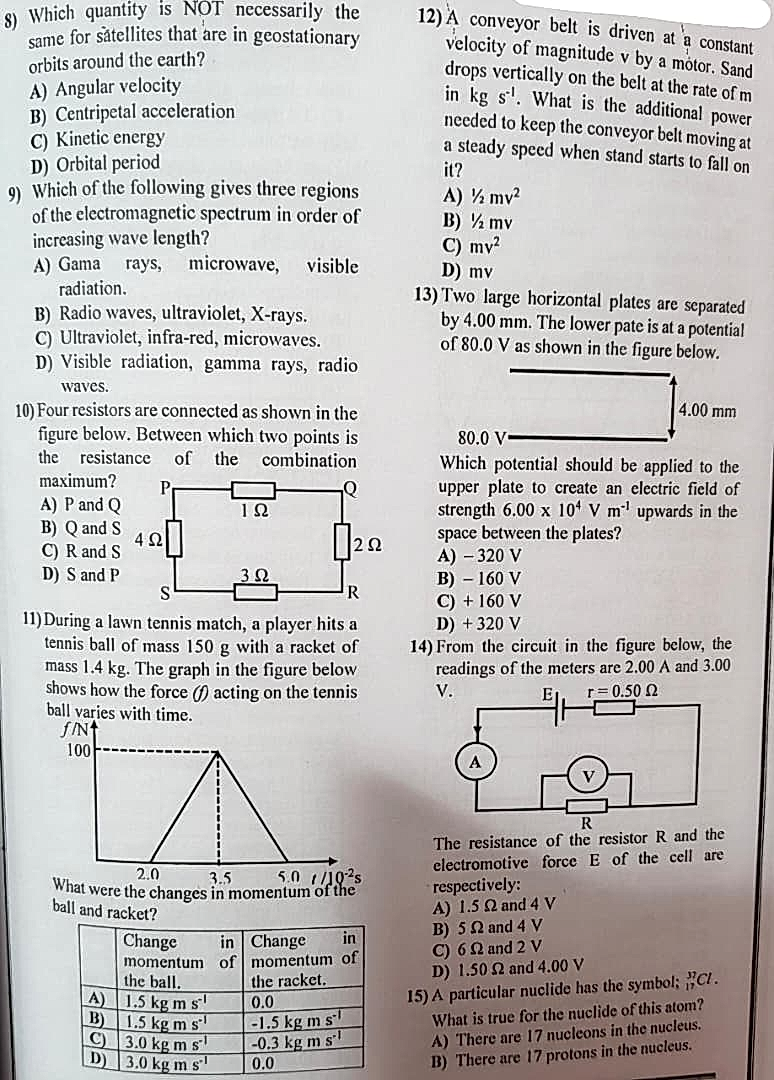
Which quantity is NOT necessarily the same for satellites that are in geostationary orbits around the earth?
View SolutionWhy cloud index model is suitable for optimize the amount of insolation using satellite data
View Solution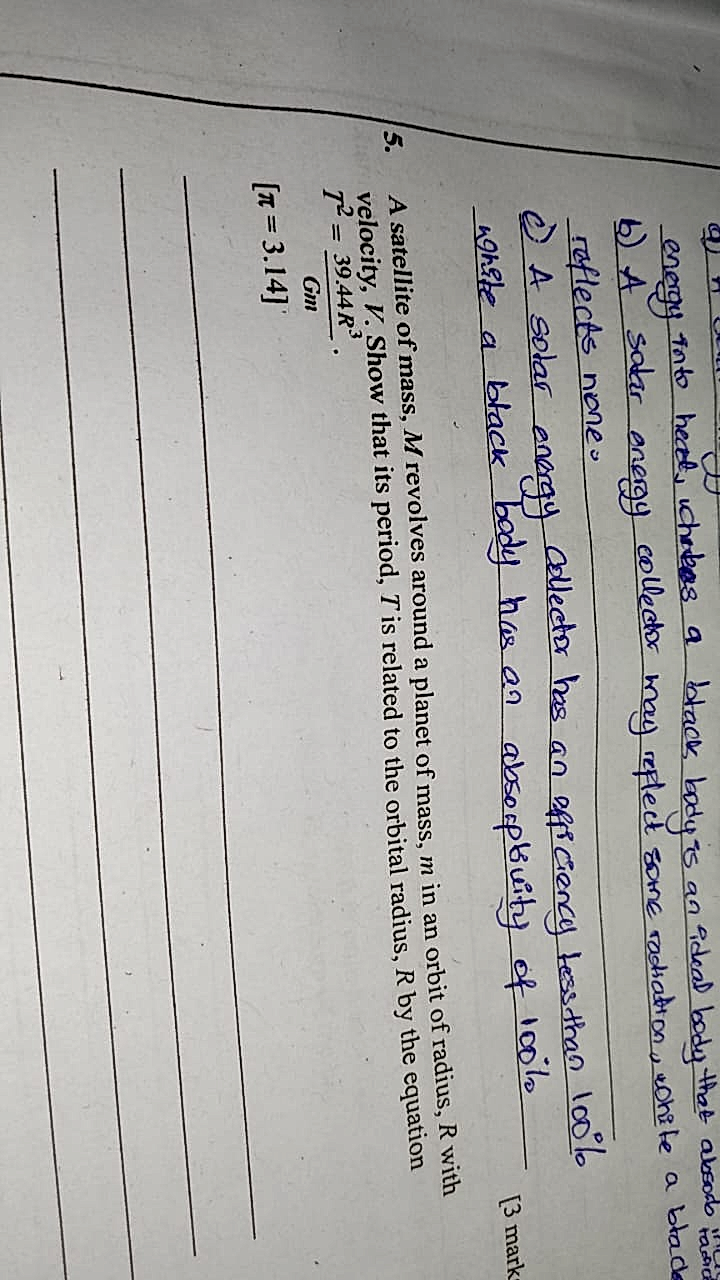
A satellite of mass, M revolves around a planet of mass, m in an orbit of radius, R with velocity, V. Show that its peri…
View Solution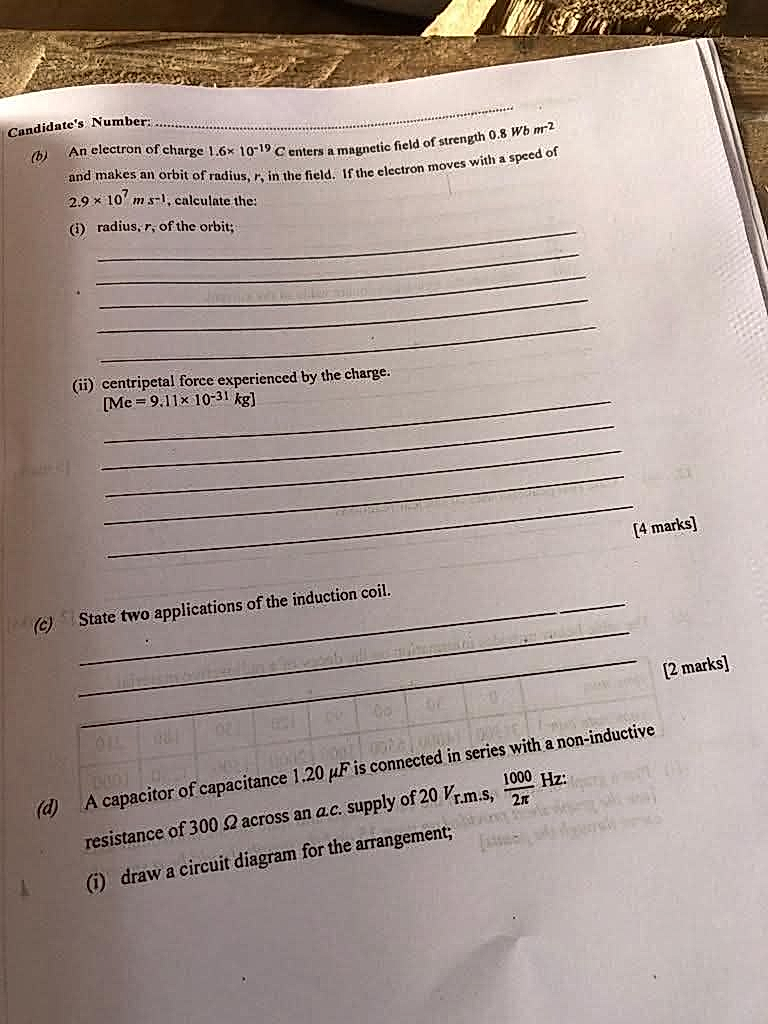
An electron of charge 1.6× 10⁻¹⁹ C enters a magnetic field of strength 0.8 Wb m−2 and makes an orbit of radius, r, in th…
View SolutionDefine the term angular magnification as used in relation to a telescope in normal adjustment
View Solution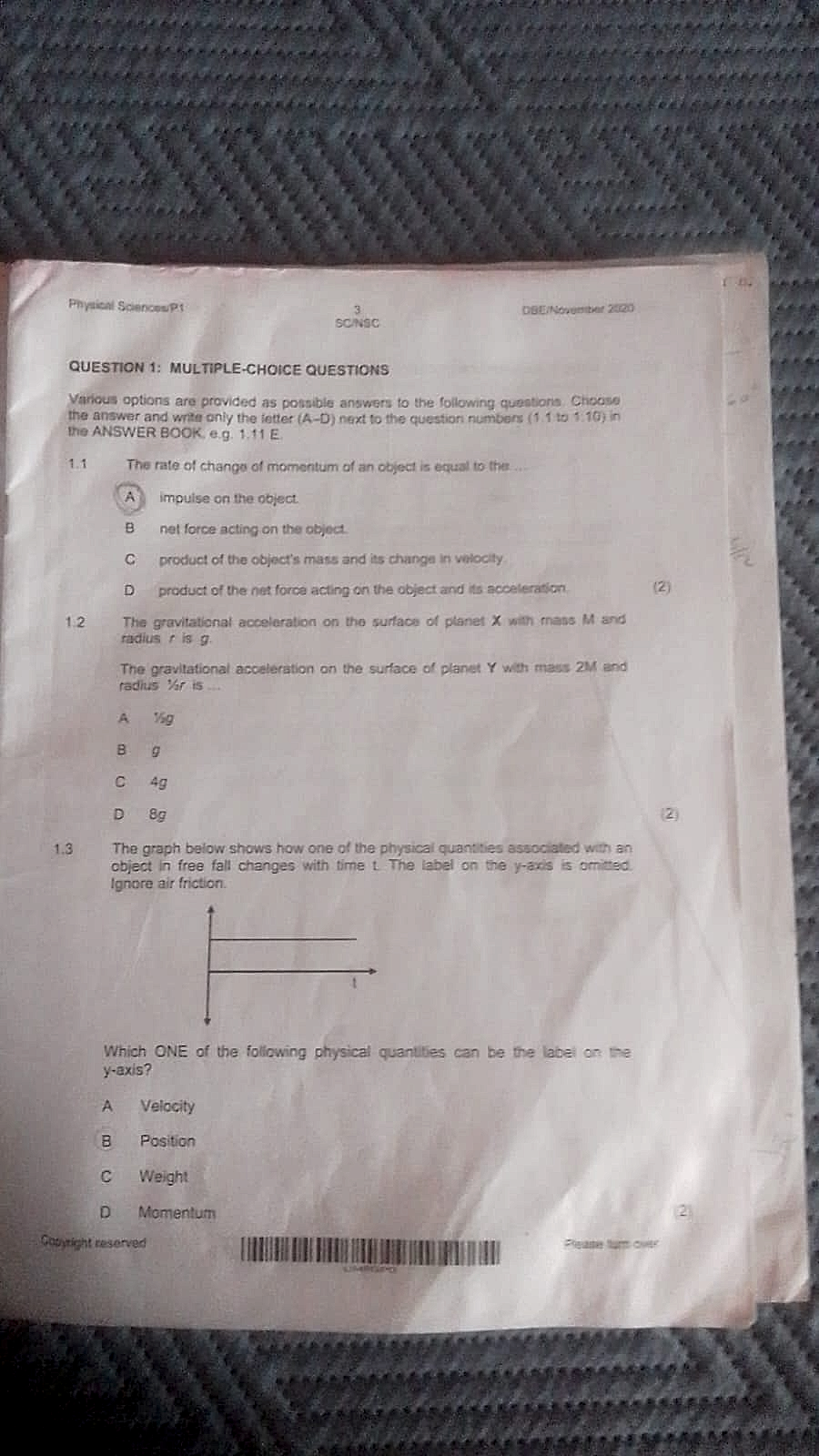
Which statement correctly defines Newton's second law of motion and relates gravitational acceleration on two planets?
View SolutionAbout Astronomy
Astronomy here sits where physics meets the sky: orbits and gravitation, satellites, the solar system, eclipses, stars and the scale of the universe. Many questions are gravitation problems in disguise — a satellite's speed, the period of an orbit, why the Moon does not fall — and reward treating them as mechanics.
Popular Topics in Astronomy
Gravitation
Newton's law of universal gravitation, gravitational field strength, and weight against mass.
Orbits & Satellites
Orbital speed and period, geostationary satellites, escape velocity and energy in orbit.
Kepler's Laws
The three laws of planetary motion and deriving the inverse-square law from them.
The Solar System
Planets and their order, moons, asteroids and comets, and how the system is thought to have formed.
Eclipses & Phases
Solar and lunar eclipses, umbra and penumbra, the phases of the Moon and tides.
Stars & The Universe
Stellar life cycles, light-years and distance, galaxies, the big bang and the evidence for expansion.
How ScanSolve Helps with Astronomy
ScanSolve treats an orbit question as a mechanics question: the gravitational force supplies the centripetal force, and the equation says so before any number appears. Units and powers of ten are carried explicitly, since astronomy arithmetic lives at 10^24 kg and 10^8 m.
Descriptive questions — eclipses, phases, stellar life cycles — are answered as sequences with the geometry stated, and where a diagram would settle it, the answer describes exactly what to draw.
Study Tips for Astronomy
Write "gravitational force = centripetal force" as your first line in any orbit question. Nearly all of them start there.
Keep powers of ten in standard form all the way through. Entering 6.4e6 as 6400000 is where these calculations go wrong.
Distinguish mass from weight in your wording. Astronomy questions test the difference more often than any other topic.
For eclipse and phase questions, sketch the Sun, Earth and Moon positions before explaining. The geometry is the answer.
Get Astronomy Help on WhatsApp
Send a photo of your astronomy homework and get step-by-step solutions instantly. No app download needed.
Message Us on WhatsAppFrequently Asked Astronomy Questions
How can ScanSolve help with Astronomy homework?
ScanSolve's AI solves astronomy problems step by step. Snap a photo of your homework or type your question to get instant, detailed solutions with clear explanations.
Is Astronomy homework help free on ScanSolve?
Yes, ScanSolve offers free astronomy homework help with step-by-step solutions. Upgrade to Pro at $89.99/year (about $7.50/month) or $9.99/week for unlimited answers and priority support.
What Astronomy topics does ScanSolve cover?
ScanSolve covers all astronomy topics including Gravitation, Orbits & Satellites, Kepler's Laws, The Solar System, Eclipses & Phases. Upload any astronomy problem and get a step-by-step solution.
Can ScanSolve solve astronomy problems from a photo?
Yes. Take a photo of your astronomy homework and ScanSolve's AI will read the problem, identify the method needed, and provide a complete step-by-step solution.
How accurate are ScanSolve's astronomy solutions?
ScanSolve uses advanced AI to deliver accurate, step-by-step astronomy solutions. Each answer includes detailed explanations so you can verify the reasoning and learn the method.
More in Science
Explore More Subjects
Have an Astronomy question?
Get an instant AI-powered step-by-step solution in seconds.