
Ecology Homework Help
Step-by-step AI solutions. Ask your own question →
Ecology Questions

Species Description (10 Points) Describe your invasive species. Include: What it looks like Whether it is a plant or ani…
View Solution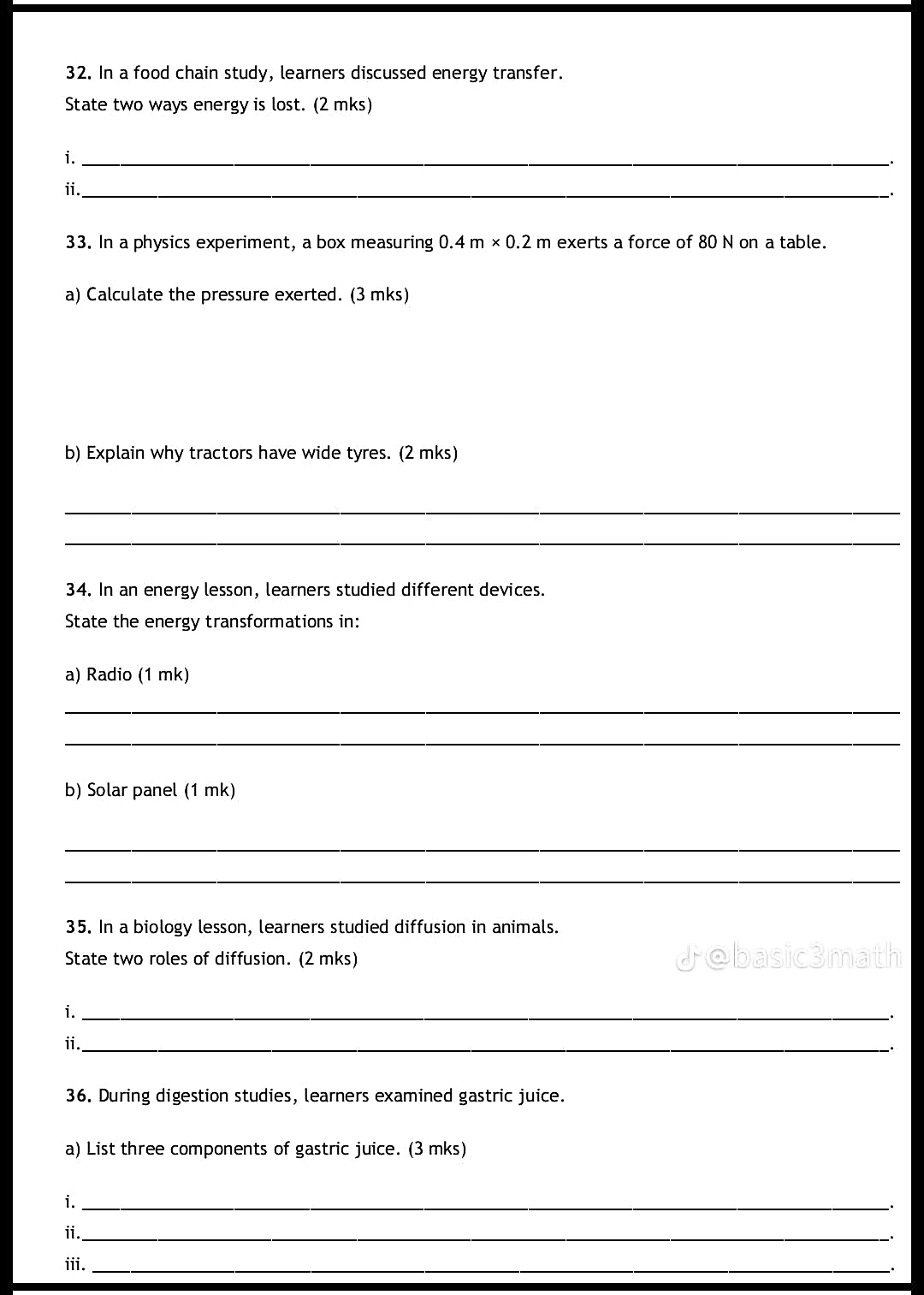
In a food chain study, learners discussed energy transfer. State two ways energy is lost.
View SolutionRead the passage from The Secret Language of Cats by Susanne Schötz. Not all cats communicate happily or frequently with…
View Solution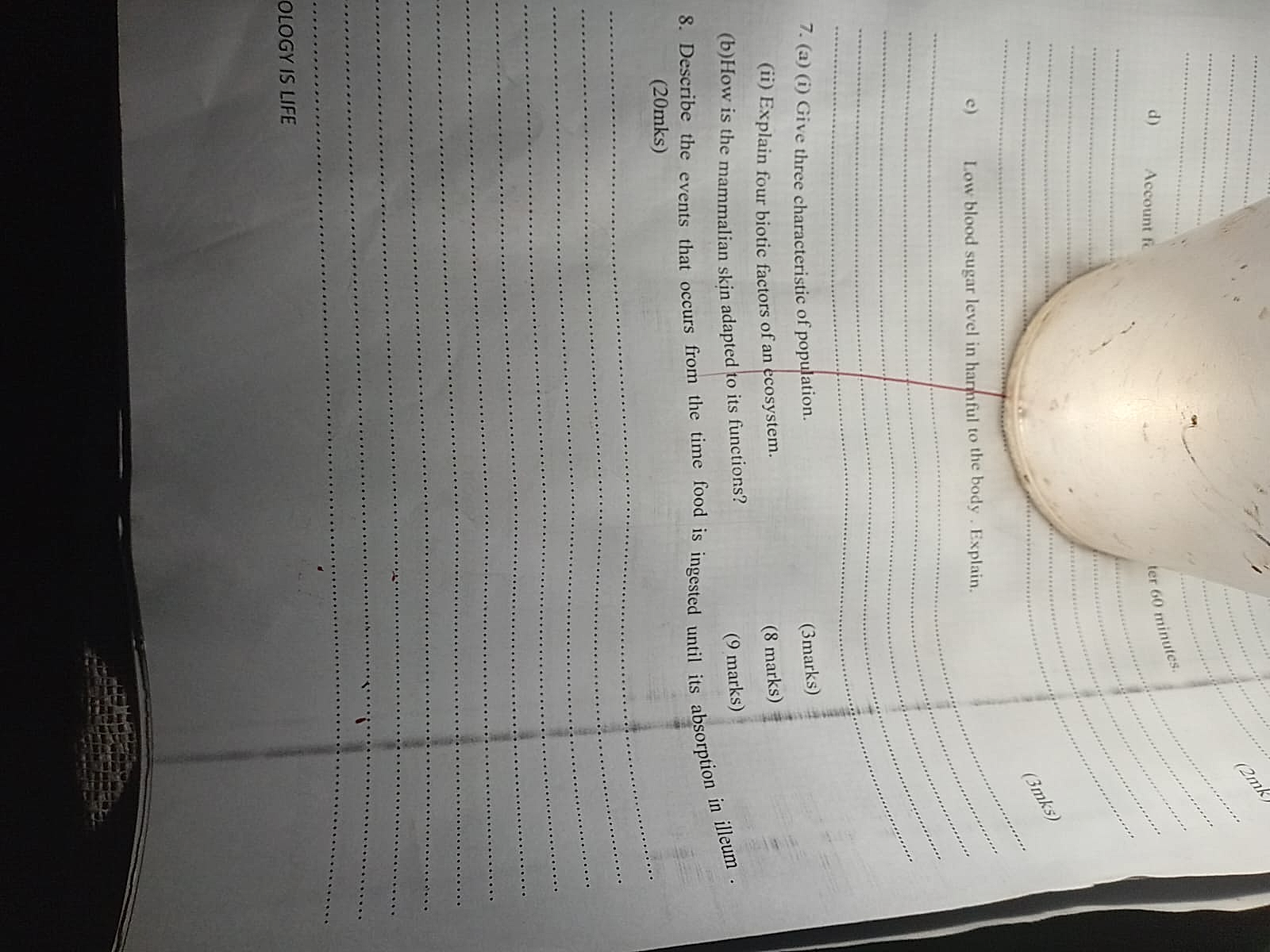
Give three characteristic of population. (ii) Explain four biotic factors of an ecosystem. (b) How is the mammalian skin…
View Solution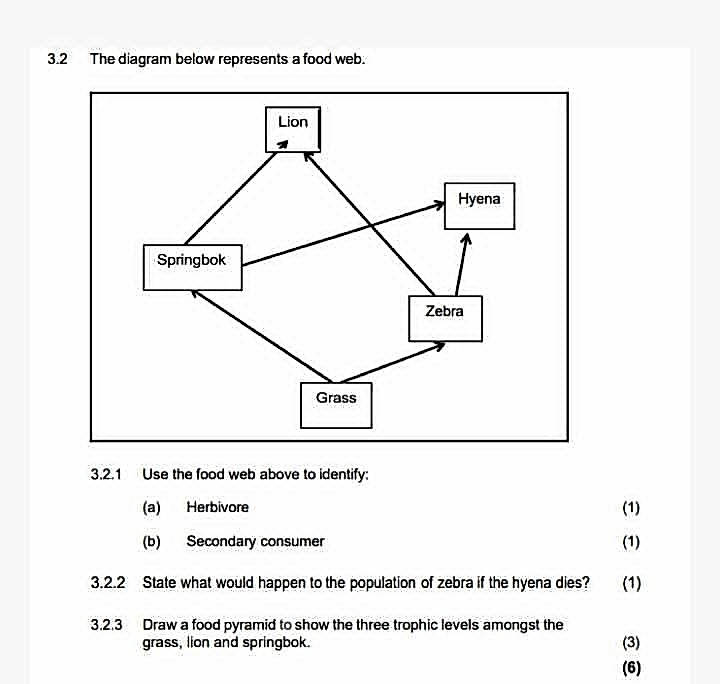
Use the food web above to identify: (a) Herbivore (b) Secondary consumer. State what would happen to the population of z…
View Solution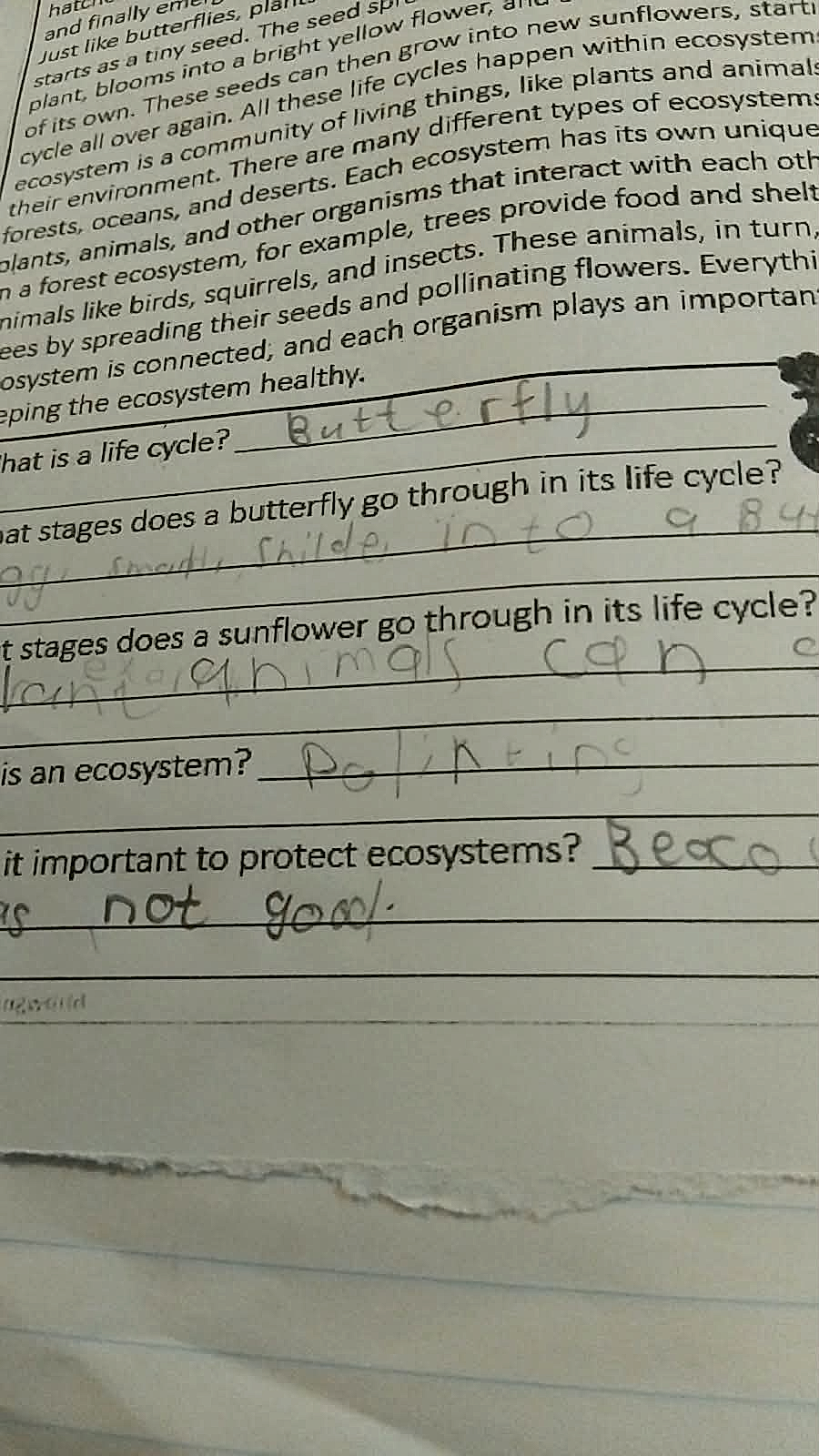
What is a life cycle? What stages does a butterfly go through in its life cycle? What stages does a sunflower go through…
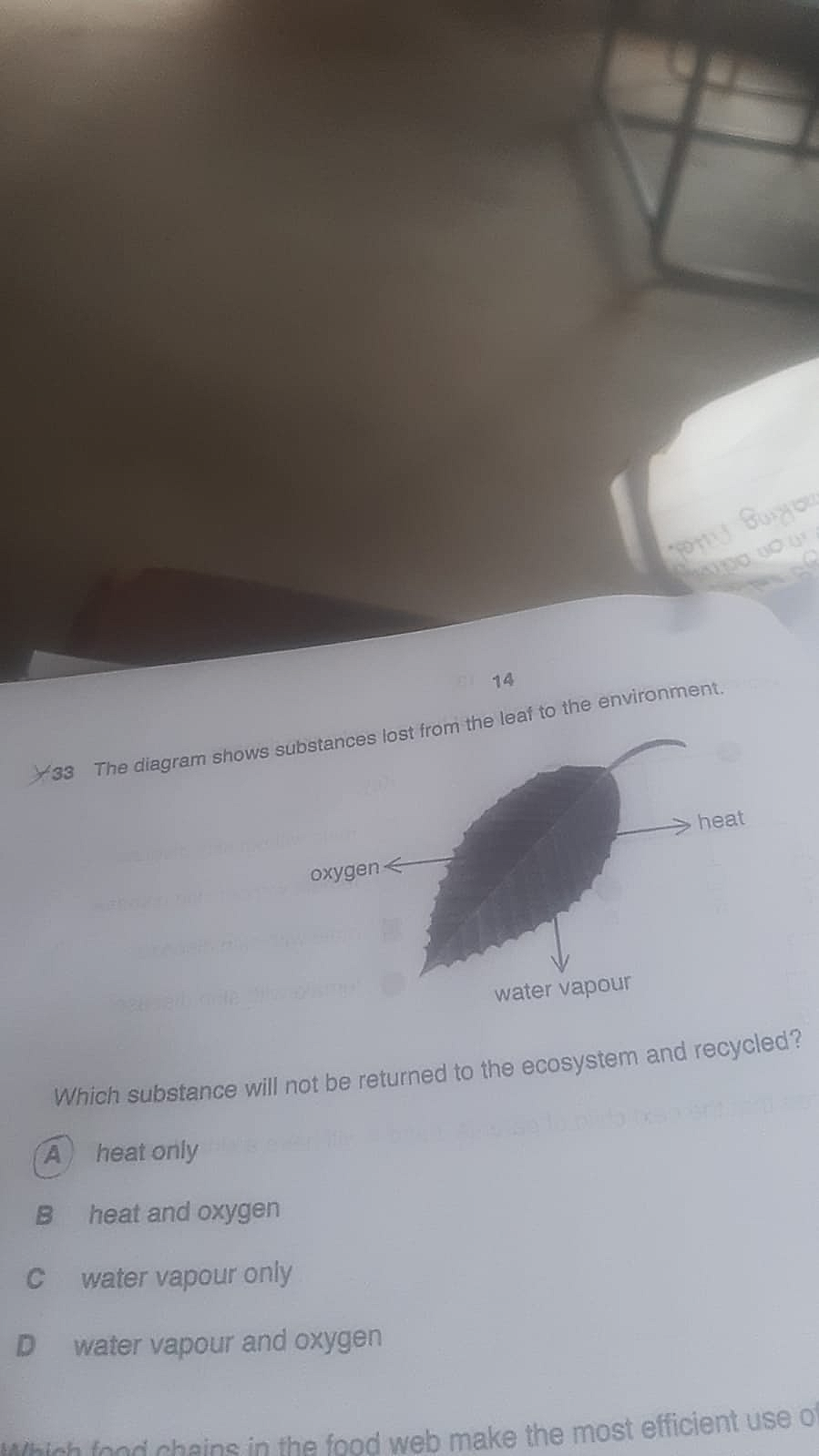
View Solution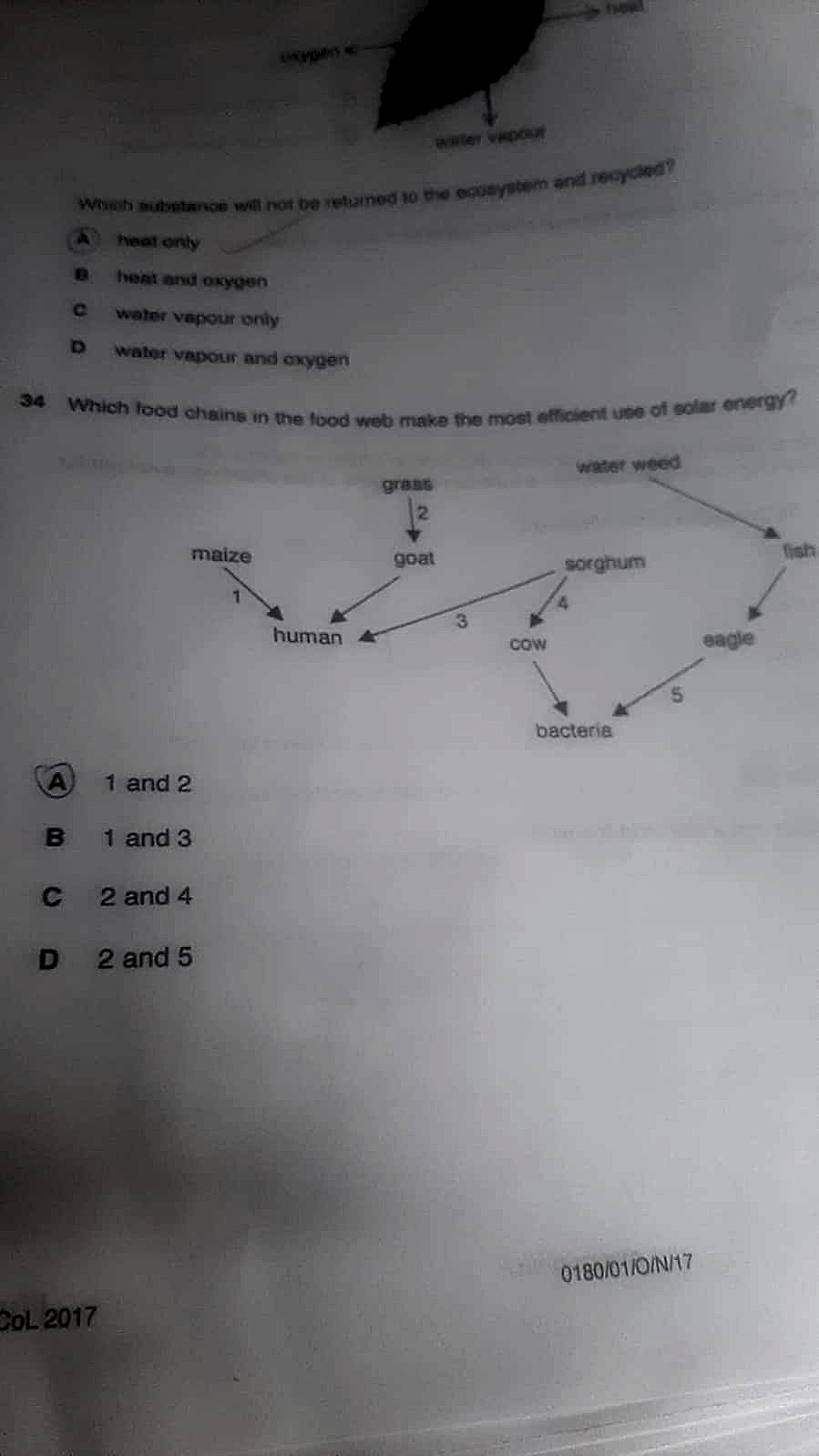
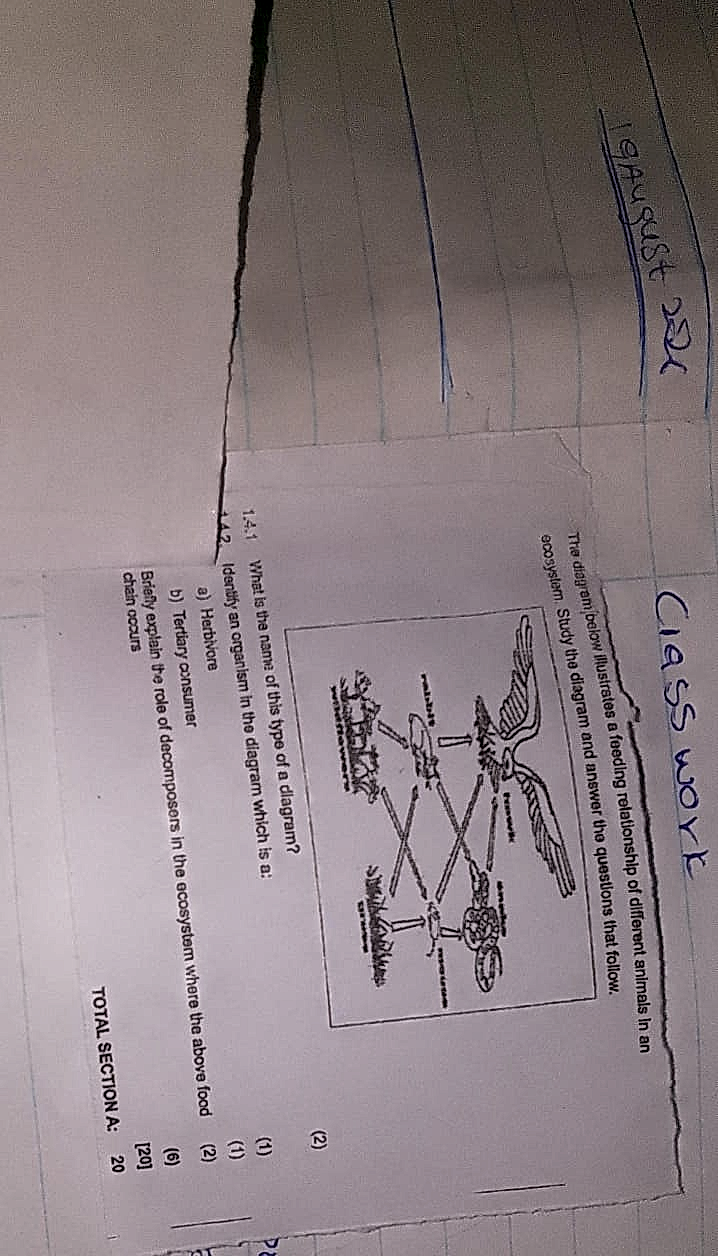
What is the name of this type of a diagram? Identify an organism in the diagram which is a: a) Herbivore b) Tertiary con…
View Solution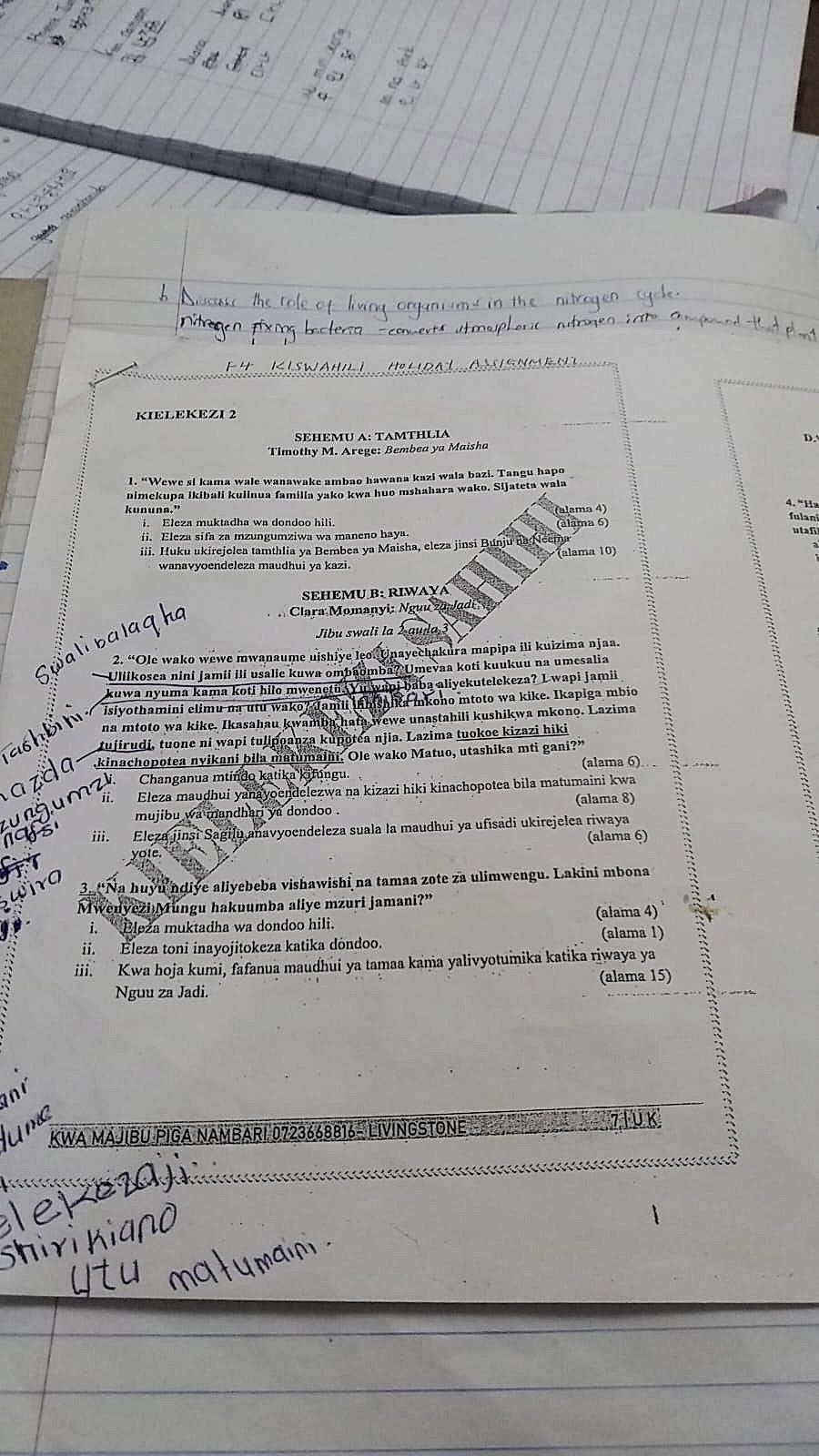
Discuss the role of living organisms in the nitrogen cycle. B. Nitrogen fixing bacteria – converts atmospheric nitrogen…
View Solution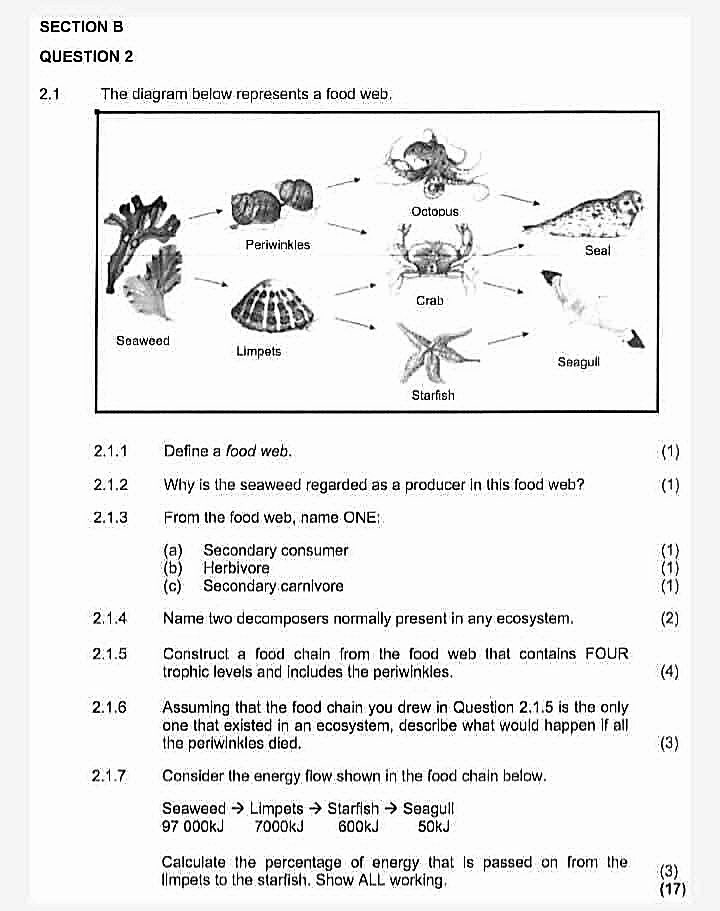
Consider the energy flow shown in the food chain below. Seaweed → Limpets → Starfish → Seagull 97 000kJ 7000kJ 600kJ 50k…
View Solution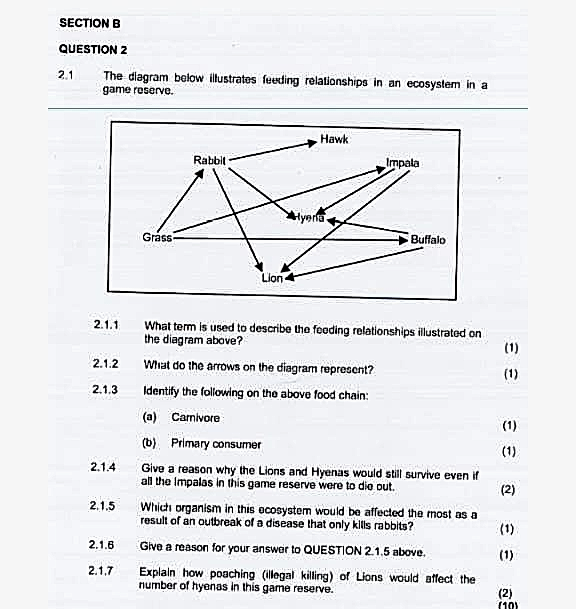
The diagram below illustrates feeding relationships in an ecosystem in a game reserve. What term is used to describe the…
View Solution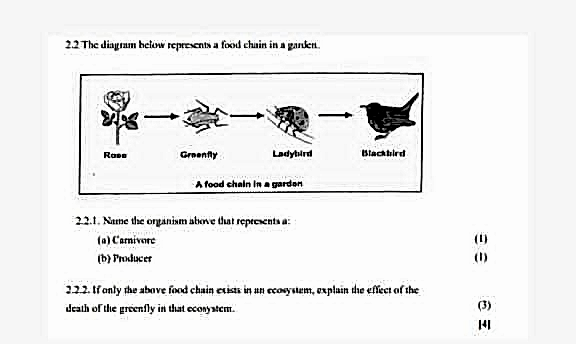
Name the organism above that represents a: (a) Carnivore (b) Producer. 2.2.2. If only the above food chain exists in an…
View Solution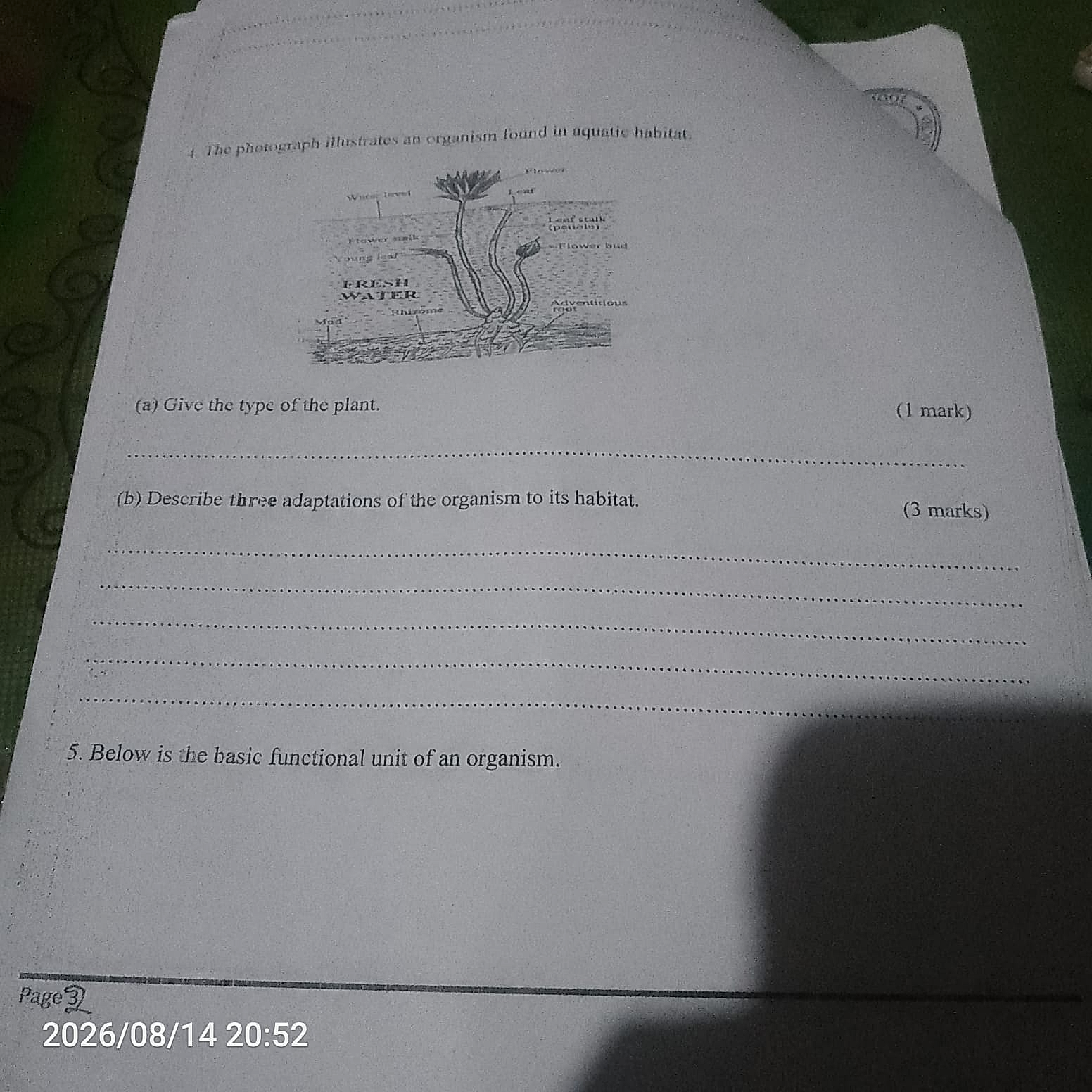
The photograph illustrates an organism found in aquatic habitat. (a) Give the type of the plant. (b) Describe three adap…
View Solution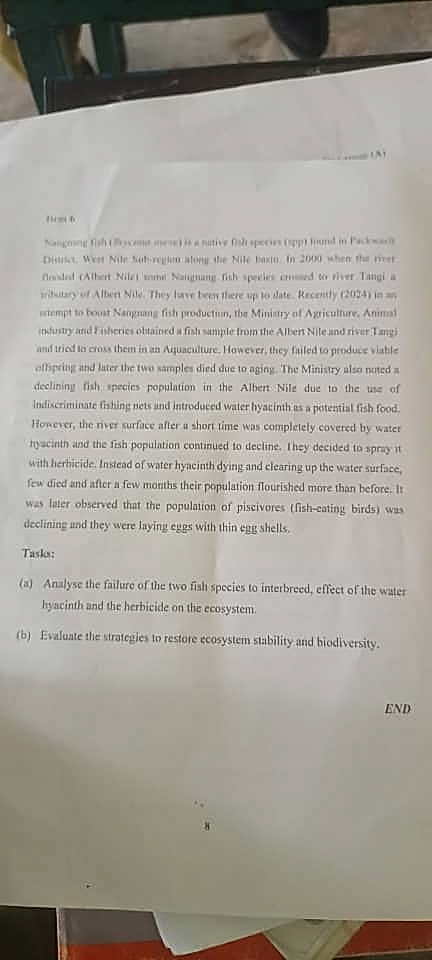
Tasks: Analyse the failure of the two fish species to interbreed, effect of the water hyacinth and the herbicide on the…
View Solution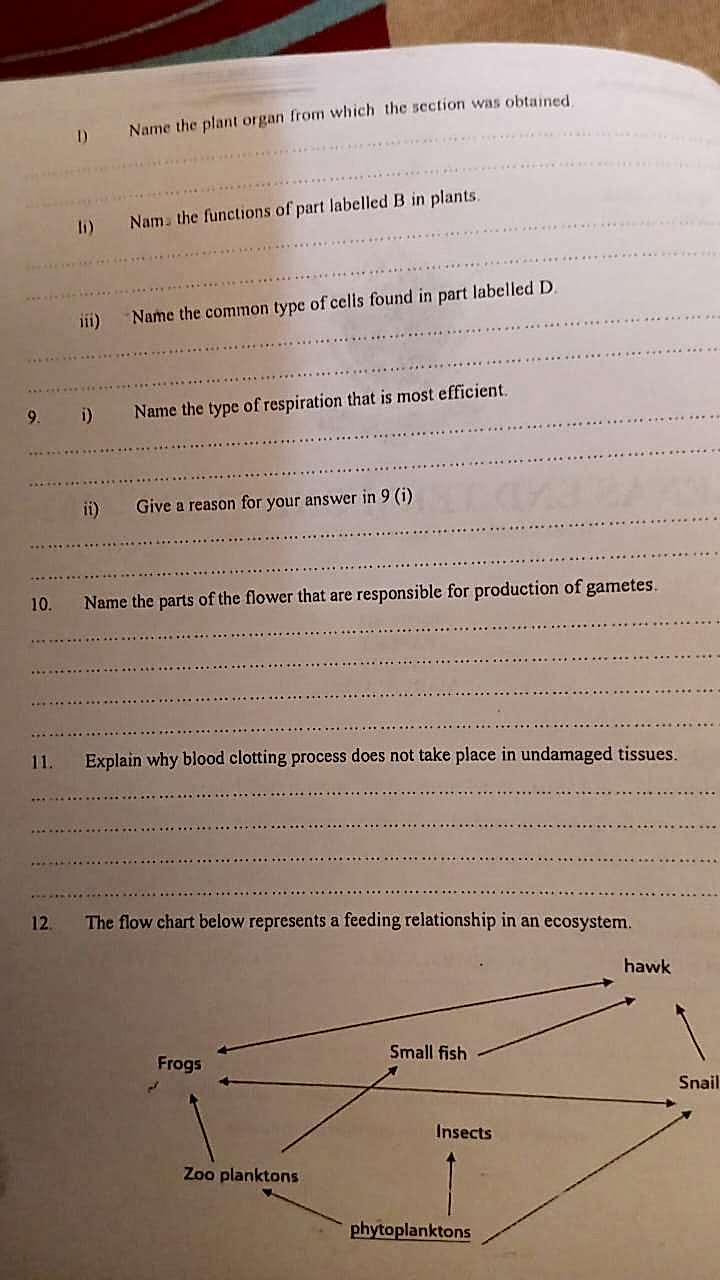
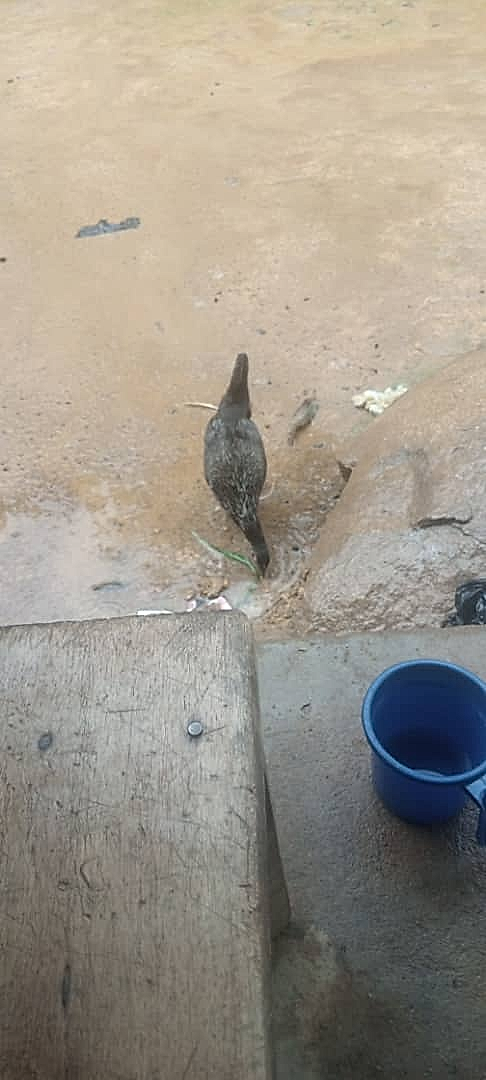
The image shows a hen and a chick. Identify the species and discuss their role in the ecosystem.
View Solution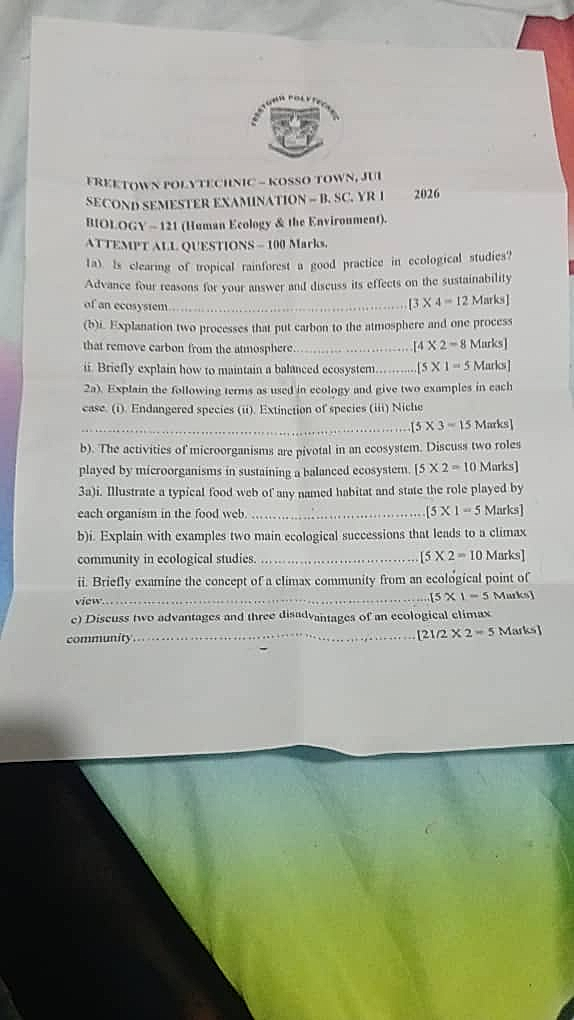
Is clearing of tropical rainforest a good practice in ecological studies? Advance four reasons for your answer and discu…
View SolutionAbout Ecology
Ecology is the study of organisms in relation to each other and to where they live. In these questions it means food chains and webs, energy flow, nutrient cycles, population and community, adaptation to habitat, and the human pressures on ecosystems. Data and diagrams feature heavily: pyramids, flow charts and field results to interpret.
Popular Topics in Ecology
Food Chains & Webs
Producers, consumers and decomposers, trophic levels, and tracing the effect of removing one organism.
Energy Flow
Pyramids of numbers, biomass and energy, the ten percent rule, and why chains are short.
Nutrient Cycles
The carbon and nitrogen cycles, the role of decomposers and nitrogen-fixing bacteria, and human interference.
Populations
Population growth curves, carrying capacity, limiting factors and methods of estimating population size.
Habitats & Adaptation
Abiotic and biotic factors, adaptations to aquatic, desert and forest habitats, and ecological niche.
Species Interactions
Competition, predation, symbiosis, mutualism and parasitism, with examples of each.
Ecological Succession
Pioneer species, seres, climax community, and colonisation of bare ground.
Conservation
Biodiversity and its value, deforestation and pollution, and conservation measures and their limits.
How ScanSolve Helps with Ecology
ScanSolve reads the food web or pyramid in the image and answers from it, naming the organisms rather than the letters, and traces consequences through the web step by step when a question asks what happens if one species is removed. Energy questions carry the percentage calculation and the reason for the loss.
Where results from fieldwork are given, the answer describes the trend, offers the ecological explanation, and separates the two. Cycle questions are answered as cycles — the process, the organism responsible and the form the nutrient takes at each stage.
Study Tips for Ecology
Name the trophic level of every organism you mention. Many ecology marks are for the level, not the organism.
Trace effects through the whole web, not just the next link. "Fewer hawks" usually changes three populations, not one.
For nutrient cycles, learn which organisms do the work at each step. Decomposers and nitrogen-fixing bacteria are the most asked-about.
Give real examples of interactions. A named mutualism beats a defined one every time.
Get Ecology Help on WhatsApp
Send a photo of your ecology homework and get step-by-step solutions instantly. No app download needed.
Message Us on WhatsAppFrequently Asked Ecology Questions
How can ScanSolve help with Ecology homework?
ScanSolve's AI solves ecology problems step by step. Snap a photo of your homework or type your question to get instant, detailed solutions with clear explanations.
Is Ecology homework help free on ScanSolve?
Yes, ScanSolve offers free ecology homework help with step-by-step solutions. Upgrade to Pro at $89.99/year (about $7.50/month) or $9.99/week for unlimited answers and priority support.
What Ecology topics does ScanSolve cover?
ScanSolve covers all ecology topics including Food Chains & Webs, Energy Flow, Nutrient Cycles, Populations, Habitats & Adaptation. Upload any ecology problem and get a step-by-step solution.
Can ScanSolve solve ecology problems from a photo?
Yes. Take a photo of your ecology homework and ScanSolve's AI will read the problem, identify the method needed, and provide a complete step-by-step solution.
How accurate are ScanSolve's ecology solutions?
ScanSolve uses advanced AI to deliver accurate, step-by-step ecology solutions. Each answer includes detailed explanations so you can verify the reasoning and learn the method.
More in Science
Explore More Subjects
Have an Ecology question?
Get an instant AI-powered step-by-step solution in seconds.