
Pre-Calculus Homework Help
Step-by-step AI solutions. Ask your own question →
Pre-Calculus Questions

Explain the logarithms, surds and indices also completing the square how they are worked with worked examples in an unde…
View Solution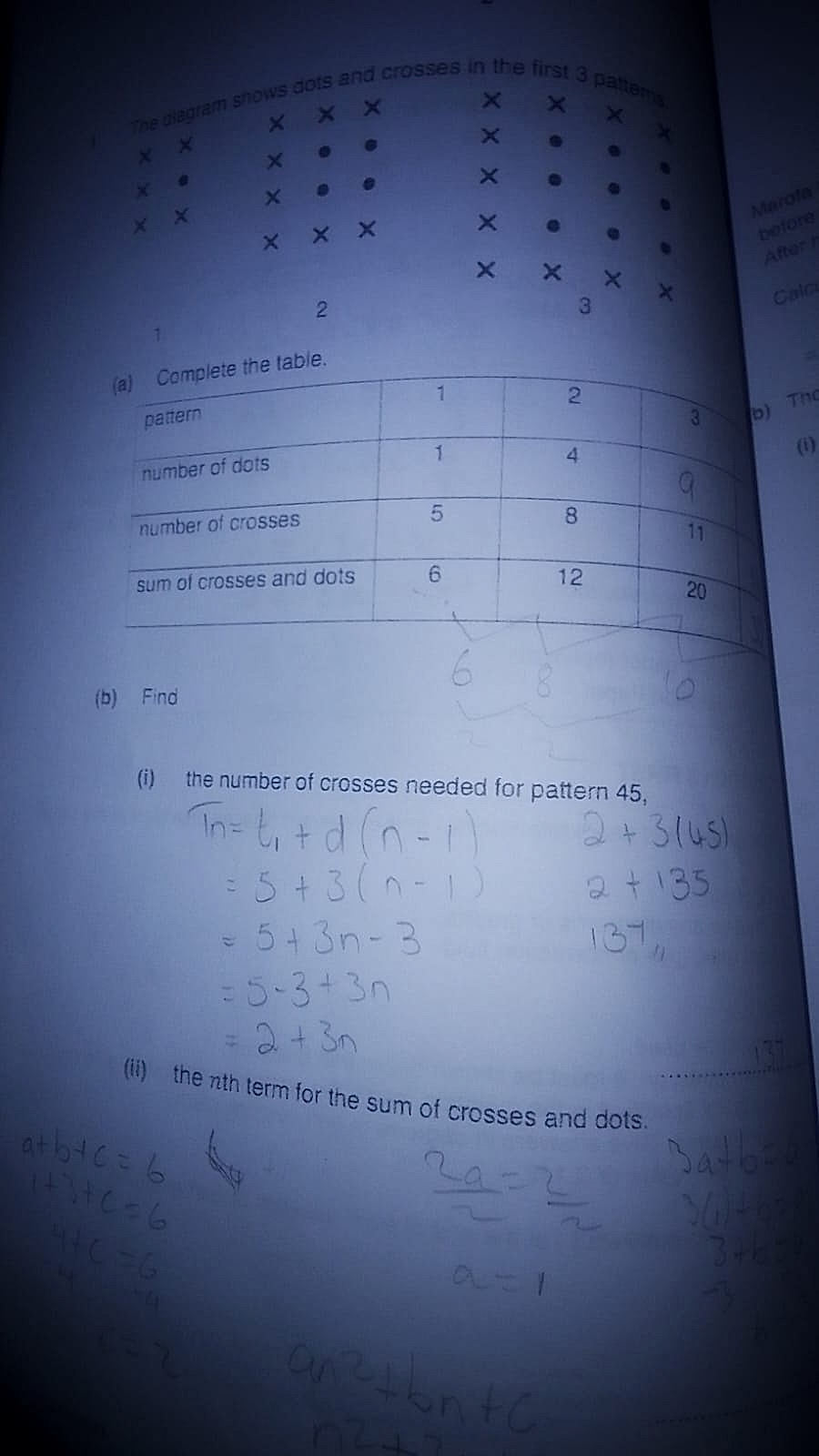
The diagram shows dots and crosses in the first 3 patterns. (a) Complete the table. (b) Find (i) the number of crosses n…
View Solution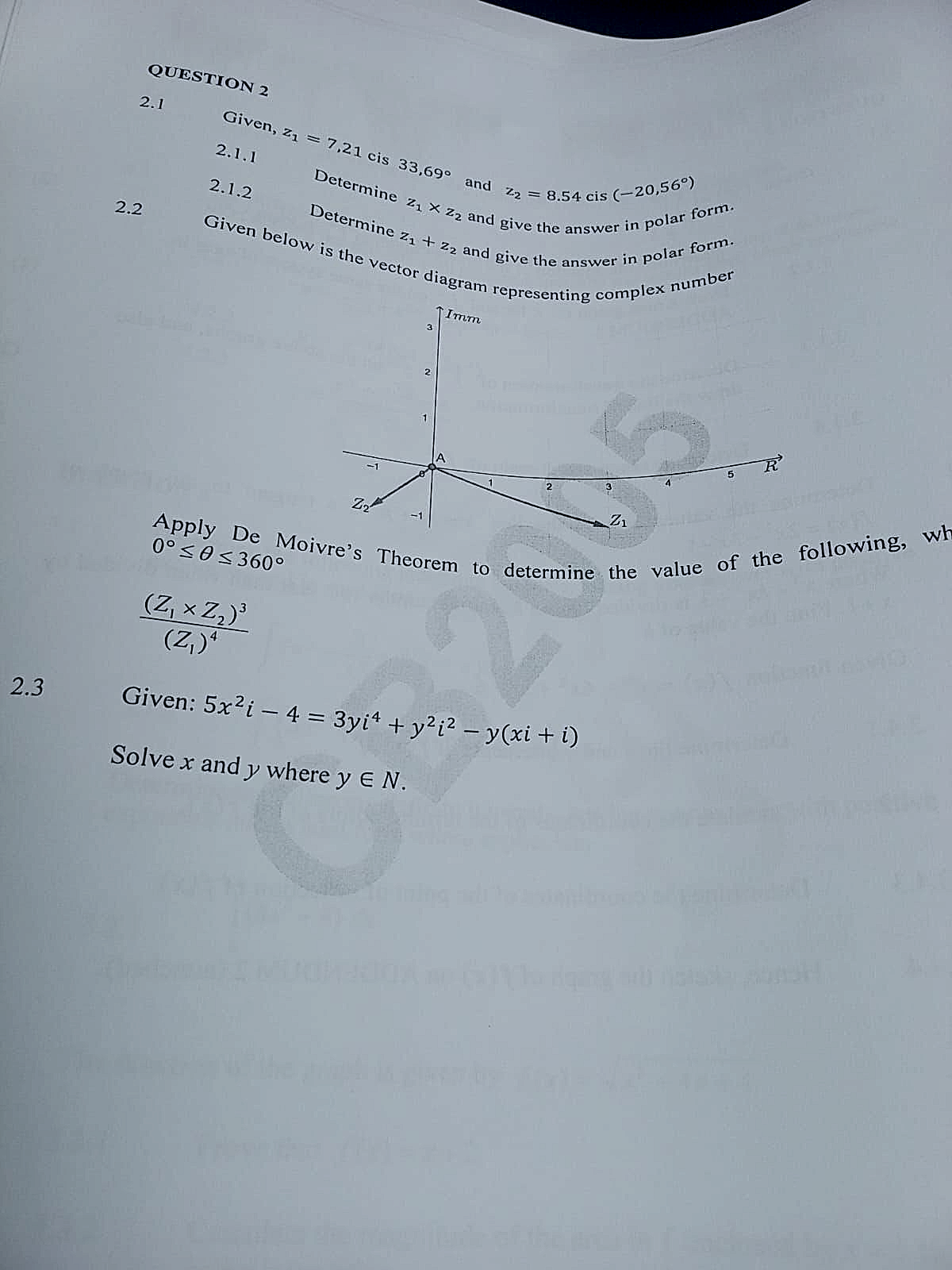
Determine z1 × z2 and give the answer in polar form. Determine z1 + z2 and give the answer in polar form.
View Solution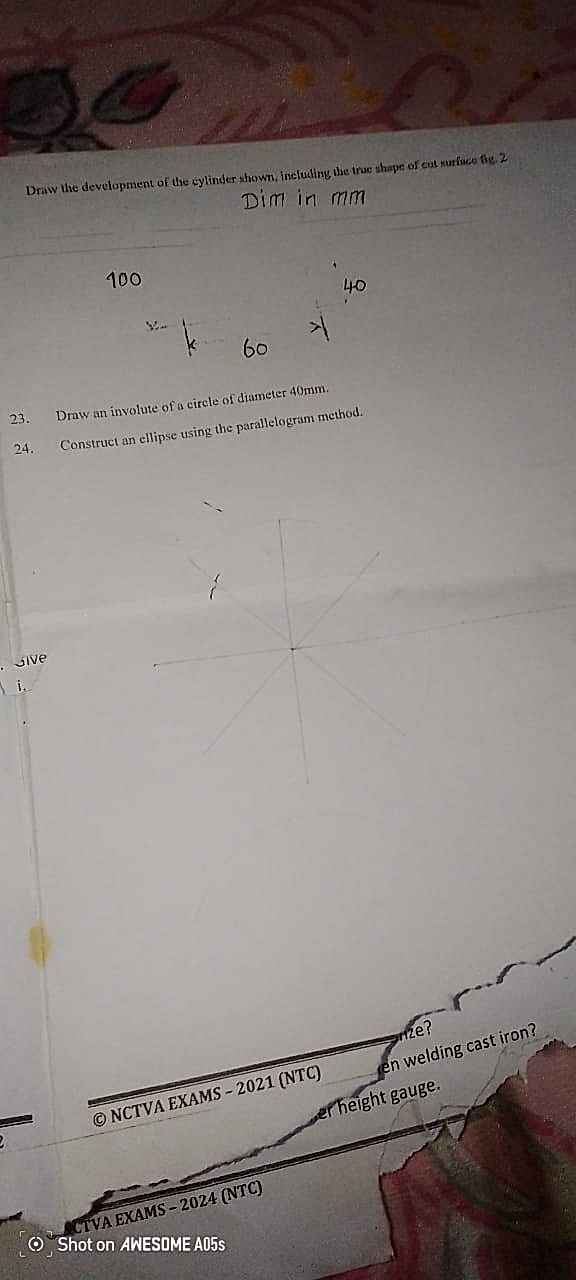
Draw an involute of a circle of diameter 40mm. Construct an ellipse using the parallelogram method.
View Solution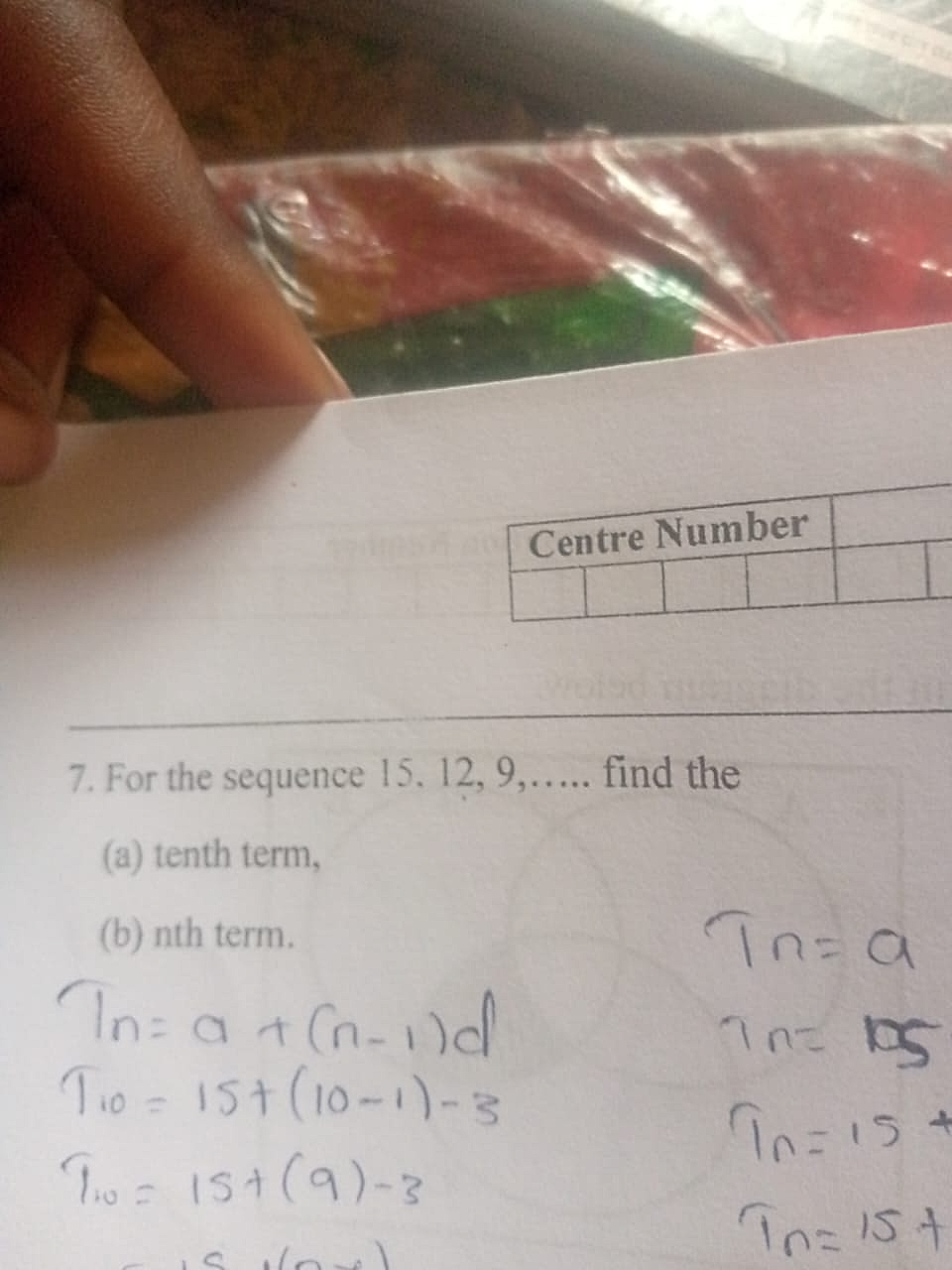
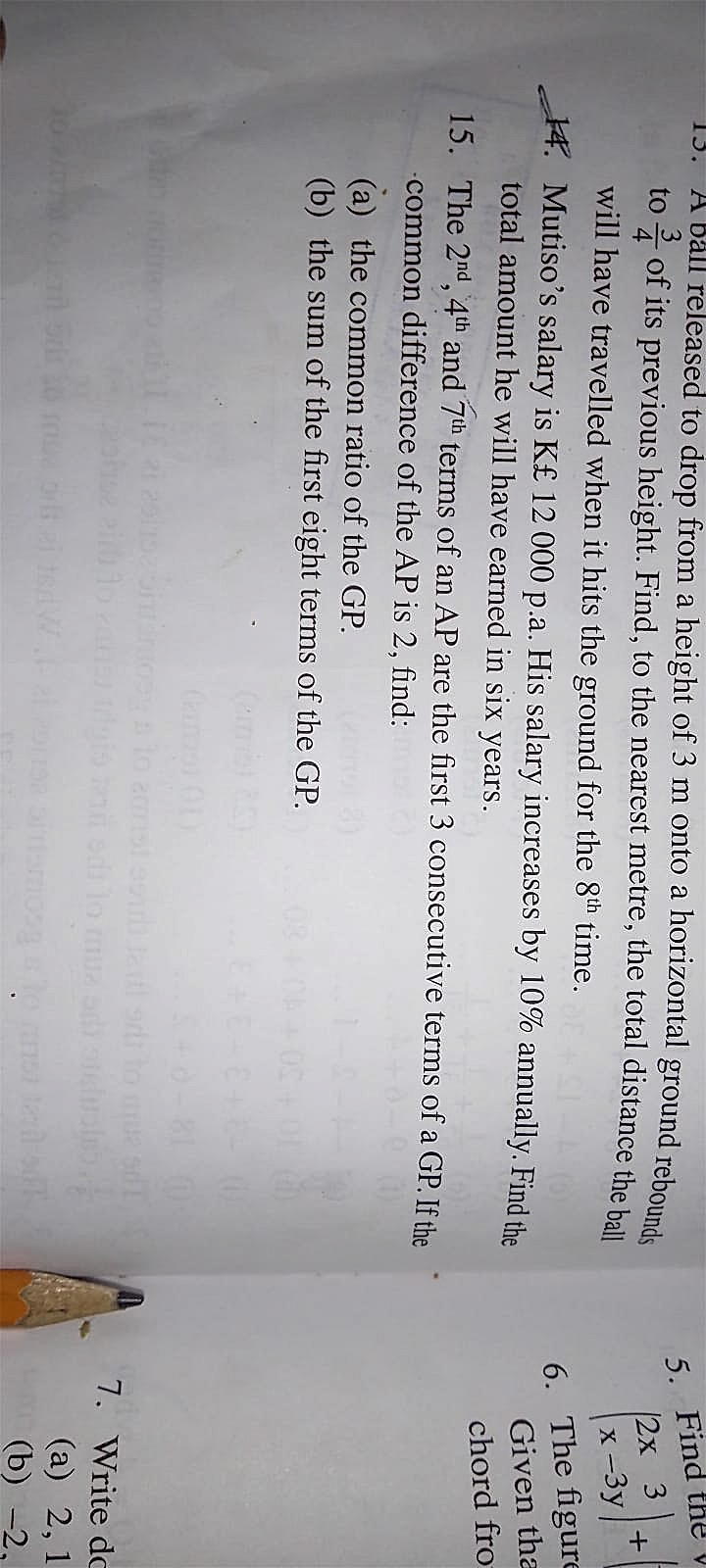
The 2nd, 4th and 7th terms of an AP are the first 3 consecutive terms of a GP. If the common difference of the AP is 2,…
View Solutiona) The first term of an Arithmetic progression (AP) is 3. The sum of the first 6 terms of the AP is 78. i ) Find the com…
View Solution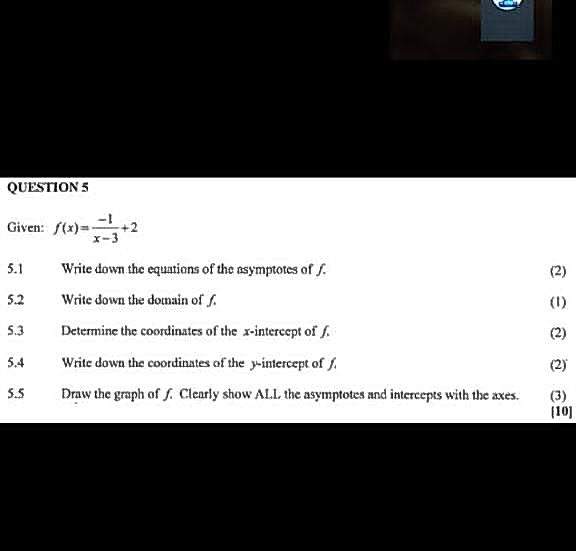
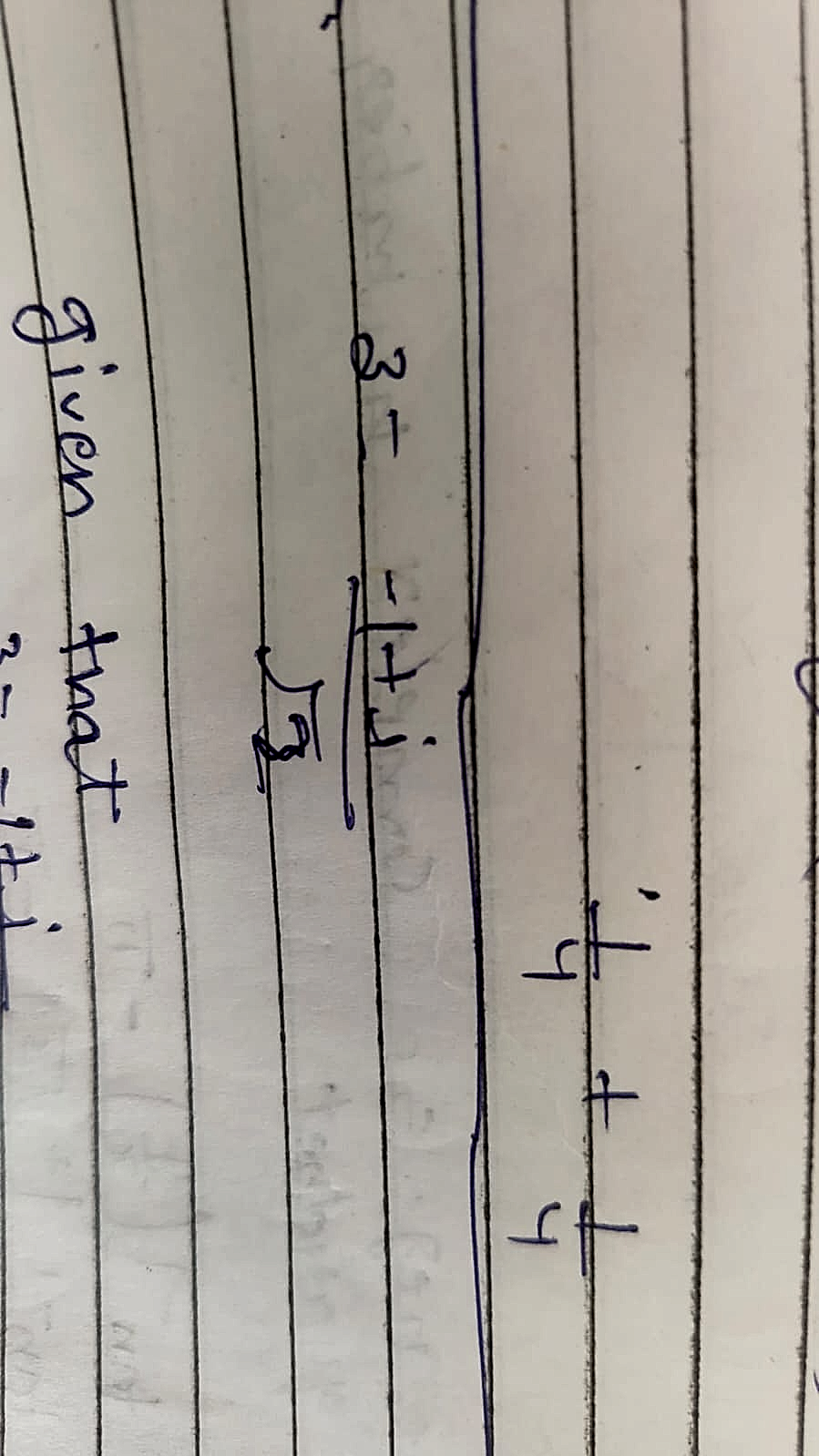
Given: f(x) = -1/(x-3) + 2. Write down the equations of the asymptotes of f, the domain of f, determine the coordinates…
View Solution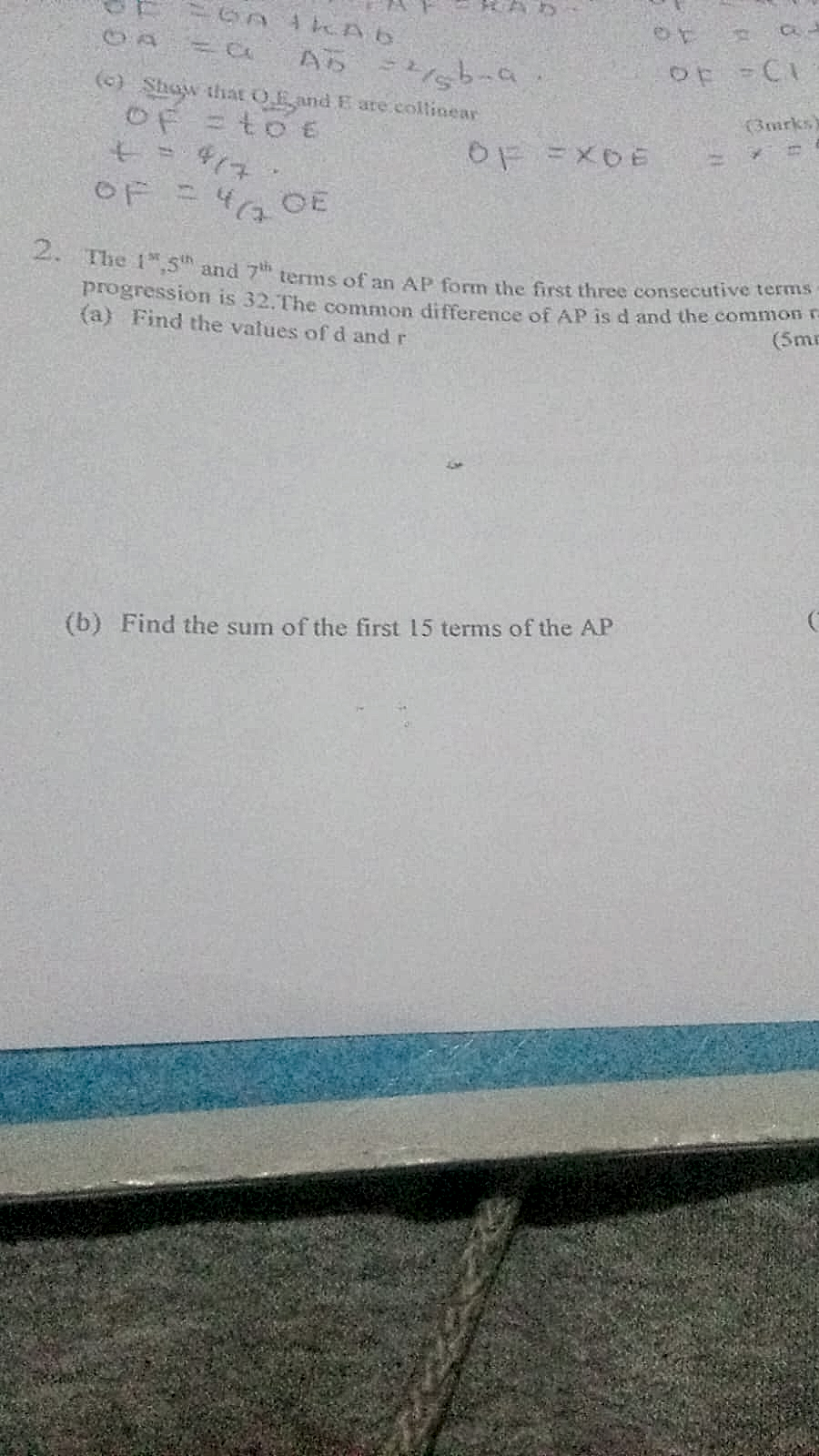
The 1st, 5th and 7th terms of an AP form the first three consecutive terms of a GP. The common difference of AP is d and…
View Solution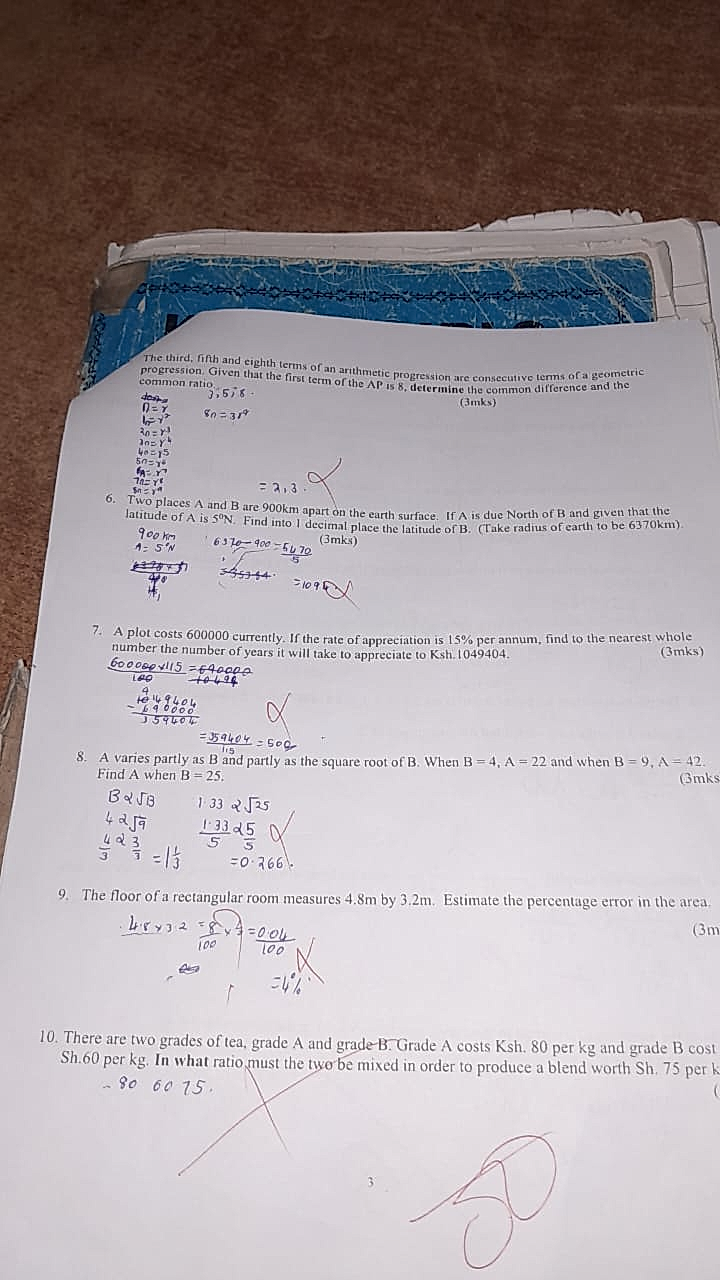
The third, fifth and eighth terms of an arithmetic progression are consecutive terms of a geometric progression. Given t…
View Solution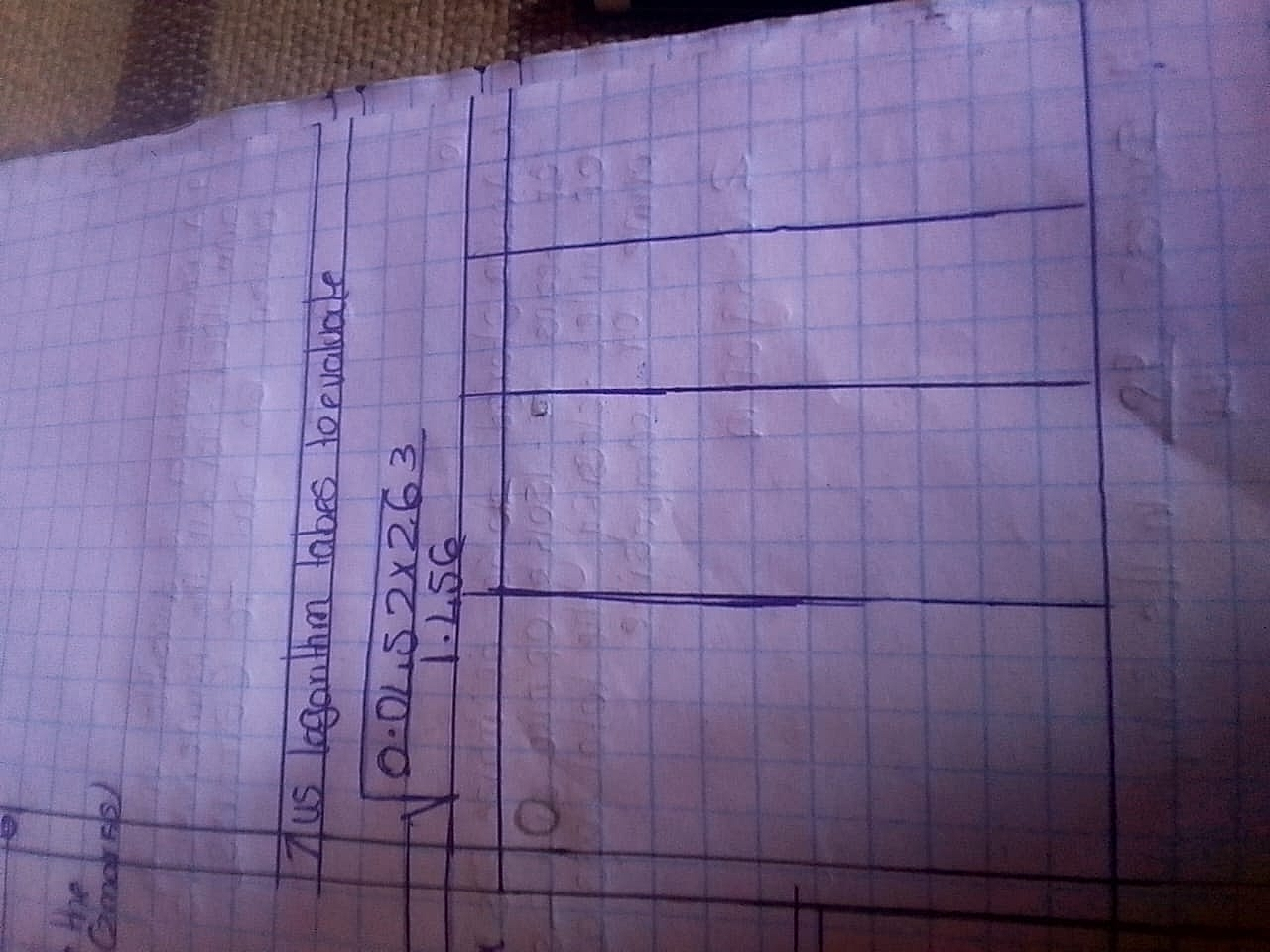
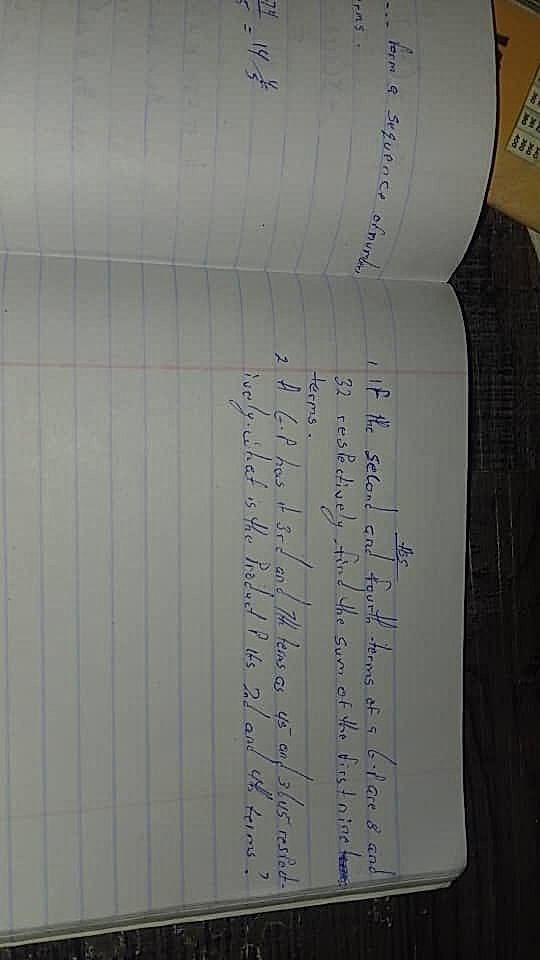
If the Second and fourth terms of a G.P. are 8 and 32 respectively, find the sum of the first nine terms. 2. A G.P. has…
View Solution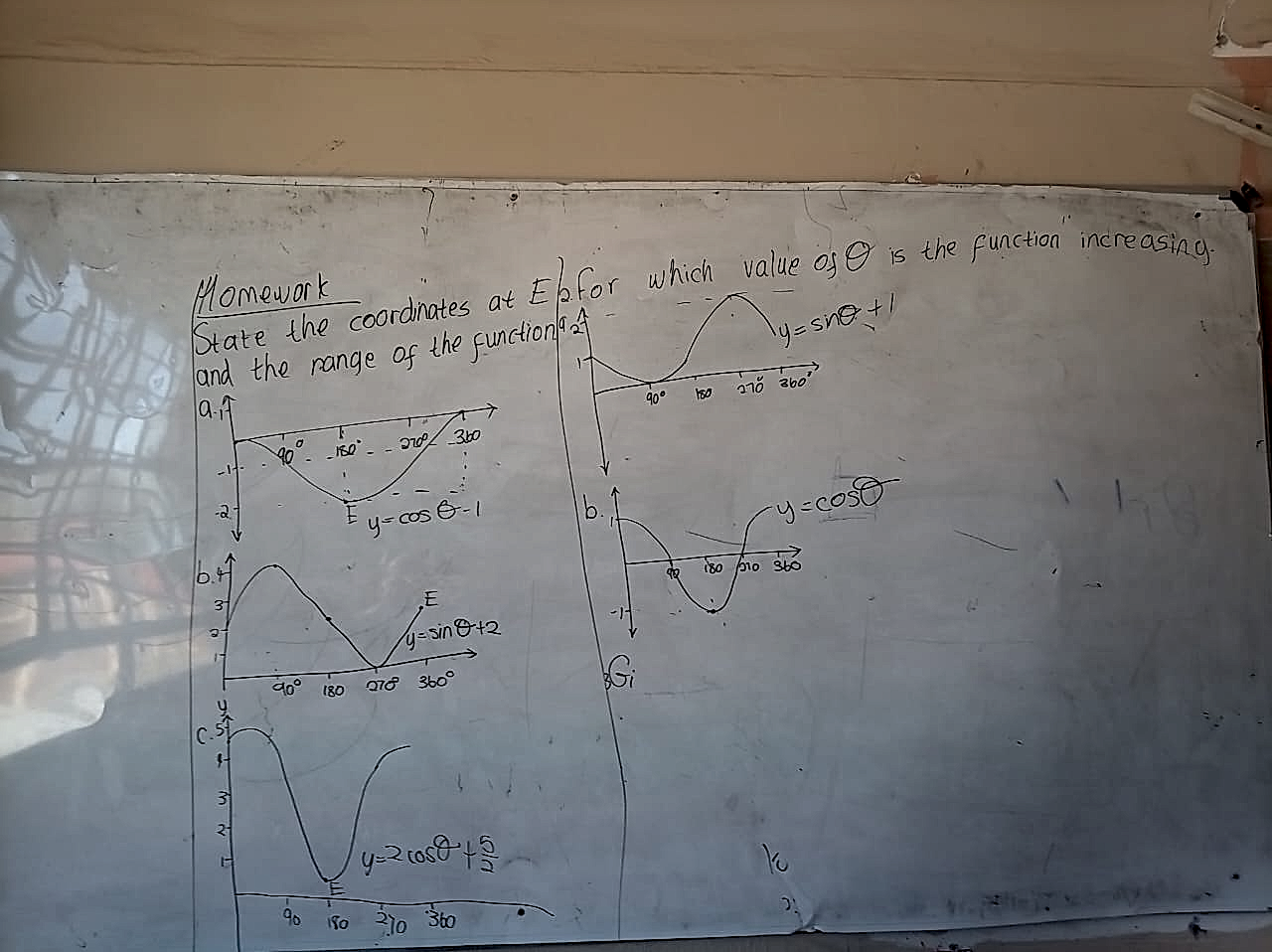
State the coordinates at E, for which value of θ is the function increasing, and the range of the function?
View Solution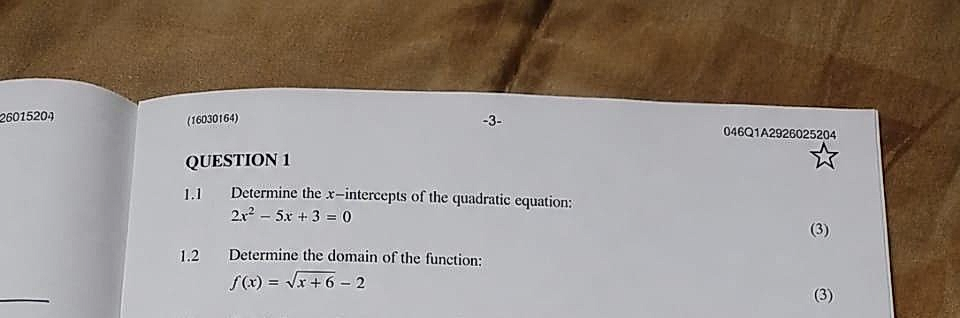
Determine the x-intercepts of the quadratic equation: 2x2 - 5x + 3 = 0. Determine the domain of the function: f(x) = sqr…
View Solution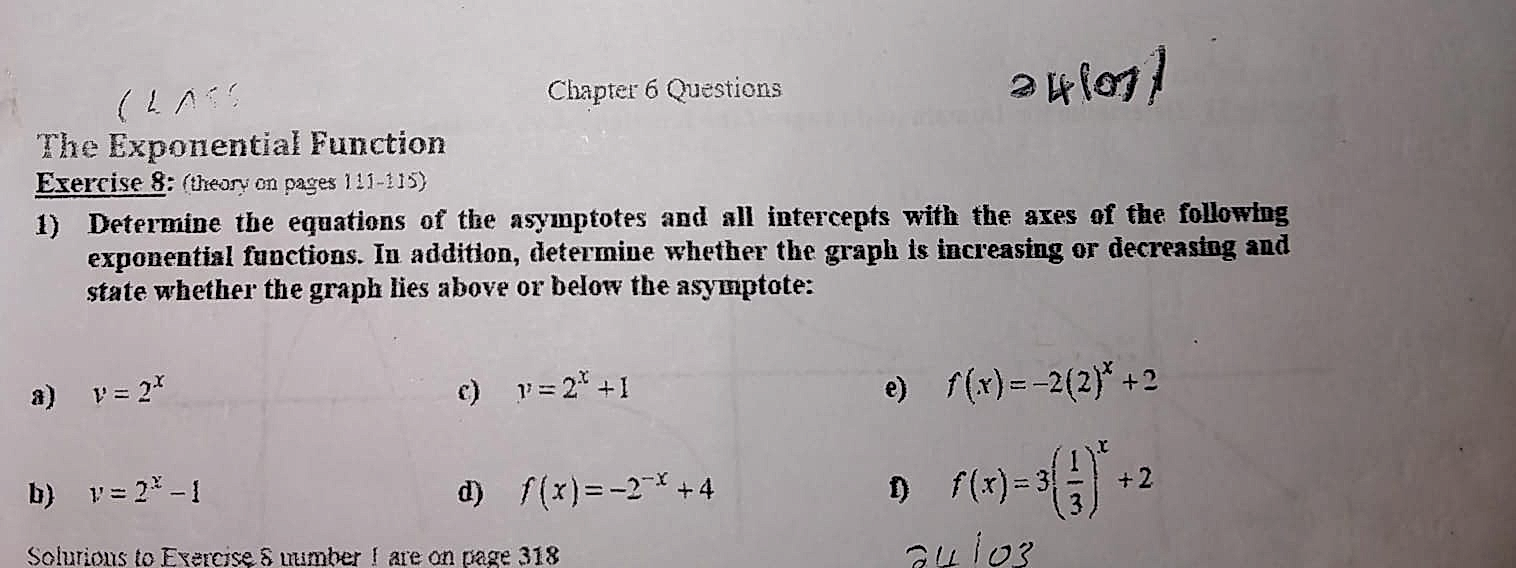
Determine the equations of the asymptotes and all intercepts with the axes of the following exponential functions. In ad…
View Solution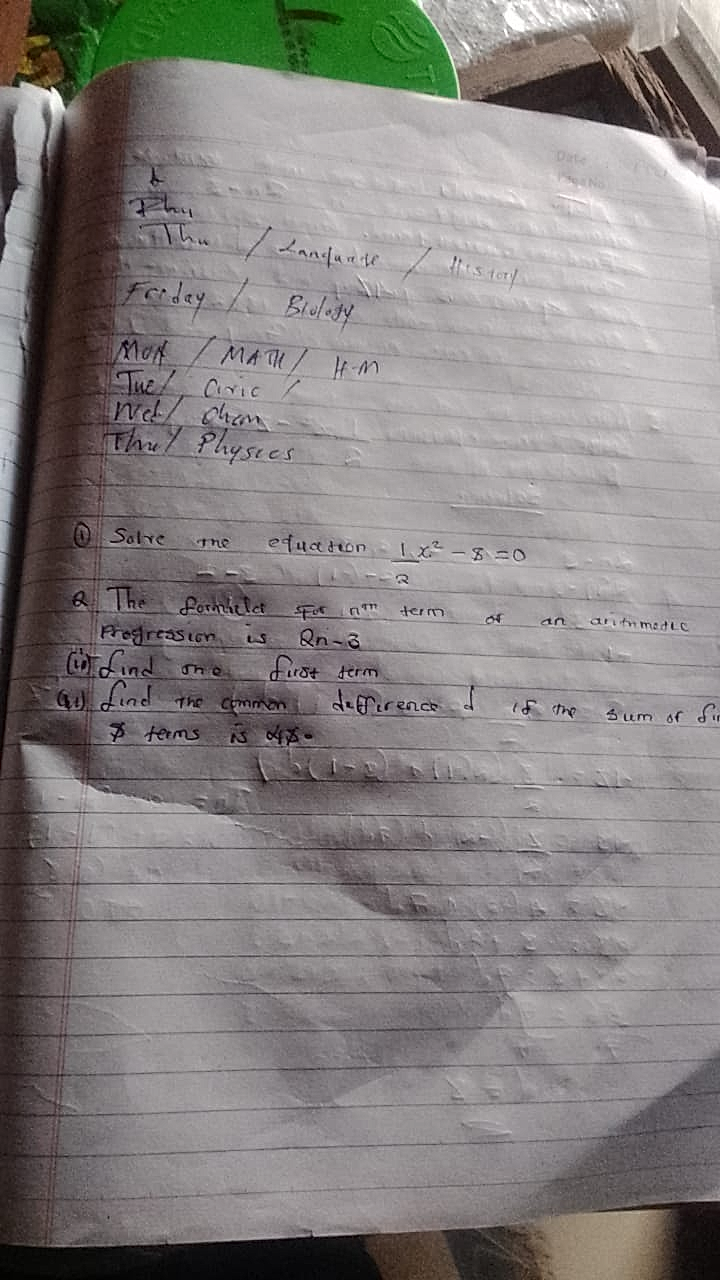
Solve the equation 1x2-8=0 / 2. The formula for nth term Progression is Rn-3. (i) Find one first term (ii) Find the comm…
View SolutionAbout Pre-Calculus
Pre-calculus gathers the tools calculus assumes you already have: functions and their graphs, logarithms and exponentials, sequences and series, complex numbers and the conic sections. The questions here are mostly about functions — domain, range, inverses and composition — together with arithmetic and geometric progressions and logarithm work.
Popular Topics in Pre-Calculus
Functions
Notation, domain and range, one-to-one and onto, and the vertical and horizontal line tests.
Inverse & Composite Functions
Finding an inverse algebraically, the domain it needs, and evaluating f(g(x)) in the right order.
Logarithms & Exponentials
Laws of logarithms, changing base, solving exponential equations, and exponential growth and decay.
Sequences & Series
Arithmetic and geometric progressions, nth term, sum of n terms, sum to infinity, and sigma notation.
Complex Numbers
Real and imaginary parts, arithmetic, the Argand diagram, modulus and argument, and polar form.
Conic Sections
Circles, parabolas, ellipses and hyperbolas: standard forms, foci and sketching from the equation.
Polynomials & Rational Functions
Remainder and factor theorems, partial fractions, and asymptotes of rational functions.
Graph Transformations
Translations, stretches and reflections, and reading a transformation off an equation.
How ScanSolve Helps with Pre-Calculus
For a function question ScanSolve states the domain restriction it is working with before it manipulates anything — the step that decides whether an inverse or a composition is even defined. Logarithm work shows which law is being applied at each line rather than collapsing several into one.
Progressions are solved from the first term and common difference or ratio, written explicitly, so a question that gives you the 2nd and 7th terms becomes two equations rather than a guess. Complex number answers give both cartesian and polar forms where the question could want either, and sketches are described precisely enough to draw.
Study Tips for Pre-Calculus
Find the domain before doing anything else. Square roots and denominators decide what the rest of the question can say.
For a progression, write down a and d (or a and r) as your first line. Almost every AP and GP question is two equations in those two unknowns.
Apply one logarithm law per line. Combining three in one step is where sign and base errors hide.
Sketch the graph even when the question does not ask for one. Asymptotes and intercepts make a wrong answer obvious.
Get Pre-Calculus Help on WhatsApp
Send a photo of your pre-calculus homework and get step-by-step solutions instantly. No app download needed.
Message Us on WhatsAppFrequently Asked Pre-Calculus Questions
How can ScanSolve help with Pre-Calculus homework?
ScanSolve's AI solves pre-calculus problems step by step. Snap a photo of your homework or type your question to get instant, detailed solutions with clear explanations.
Is Pre-Calculus homework help free on ScanSolve?
Yes, ScanSolve offers free pre-calculus homework help with step-by-step solutions. Upgrade to Pro at $89.99/year (about $7.50/month) or $9.99/week for unlimited answers and priority support.
What Pre-Calculus topics does ScanSolve cover?
ScanSolve covers all pre-calculus topics including Functions, Inverse & Composite Functions, Logarithms & Exponentials, Sequences & Series, Complex Numbers. Upload any pre-calculus problem and get a step-by-step solution.
Can ScanSolve solve pre-calculus problems from a photo?
Yes. Take a photo of your pre-calculus homework and ScanSolve's AI will read the problem, identify the method needed, and provide a complete step-by-step solution.
How accurate are ScanSolve's pre-calculus solutions?
ScanSolve uses advanced AI to deliver accurate, step-by-step pre-calculus solutions. Each answer includes detailed explanations so you can verify the reasoning and learn the method.
Pre-Calculus Study Guides & Articles
How to Factor Polynomials: Complete Guide with Examples
Learn how to factor polynomials step by step. Covers GCF factoring, difference of squares, trinomials, factoring by grouping, and the factor theorem with examples.
MathematicsHow to Find the Derivative: Rules, Formulas & Examples
Learn how to find the derivative using the power rule, product rule, quotient rule, and chain rule. Step-by-step examples with trigonometric and exponential functions.
MathematicsHow to Solve Inequalities: Linear, Quadratic & Absolute Value
Learn how to solve inequalities step by step. Covers linear, compound, quadratic, and absolute value inequalities with graphing on number lines and practice problems.
More in Maths
Explore More Subjects
Have a Pre-Calculus question?
Get an instant AI-powered step-by-step solution in seconds.