
Electrical Engineering Homework Help
Step-by-step AI solutions. Ask your own question →
Electrical Engineering Questions

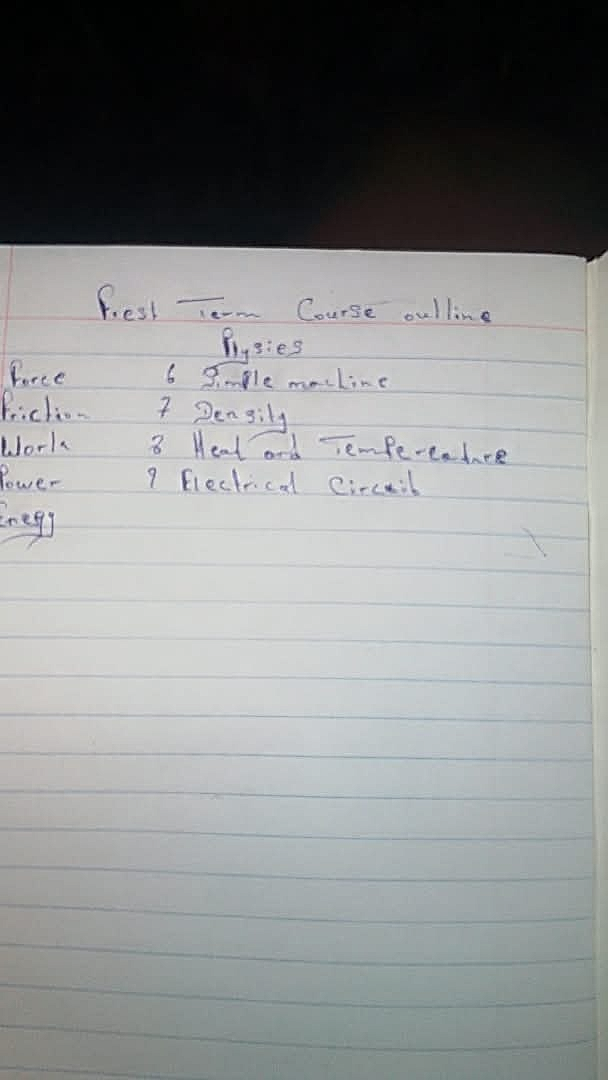
First Term Course Outline: Physics, Force, Friction, Work, Power, Energy, Simple machine, Density, Heat and Temperature,…
View Solution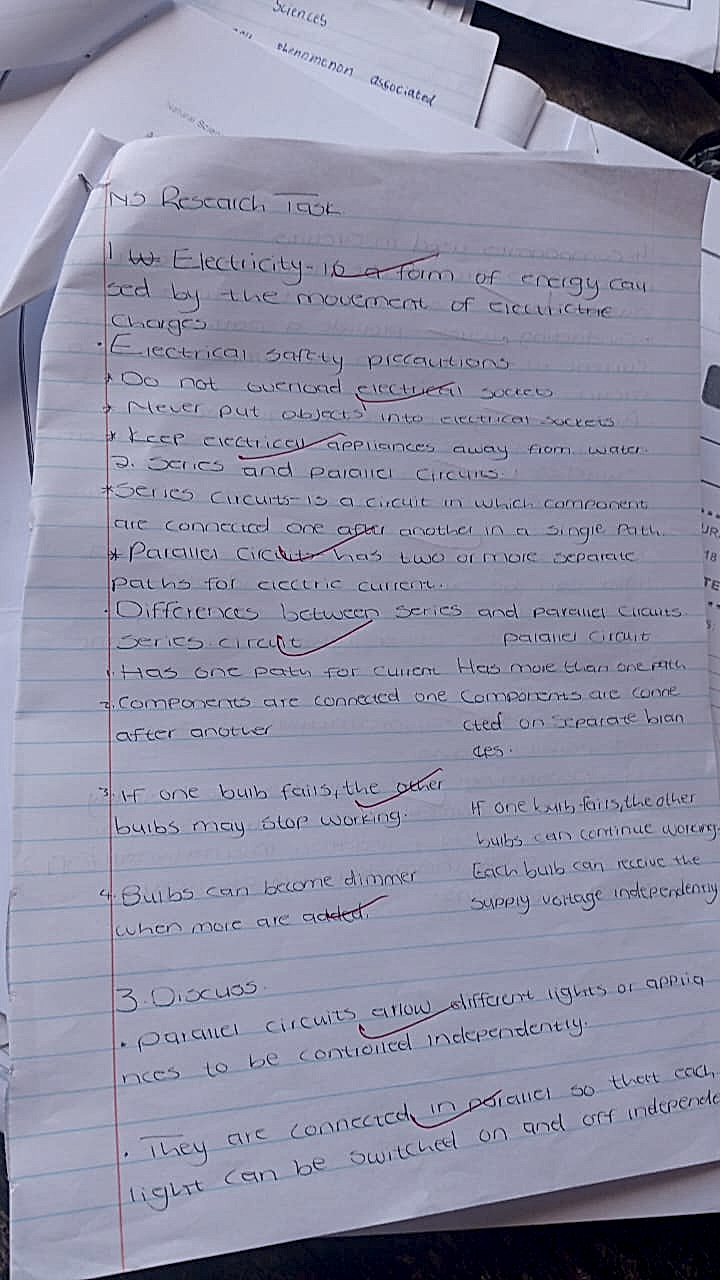
W. Electricity - 16 a form of energy caused by the movement of electric charges. Electrical safety precautions. 2. Serie…
View Solution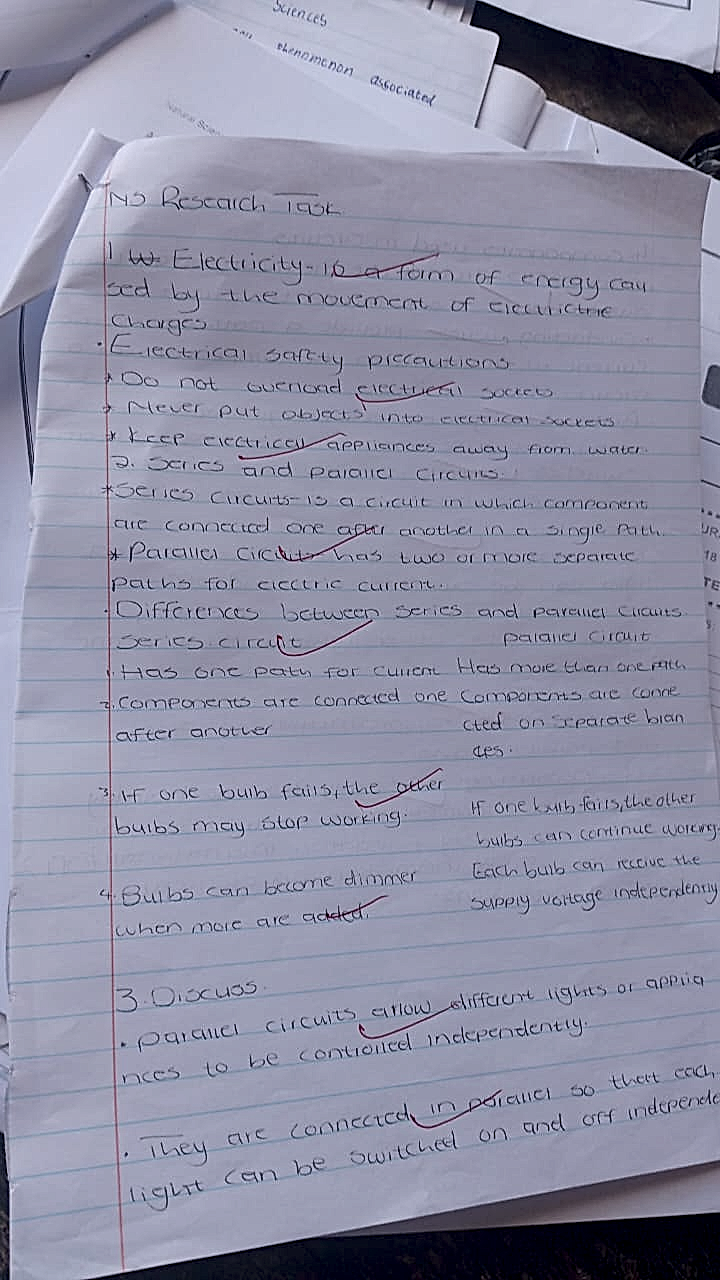
Electricity: 16 a form of energy caused by the movement of electric charges. Electrical safety precautions. 2. Series an…
View Solutionhydroelectricity generator using motor and turbine but not including a mini water pump
View Solution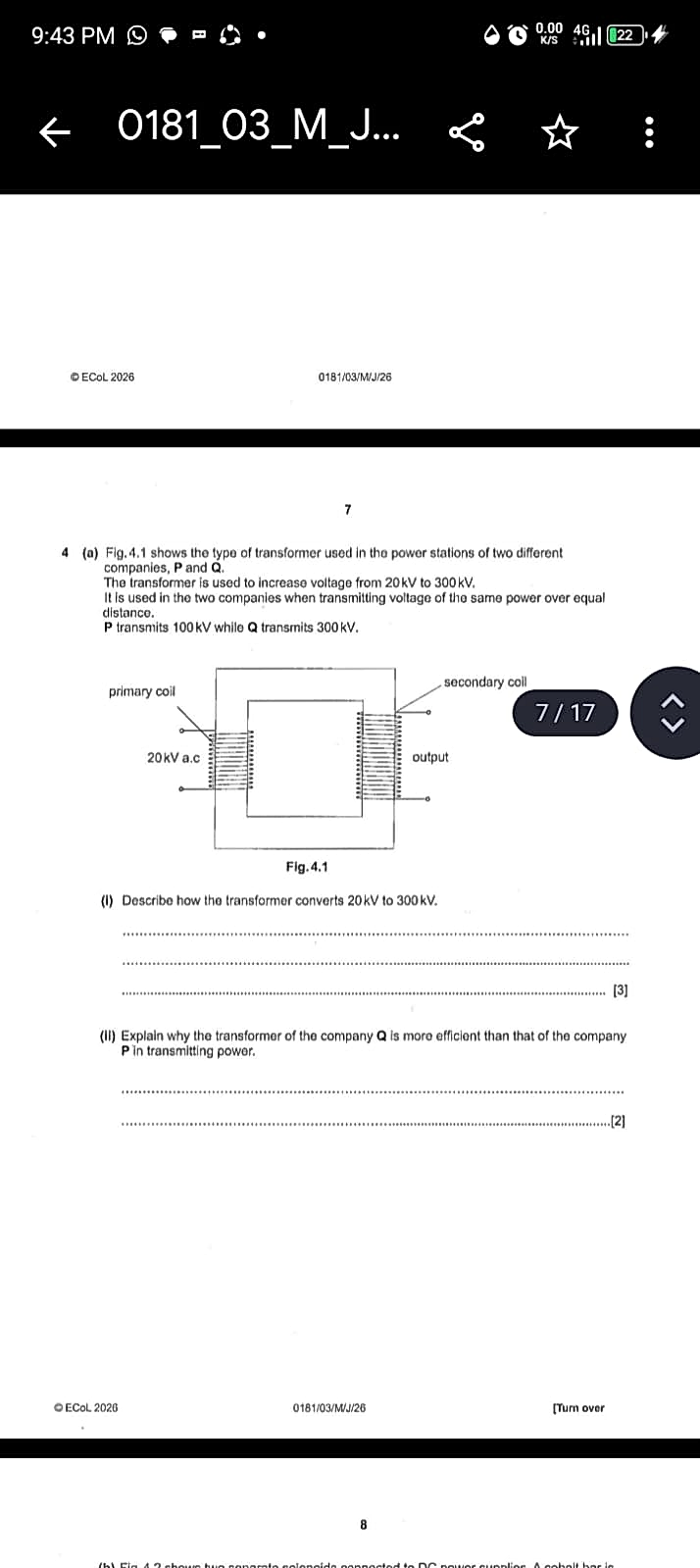
Fig. 4.1 shows the type of transformer used in the power stations of two different companies, P and Q. Describe how the…
View Solution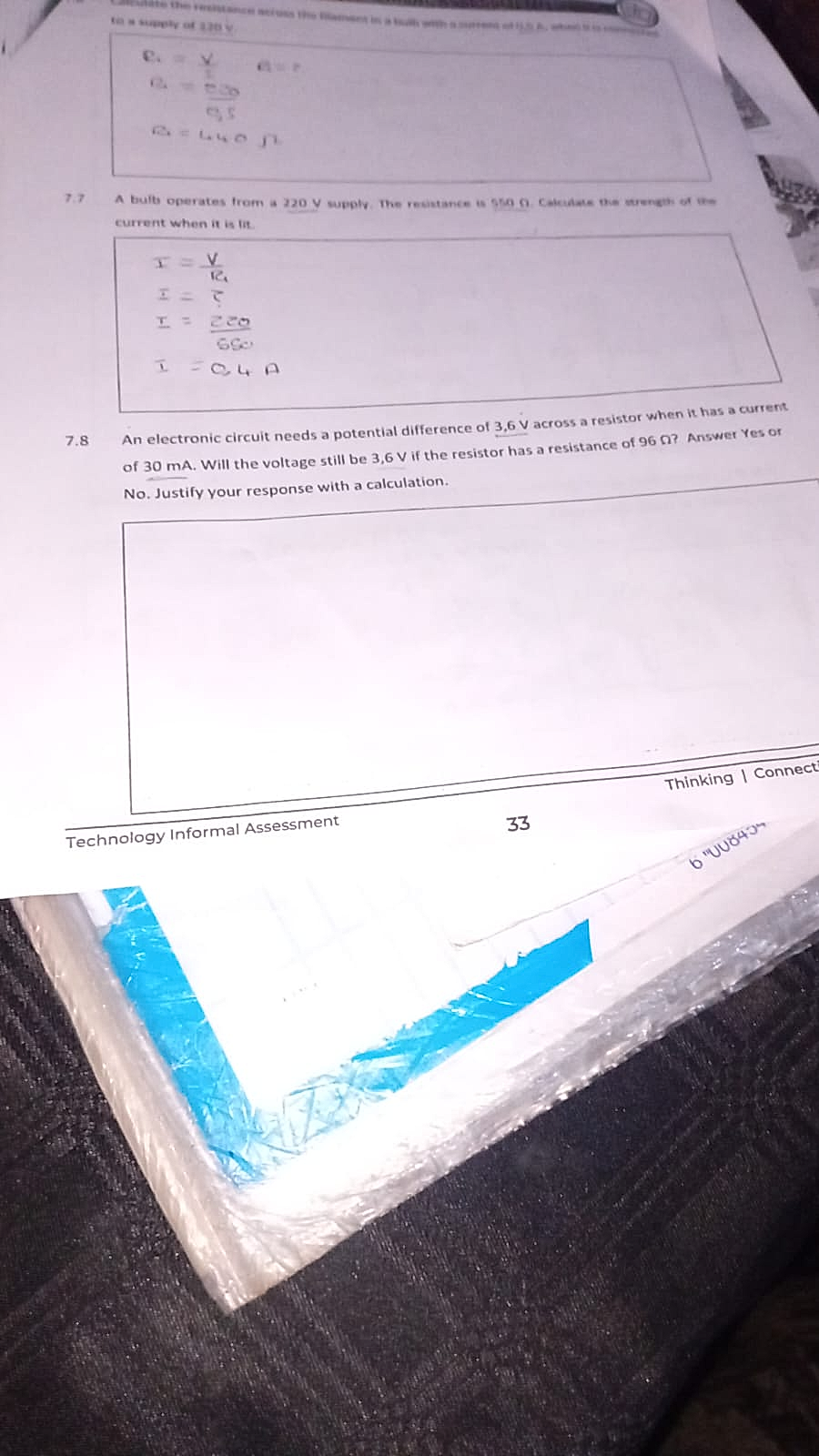
An electronic circuit needs a potential difference of 3,6 V across a resistor when it has a current of 30 mA. Will the v…
View Solution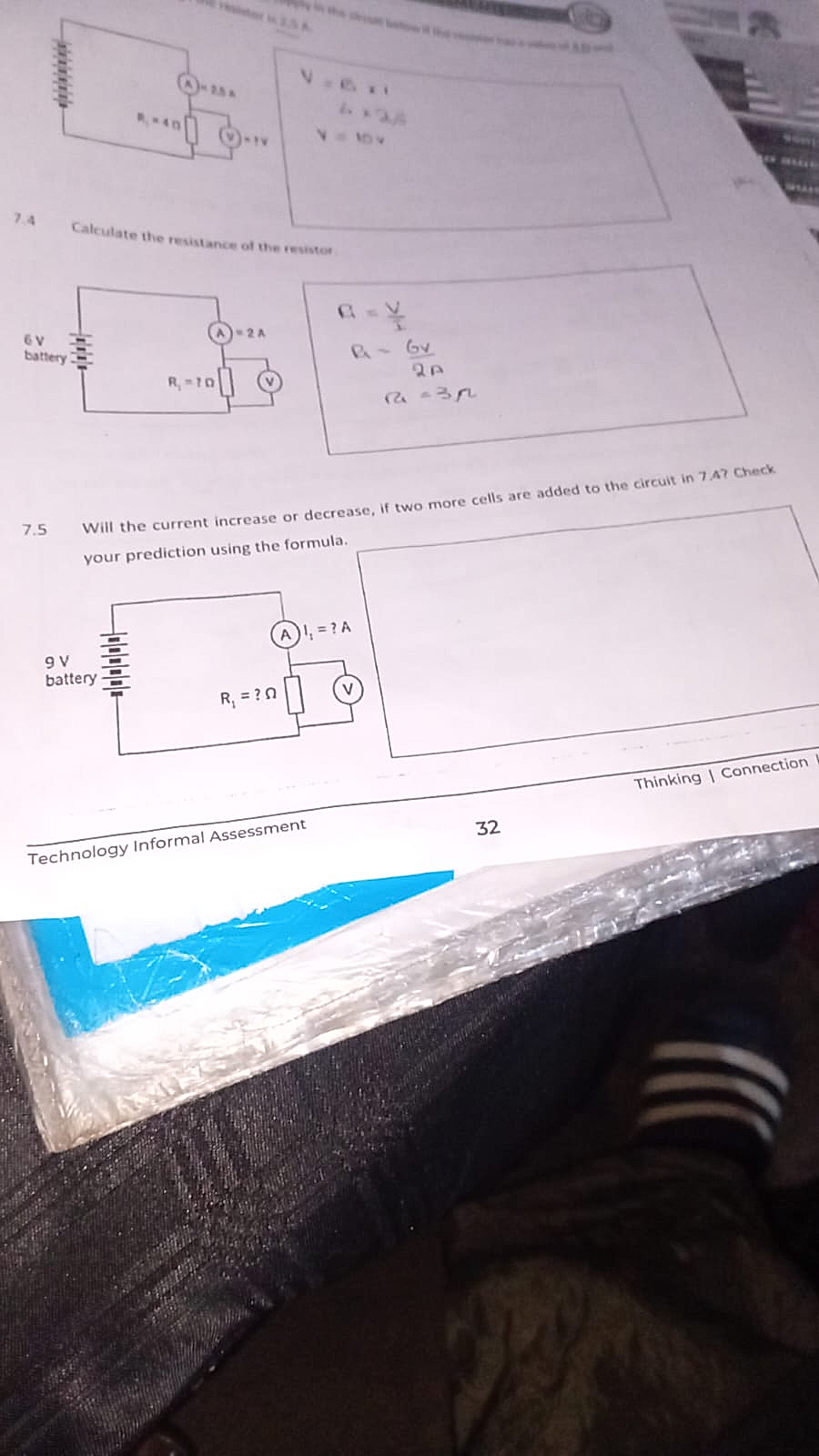
Will the current increase or decrease, if two more cells are added to the circuit in 7.4? Check your prediction using th…
View Solution
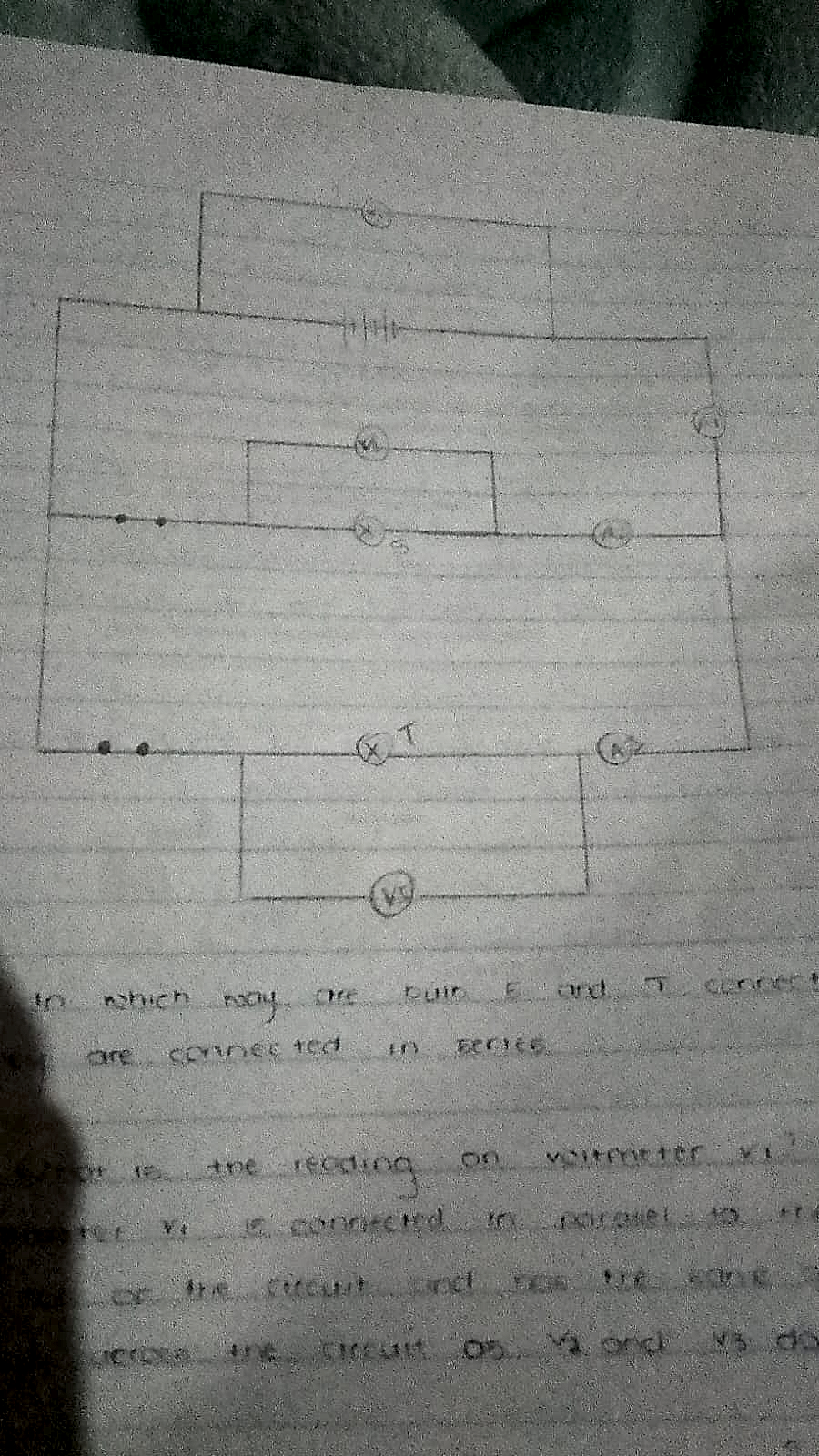
In which way are bulb F and T connected in series? What is the reading on voltmeter V1? If voltmeter V1 is connected in…
View Solution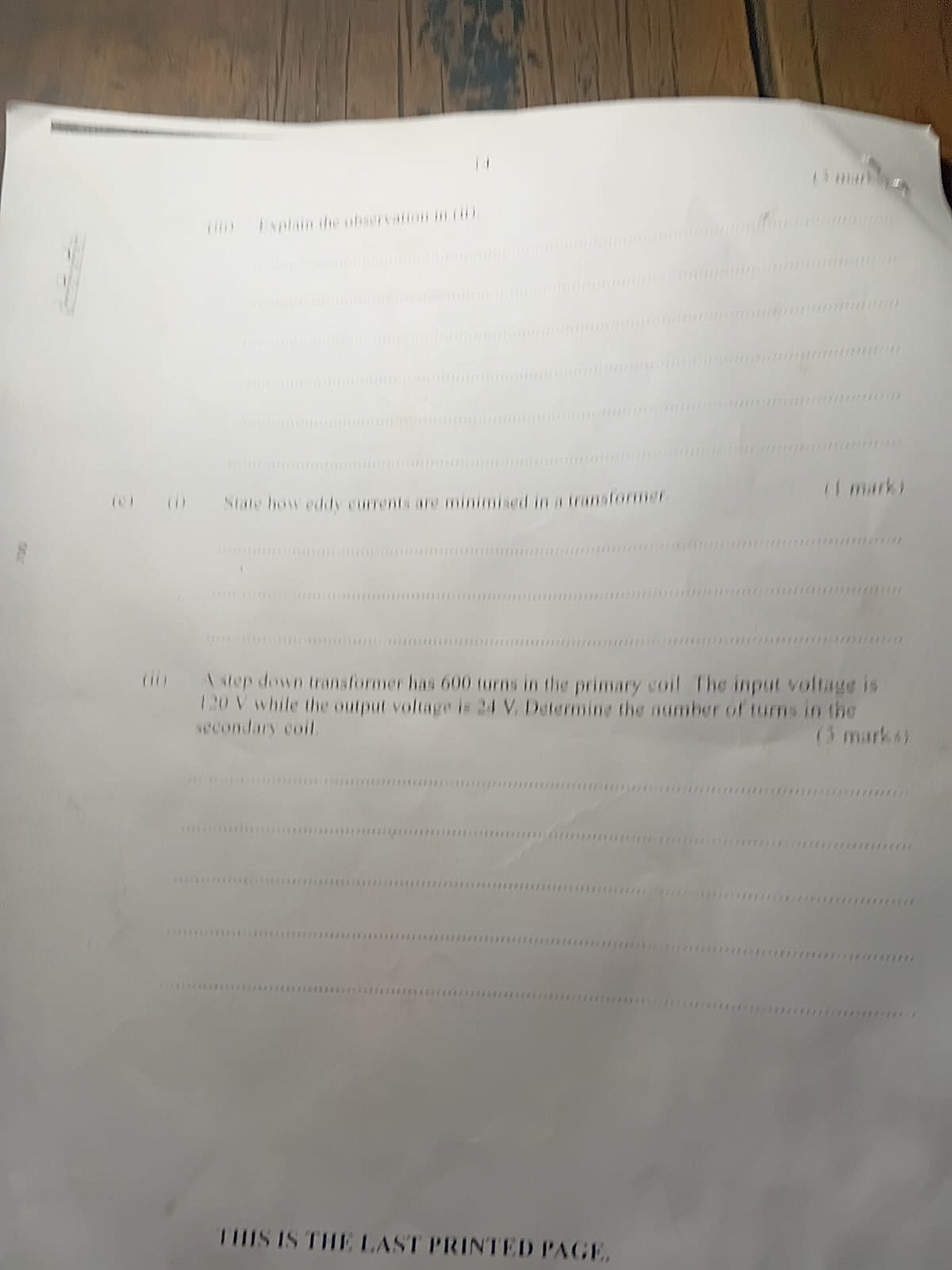
A step down transformer has 600 turns in the primary coil. The input voltage is 120 V while the output voltage is 24 V.…
View Solution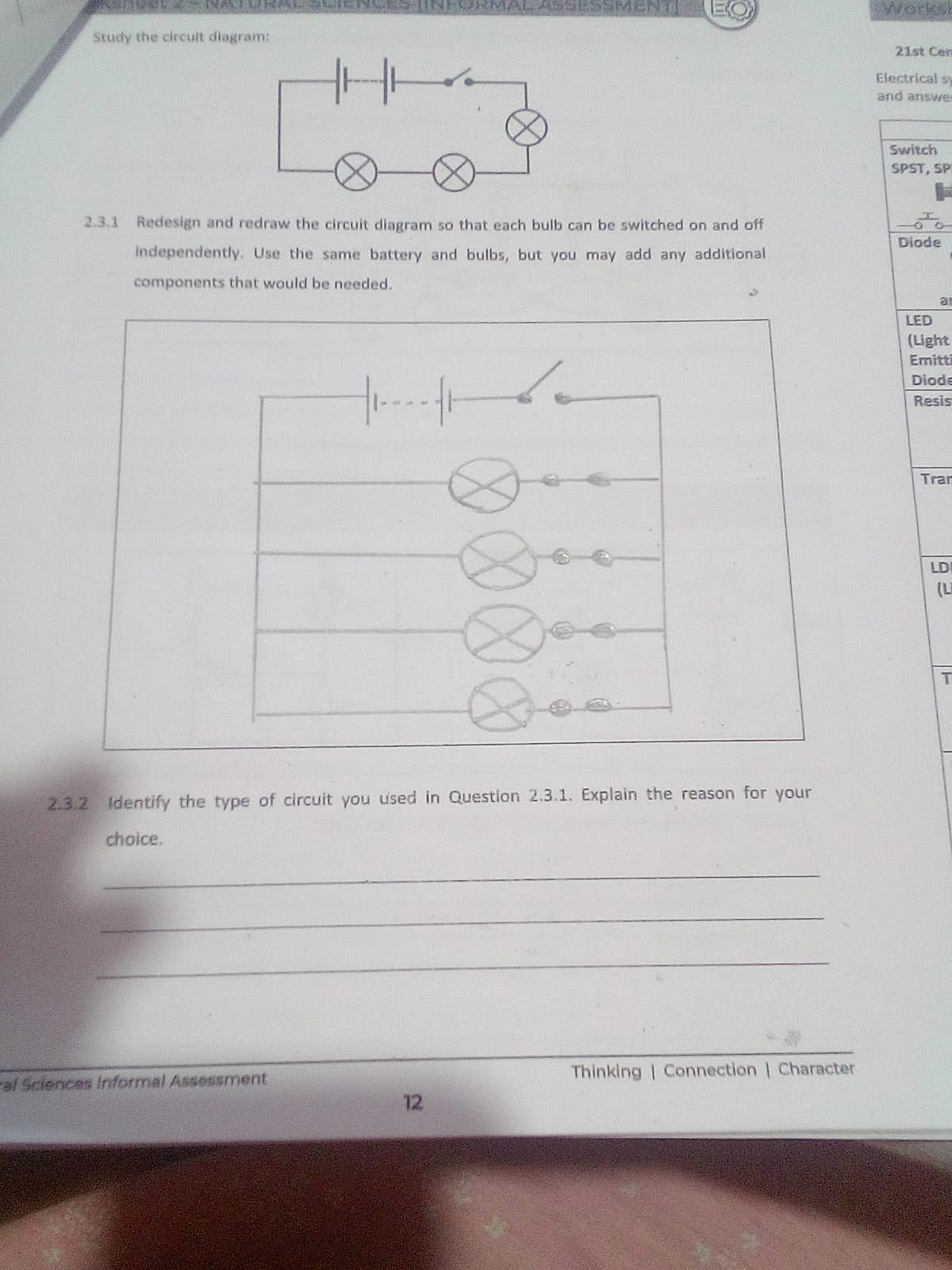
Redesign and redraw the circuit diagram so that each bulb can be switched on and off independently. Use the same battery…
View Solution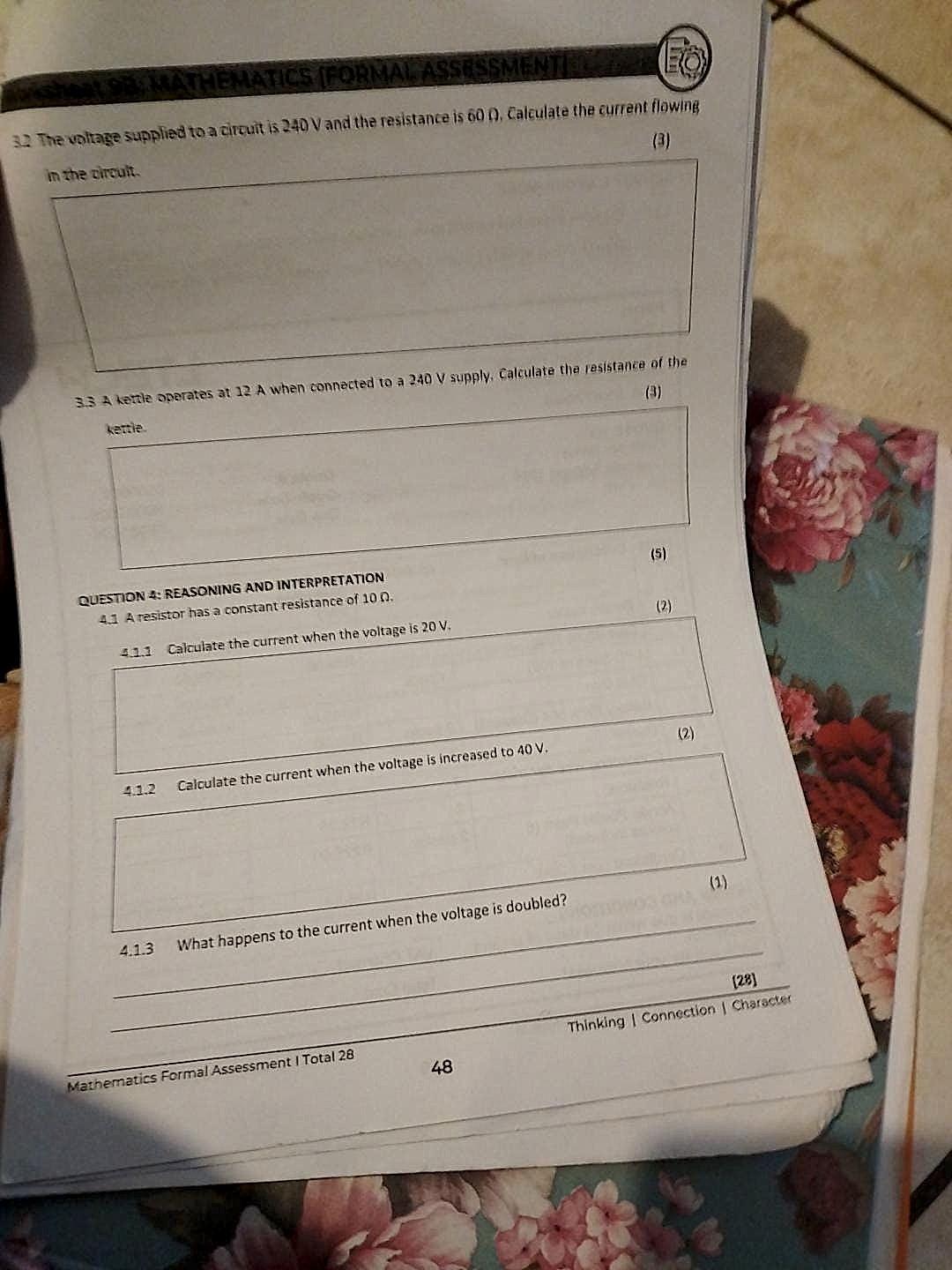
2 The voltage supplied to a circuit is 240 V and the resistance is 60 Ω. Calculate the current flowing in the circuit.
View Solution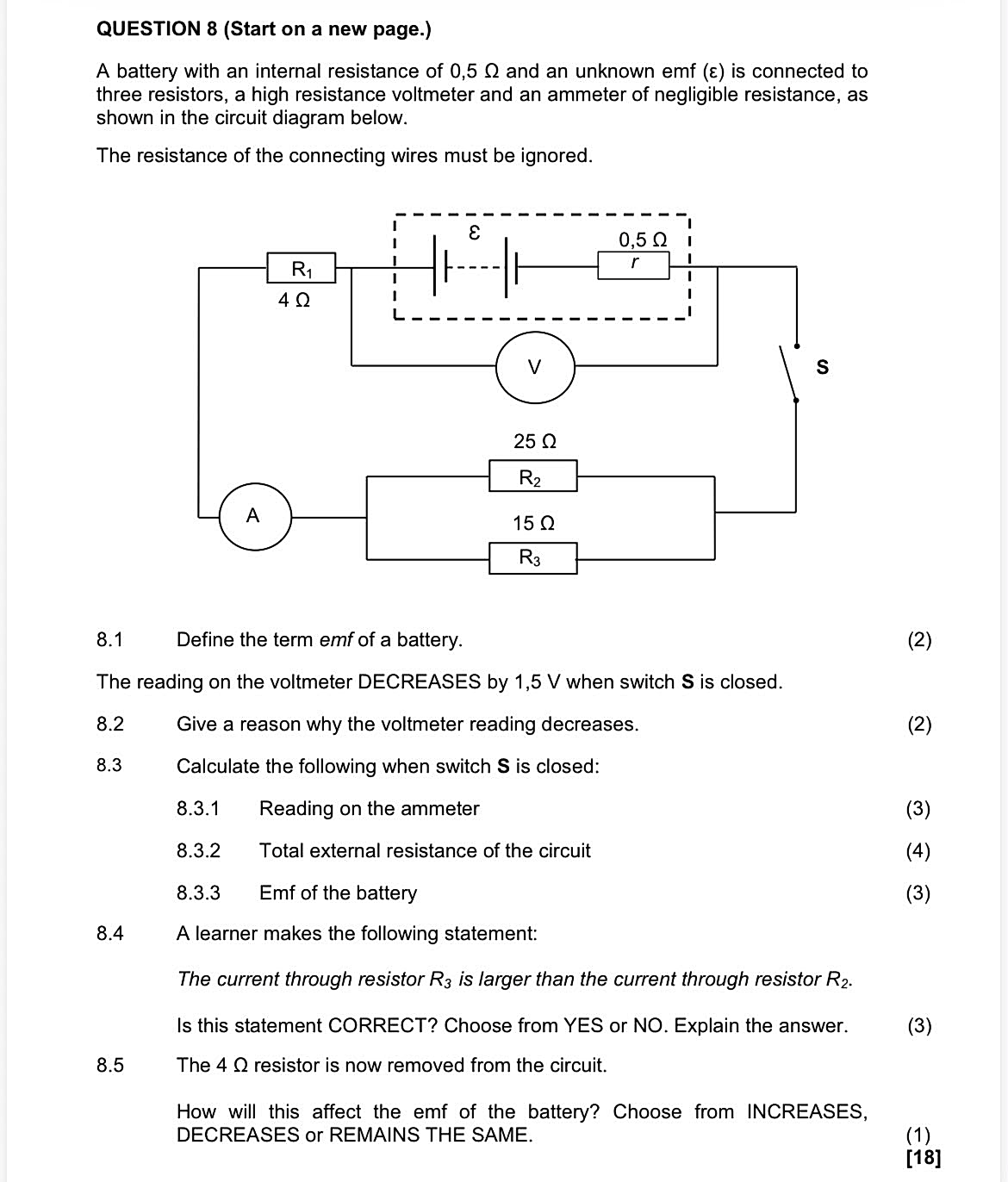
QUESTION 8 (Start on a new page.) A battery with an internal resistance of 0,5 Ω and an unknown emf (ε) is connected to…
View Solution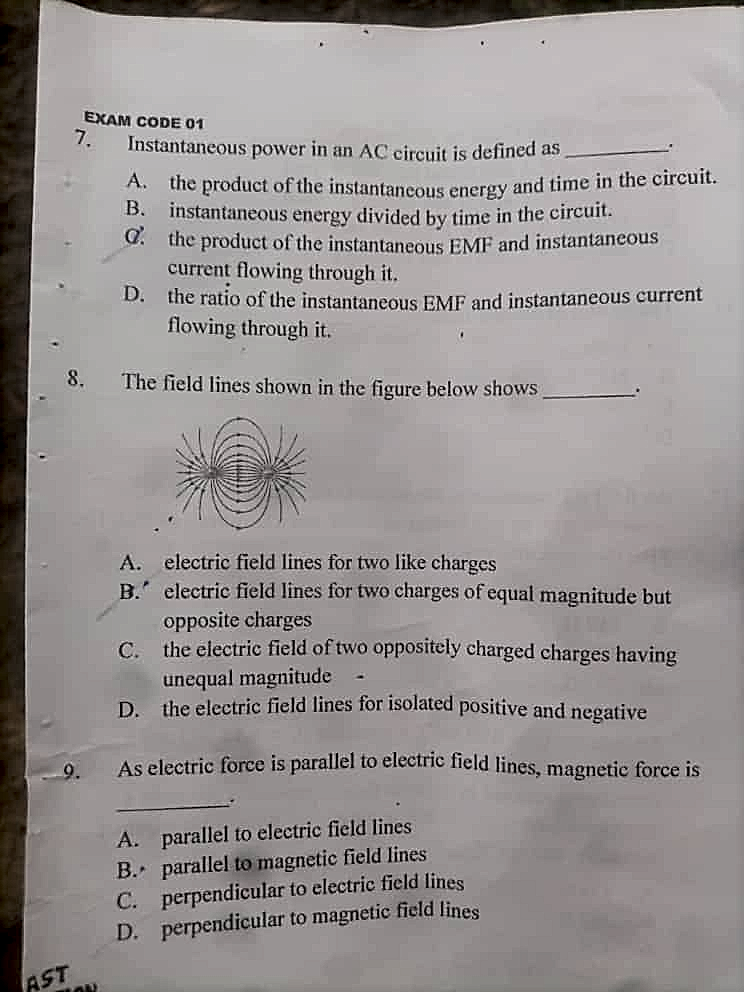
About Electrical Engineering
This hub collects the circuit side of physics and electrical engineering: series and parallel networks, Ohm's law, resistors and capacitors, e.m.f. and internal resistance, transformers, motors and generators, and the a.c. quantities that follow. The questions are typically a circuit diagram with one unknown — a current, a total resistance, a node voltage — or a device to explain.
Popular Topics in Electrical Engineering
Ohm's Law & Resistance
Current, voltage and resistance, resistors in series and parallel, and equivalent resistance of a network.
Circuit Analysis
Kirchhoff's current and voltage laws, node voltages, potential dividers, and ammeter and voltmeter readings.
E.m.f. & Internal Resistance
Terminal voltage, lost volts, cells in series and parallel, and maximum power transfer.
Capacitors
Capacitance, combinations in series and parallel, energy stored, and charging and discharging through a resistor.
A.C. Circuits
RMS and peak values, reactance and impedance, RLC circuits, resonance and power factor.
Transformers
The turns ratio, step-up and step-down, efficiency and losses, and why transmission happens at high voltage.
Motors & Generators
The motor effect, the d.c. motor and generator, induction motors, and the role of commutators and slip rings.
Semiconductors
Diodes and rectification, transistors as switches and amplifiers, and logic gates built from them.
How ScanSolve Helps with Electrical Engineering
Photograph the circuit and ScanSolve redraws it in words first — what is in series with what, what is in parallel — because most circuit errors are topology errors rather than arithmetic ones. It then applies the right law, keeps the units explicit, and gives the reading each meter in the diagram would show.
For questions that mix components, the working reduces the network one stage at a time instead of producing a single expression, so you can check each stage. Where a device is to be explained (transformer, induction motor, diode), the answer separates the principle from the construction, which is how marking schemes split the marks.
Study Tips for Electrical Engineering
Identify series and parallel groupings before touching a formula. Redraw the circuit so that grouping is obvious.
In parallel, resistance goes down and current divides; in series, resistance adds and current is common. Stating which case you are in prevents the most common slip.
Watch for internal resistance. A question that gives a cell's e.m.f. and a resistance often expects the lost volts too.
Convert prefixes before substituting: mA, kΩ, µF. Mixed prefixes account for most wrong answers with right methods.
Get Electrical Engineering Help on WhatsApp
Send a photo of your electrical engineering homework and get step-by-step solutions instantly. No app download needed.
Message Us on WhatsAppFrequently Asked Electrical Engineering Questions
How can ScanSolve help with Electrical Engineering homework?
ScanSolve's AI solves electrical engineering problems step by step. Snap a photo of your homework or type your question to get instant, detailed solutions with clear explanations.
Is Electrical Engineering homework help free on ScanSolve?
Yes, ScanSolve offers free electrical engineering homework help with step-by-step solutions. Upgrade to Pro at $89.99/year (about $7.50/month) or $9.99/week for unlimited answers and priority support.
What Electrical Engineering topics does ScanSolve cover?
ScanSolve covers all electrical engineering topics including Ohm's Law & Resistance, Circuit Analysis, E.m.f. & Internal Resistance, Capacitors, A.C. Circuits. Upload any electrical engineering problem and get a step-by-step solution.
Can ScanSolve solve electrical engineering problems from a photo?
Yes. Take a photo of your electrical engineering homework and ScanSolve's AI will read the problem, identify the method needed, and provide a complete step-by-step solution.
How accurate are ScanSolve's electrical engineering solutions?
ScanSolve uses advanced AI to deliver accurate, step-by-step electrical engineering solutions. Each answer includes detailed explanations so you can verify the reasoning and learn the method.
More in Computing & Engineering
Explore More Subjects
Have an Electrical Engineering question?
Get an instant AI-powered step-by-step solution in seconds.